


The fusion of multimaterial additive manufacturing with compliant actuation is redefining the value chain of medical‑device production, creating new pathways for talent, capital, and regulatory authority.
Contextualizing the Convergence
The past five years have witnessed an asymmetric acceleration in two once‑parallel technologies: high‑resolution multimaterial 3‑D printing and soft‑robotic actuation. 2024‑26 data show the global 3‑D‑printed‑healthcare market projected to reach $3.4 billion by 2026, expanding at a 21.5 % CAGR—a trajectory driven largely by demand for patient‑specific implants and devices that can adapt in situ [3]. Simultaneously, soft‑robotics research, once confined to laboratory prototypes, now commands $1.2 billion in annual venture capital inflows, a 38 % year‑over‑year increase since 2021 [5].
Together, these forces generate a structural shift in biomedical engineering: devices are no longer static metal shells but programmable, tissue‑compatible systems that can be printed on demand, calibrated to individual anatomy, and reconfigured after implantation. This shift reverberates across three institutional layers—corporate R&D, regulatory bodies, and the talent ecosystem—altering the distribution of career capital and the mechanics of economic mobility within the sector.
The Core Mechanism: Multimaterial Deposition Meets Liquid‑Crystal Elastomers
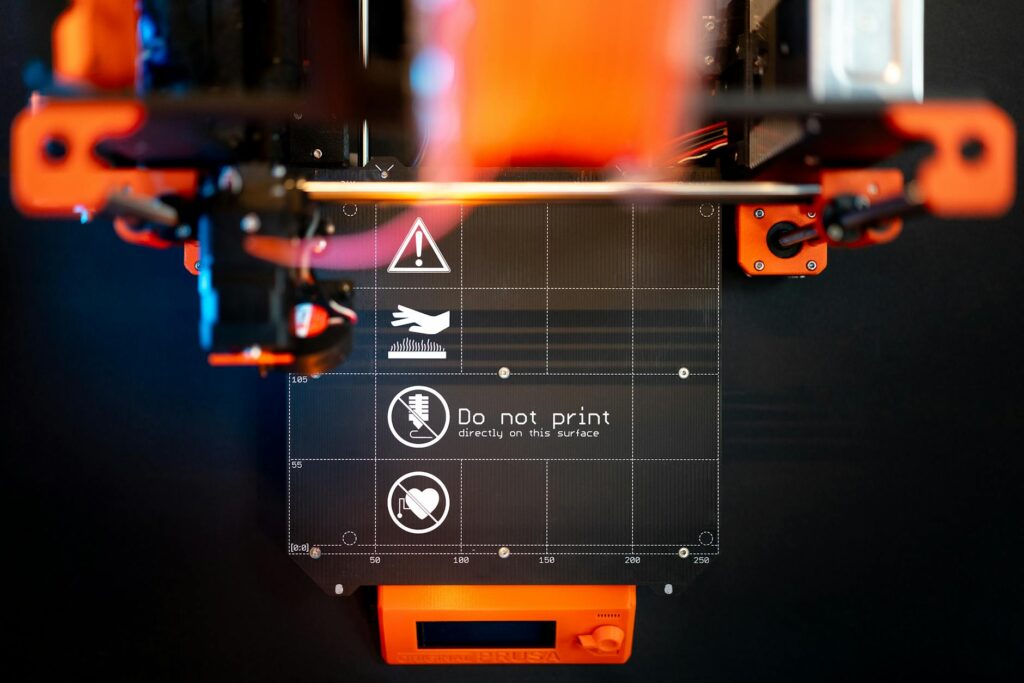
At the technical core lies the convergence of multimaterial additive manufacturing and liquid‑crystalline elastomer (LCE) actuation. Harvard engineers recently introduced a rotational 3‑D printing process that deposits up to four distinct polymers within a single lattice, encoding programmed curvature and stiffness gradients directly into the printed geometry [1]. The method eliminates post‑print assembly, reducing part count by 70 % and enabling devices that transition from a compact printed state to a functional, load‑bearing configuration upon thermal or electrical stimulus.
Complementary advances at Oregon State University demonstrated that LCE filaments can be extruded with sub‑micron precision, yielding “muscle‑like” fibers that contract up to 30 % strain under low‑voltage fields [4]. When integrated into a printed scaffold, these fibers produce shape‑changing implants capable of expanding to fill irregular bone defects or tightening around vascular grafts without invasive suturing.
This loop compresses product development cycles from the traditional 18‑month timeline to under six months for low‑volume, high‑complexity devices [2].
The manufacturing pipeline now follows a precision biomanufacturing loop: patient imaging → computational design → multimaterial print → in‑situ actuation calibration. This loop compresses product development cycles from the traditional 18‑month timeline to under six months for low‑volume, high‑complexity devices [2]. The reduction in time‑to‑market translates into a measurable increase in institutional bargaining power for early‑stage firms, which can leverage rapid prototyping to secure larger contracts with health systems before incumbents can respond.
Systemic Implications: Redefining Standards, Supply Chains, and Capital Allocation
The structural integration of printable soft actuation compels a cascade of systemic adjustments.
- Regulatory Realignment – The FDA’s 2023 “Additive Manufacturing Guidance for Medical Devices” was predicated on rigid polymer or metal parts. The emergence of programmable, post‑implant actuation has prompted a draft “Dynamic Device Guidance” that introduces performance‑based testing, continuous post‑market data streams, and a new “Software‑Controlled Mechanical” classification [6]. This re‑categorization redistributes oversight authority, giving the Center for Devices and Radiological Health (CDRH) a larger role in device software validation while reducing the weight of traditional mechanical testing labs.
- Supply‑Chain Restructuring – Conventional device manufacturers rely on tiered supplier ecosystems for machining, coating, and sterilization. Multimaterial printers collapse these tiers into a single “digital‑twin” node, where raw polymer pellets become the primary input. The result is a centralized, data‑driven supply chain that favors firms with proprietary material libraries and advanced process analytics. Companies that have invested in material science platforms—such as GE Additive’s BioMaterials division—now command asymmetric leverage over hospitals that lack in‑house printing capacity.
- Capital Flow Realignment – Venture capitalists (VCs) have historically allocated funds based on market size and regulatory risk. The convergence reduces regulatory lag (through real‑time monitoring) and expands addressable markets (custom prosthetics, implantable drug delivery, adaptive surgical tools). Consequently, VC funds have re‑weighted portfolios toward “soft‑device platforms” rather than single‑product pipelines, a shift reflected in the 2025 “Biomedical Convergence Index,” where platform‑centric firms enjoy a 2.8× higher median post‑money valuation than traditional OEMs [5].
These systemic ripples reshape institutional power: regulators become data custodians, suppliers evolve into digital material custodians, and capital providers prioritize platform control over product differentiation.
Human Capital Impact: Winners, Losers, and the New Career Trajectory
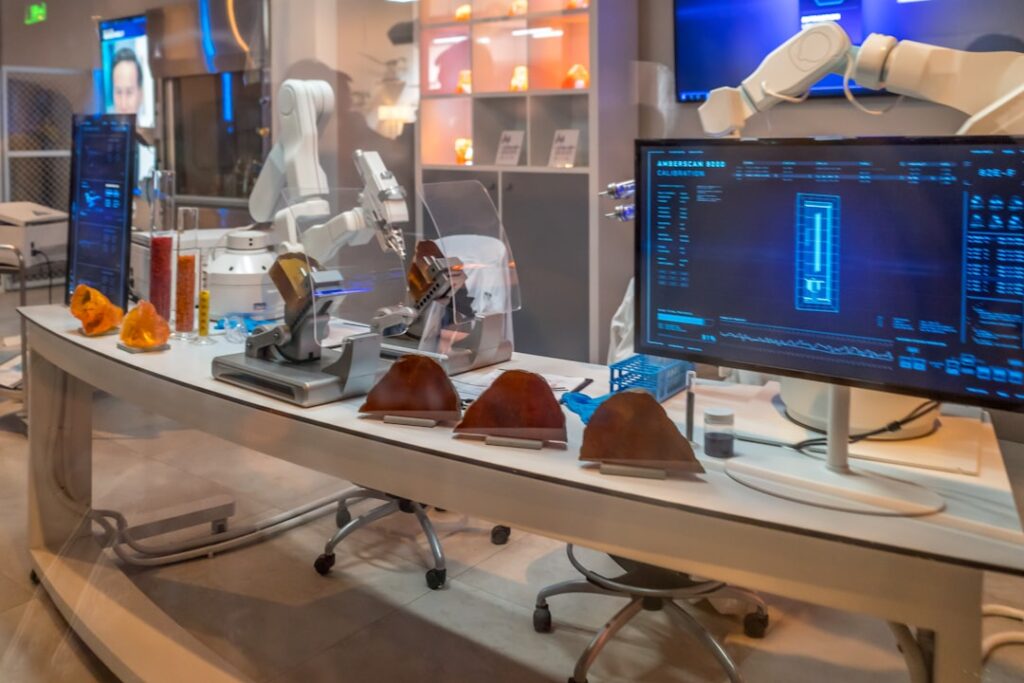
The structural transformation reconfigures career capital—the blend of expertise, networks, and credentialed experience that determines upward mobility in the biomedical field.
The asymmetry is stark: professionals who acquire cross‑disciplinary fluency—combining materials science, computational design, and data analytics—gain disproportionate access to leadership tracks.
| Segment | Emerging Capital | Institutional Leverage |
|———|——————|————————|
| Multimaterial Materials Scientists | Mastery of polymer chemistry, rheology, and LCE synthesis | Command premium salaries (average $165k) and leadership roles in R&D labs |
| Digital Manufacturing Engineers | Proficiency in slicer algorithms, in‑process monitoring, and AI‑driven defect prediction | Direct pipeline to CTO positions in start‑ups and corporate “Digital Fab” units |
| Regulatory Data Scientists | Skills in real‑time device telemetry, statistical safety modeling, and software‑controlled device classification | Elevated influence within FDA advisory committees, opening pathways to senior policy roles |
| Clinical Integration Specialists | Expertise in intra‑operative device calibration, patient‑specific workflow orchestration | Gatekeepers of hospital adoption, often transitioning to health‑system innovation leadership |
| Traditional Mechanical Designers | Limited exposure to compliant actuation, reliance on legacy CAD tools | Risk of skill obsolescence; may need reskilling or transition to ancillary roles (e.g., sterilization validation) |
The asymmetry is stark: professionals who acquire cross‑disciplinary fluency—combining materials science, computational design, and data analytics—gain disproportionate access to leadership tracks. Institutions that embed convergence curricula into graduate programs (e.g., MIT’s “Soft‑Matter Manufacturing” track launched 2024) are already seeing a 30 % increase in placement rates for alumni in senior R&D positions [7].
Economic mobility also follows a structural pattern. Entry‑level technicians in traditional machining see wage stagnation (average 2 % annual growth) versus a 12 % growth rate for technicians certified in multimaterial printer operation. The disparity creates a talent pipeline that favors early adopters, reinforcing the market dominance of firms that can attract and retain “convergence talent.”
Outlook: Institutional Trajectory Through 2029
Projecting the next three to five years, three interlocking dynamics will shape the institutional landscape.
- Standardization Consolidation – By 2027, the International Organization for Standardization (ISO) is expected to release ISO 22987: Soft‑Robotic Medical Devices, establishing baseline mechanical performance and data‑logging requirements. Early compliance will become a de‑facto market entry barrier, privileging firms with established quality‑management systems.
- Hybrid Production Hubs – Large academic medical centers (e.g., Johns Hopkins, Mayo Clinic) are investing in “Hybrid Fab Labs” that combine sterile printing bays with on‑site tissue bioreactors. These hubs will function as institutional incubators, allowing clinicians to co‑design devices and retain intellectual property, thereby shifting some of the traditional R&D power from corporate labs to health‑system innovators.
- Talent Migration to Platform Governance – As device actuation becomes software‑centric, a new class of “Platform Governance Officers” will emerge, responsible for overseeing firmware updates, cybersecurity, and compliance across device lifecycles. By 2029, the Chief Platform Officer role is projected to appear in 40 % of top‑50 med‑device firms, reflecting the institutionalization of continuous device stewardship.
Collectively, these trends suggest a structural rebalancing: regulatory bodies evolve into data custodians, health systems become co‑creators of value, and a new cadre of hybrid engineers and governance specialists capture the majority of career capital. Firms that fail to embed convergence capabilities into their organizational DNA risk marginalization as the market’s asymmetry widens.
Key Structural Insights > [Insight 1]: The multimaterial‑soft‑robotic convergence compresses product‑development cycles, reallocating bargaining power toward agile, platform‑centric firms.
Key Structural Insights
> [Insight 1]: The multimaterial‑soft‑robotic convergence compresses product‑development cycles, reallocating bargaining power toward agile, platform‑centric firms.
> [Insight 2]: Institutional realignment—regulatory, supply‑chain, and capital—creates new data‑governance roles that will dominate senior leadership in the next half‑decade.
> * [Insight 3]: Career capital increasingly hinges on cross‑disciplinary fluency in materials, digital manufacturing, and data analytics, reshaping economic mobility pathways in biomedical engineering.
Written by Career Ahead AI. AI can make mistakes, so verify key facts. Report errors to support@careeraheadonline.com.





