Institutional mandates and carbon‑pricing are embedding sustainable aviation fuel into the core economics of air travel, reshaping power dynamics and generating new high‑skill career pathways while linking climate goals to regional economic uplift.
The surge in sustainable aviation fuel (SAF) is redefining institutional power in aviation, creating asymmetric career pathways and embedding climate targets into the core economics of air travel.
Macro Context and Institutional Mandates
The aviation sector accounts for roughly 2.5 % of global CO₂ emissions, a share that has risen faster than the world‑wide GDP growth rate over the past two decades [1]. In response, the International Air Transport Association (IATA) has codified a net‑zero ambition for 2050, backed by a coalition of 300 airlines that collectively represent 80 % of global traffic [2]. Parallel to industry pledges, the European Union’s Emissions Trading System (EU ETS) and the United States’ Inflation Reduction Act (IRA) have introduced carbon pricing and tax credits that directly reward the use of SAF [3][4].
These policy levers have catalyzed market expansion: the global SAF market, valued at $100 million in 2020, is projected to exceed $1.5 billion by 2025, reflecting a compound annual growth rate (CAGR) of 78 % [5]. Consumer sentiment reinforces the trajectory; a 2024 survey by the International Travel Association found that 75 % of travelers now factor carbon intensity into flight selection, with 42 % willing to pay a premium for SAF‑blended tickets [6]. The convergence of regulatory pressure, fiscal incentives, and consumer demand establishes SAF not as an ancillary product but as a structural cornerstone of aviation’s carbon strategy.
Technical Architecture of SAF Production
Sustainable Aviation Fuel Ascends: Structural Shift Toward a Low‑Carbon Sky
SAF is defined by its ability to meet the ASTM D7566 specification, allowing a “drop‑in” replacement for conventional jet‑A fuel without aircraft redesign. The dominant pathway, Hydroprocessed Esters and Fatty Acids (HEFA), converts waste cooking oil, agricultural residues, or purpose‑grown oilseeds into a hydrocarbon blend that mirrors fossil jet fuel’s energy density and combustion profile [7]. Emerging routes—Fischer‑Tropsch synthesis from municipal solid waste, alcohol‑to‑jet (ATJ) from corn‑derived ethanol, and power‑to‑liquid (PtL) using renewable electricity and captured CO₂—promise lifecycle emissions reductions of 70‑80 % relative to baseline [8].
From a systems perspective, the SAF value chain integrates three asymmetrical nodes: feedstock acquisition, catalytic conversion, and distribution logistics. Feedstock sourcing has shifted institutional power toward agribusinesses and waste‑management firms, incentivizing contracts that tie rural producers to airline demand. Catalytic conversion facilities, often co‑located with existing petroleum refineries, leverage existing hydrogen infrastructure, reducing capital intensity by an estimated 30 % versus greenfield bio‑refineries [9]. Distribution utilizes the same pipeline and airport fueling infrastructure as conventional jet fuel, a factor that the Air Transport Action Group (ATAG) cites as the primary driver for rapid market entry [10].
Feedstock sourcing has shifted institutional power toward agribusinesses and waste‑management firms, incentivizing contracts that tie rural producers to airline demand.
D-Mart's Q2 revenue rose 18% to Rs 19,206 crore, reflecting a strong growth trend in India's retail sector. The company's expansion to 518 stores indicates…
Systemic Ripple Effects Across the Aviation Ecosystem
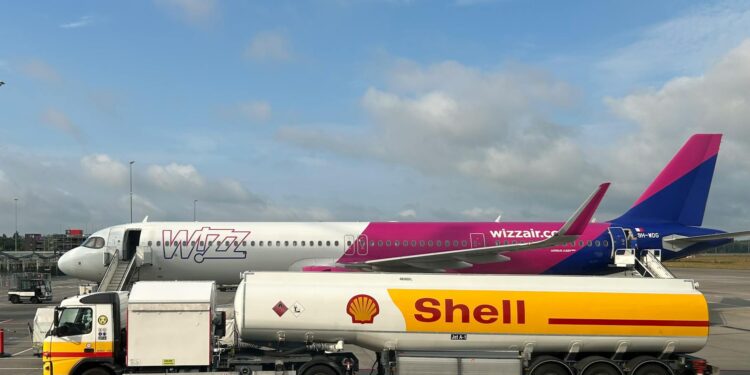
The institutional adoption of SAF triggers a cascade of structural adjustments. Airlines have moved from pilot projects to long‑term procurement contracts; United Airlines secured a 10‑year agreement for 500 million gallons of SAF sourced from Fulcrum BioEnergy, locking in a price premium of $0.75 per gallon that translates into a $375 million revenue stream for the producer [11]. Simultaneously, major oil majors such as Shell and BP have launched dedicated SAF subsidiaries, leveraging their downstream logistics to capture upstream feedstock contracts and downstream retail margins [12].
These dynamics reshape competitive hierarchies. Traditional jet‑fuel suppliers now compete on SAF volume, while new entrants—biotech firms, waste‑to‑energy cooperatives, and renewable‑hydrogen producers—gain bargaining power through diversified feedstock portfolios. The resulting market structure resembles the diesel transition of the 1990s, where regulatory standards (Euro IV/VI) forced incumbent refiners to retrofit plants or cede market share to specialty fuel producers [13].
Beyond corporate realignment, SAF production generates localized economic externalities. A 2023 case study in the Mid‑South United States documented that a 50‑million‑gallon‑per‑year HEFA plant created 300 direct jobs and catalyzed a 12 % increase in farm income for soybean growers who redirected a portion of their crop to biodiesel‑derived SAF feedstock [14]. Waste‑derived SAF projects similarly reduce municipal landfill costs; the Chicago Department of Streets and Sanitation reported a 15 % decline in landfill tonnage after a partnership with LanzaTech to convert food waste into jet fuel [15]. These outcomes illustrate how SAF embeds climate mitigation within broader economic mobility frameworks.
Human Capital Reallocation and Career Capital
Sustainable Aviation Fuel Ascends: Structural Shift Toward a Low‑Carbon Sky
The SAF surge is reconfiguring the talent landscape across multiple strata. At the technical frontier, demand for chemical engineers versed in hydroprocessing, catalysis, and process optimization has risen 42 % year‑over‑year since 2022, according to the American Institute of Chemical Engineers [16]. Concurrently, sustainability officers within airlines are transitioning from advisory roles to executive seats, overseeing SAF procurement, emissions accounting, and stakeholder reporting; Delta Air Lines appointed a Chief SAF Officer in 2023, a position that now reports directly to the CEO [17].
Consulting firms have responded with dedicated practice areas. McKinsey’s “Aviation Decarbonization” unit grew its headcount by 35 % in 2023, focusing on SAF financing models, carbon‑credit integration, and supply‑chain risk assessments [18]. This creates a feedback loop: as institutional actors demand rigorous SAF economics, a new class of analysts—often with dual expertise in energy markets and aviation operations—emerges, enhancing career capital for professionals who can navigate both domains.
As whey protein prices soar, food companies in India are increasingly turning to yeast protein to diversify their offerings and meet changing consumer preferences.
The shift also opens pathways for underrepresented communities. Programs such as the Rural Biofuel Workforce Initiative, funded under the IRA, provide apprenticeship slots for displaced coal workers to retrain as SAF plant operators, offering a median wage increase of 28 % relative to prior employment [19]. These mechanisms illustrate how SAF can serve as a lever for economic mobility, converting environmental policy into tangible labor market outcomes.
These outcomes illustrate how SAF embeds climate mitigation within broader economic mobility frameworks.
Projection to 2030: Structural Trajectory
If current policy trajectories persist, SAF could account for 20‑30 % of total jet fuel consumption by 2030, a share that would deliver an estimated 1.2 gigatons of CO₂ avoided annually [20]. Achieving this scale hinges on three systemic levers:
Policy Alignment – Expansion of carbon pricing to cover international flights and harmonization of SAF credit mechanisms across jurisdictions will reduce price volatility and attract private capital.
Infrastructure Investment – Scaling of hydrogen production and carbon‑capture capacity is essential for PtL pathways; the Department of Energy’s $7 billion “Hydrogen Hubs” program, slated for completion by 2028, is a pivotal enabler.
Talent Pipeline Development – Institutionalizing SAF curricula within engineering schools and creating cross‑industry fellowship programs will sustain the flow of specialized labor required for plant construction, operation, and regulatory compliance.
The structural shift toward SAF redefines power relations in aviation: airlines become both demand aggregators and de‑facto climate strategists; traditional fuel majors evolve into integrated low‑carbon energy providers; and regional economies gain leverage through feedstock ownership. The trajectory suggests an asymmetric redistribution of capital, where entities that can lock in long‑term SAF contracts and secure feedstock streams will command disproportionate influence over the industry’s carbon trajectory.
Key Structural Insights [Institutional Realignment]: Regulatory mandates and carbon‑pricing mechanisms are converting SAF from a niche product into a core component of aviation’s operating model, reshaping the power balance among airlines, fuel majors, and feedstock providers. [Career Capital Generation]: The SAF supply chain is creating high‑skill, high‑wage roles across engineering, sustainability leadership, and policy analytics, while simultaneously offering retraining pathways for workers in declining fossil‑fuel sectors.
[Economic Mobility Vector]: Rural and waste‑management communities are capturing new revenue streams through feedstock contracts, linking climate mitigation directly to localized economic uplift.



Entrepreneurship & Business
 Entrepreneurship & Business