
Biorefineries are emerging as a systemic lever that converts agricultural residues into fuels, chemicals and power, redefining career pathways, regional economies and the institutional balance of the global energy complex.
The Macro‑Scale Realignment of Energy Supply
The last decade has witnessed a decisive re‑orientation of the world’s energy mix. Global primary energy consumption from fossil sources fell by 2.3 % in 2024, while renewable share rose to 29 %—the highest share since the 1970s [1]. Climate‑driven policy, notably the European Union’s Renewable Energy Directive (target ≥ 32 % renewables by 2030) and the United States Inflation Reduction Act’s $369 billion clean‑energy budget, have accelerated capital flows toward bio‑based value chains [2].
Within this macro‑trend, biorefineries occupy a unique niche: they transform lignocellulosic biomass, municipal solid waste and algae into a portfolio of market‑ready outputs—bioethanol, drop‑in jet fuel, bioplastics, and electricity. A 2025 meta‑analysis of 84 operational plants estimated a mean life‑cycle greenhouse‑gas (GHG) reduction of 71 % relative to petroleum‑based equivalents, with best‑in‑class facilities approaching 80 % [3]. The sector’s projected compound annual growth rate (CAGR) of 11 % through 2035 suggests a market size of $210 bn, rivaling the traditional refining industry’s $250 bn footprint [4].
These figures reflect not merely a substitution of feedstock but a structural re‑configuration of the energy‑chemical complex, with implications for institutional power, labor markets and leadership hierarchies.
Integrated Conversion: The Core Mechanism and Its Quantitative Levers
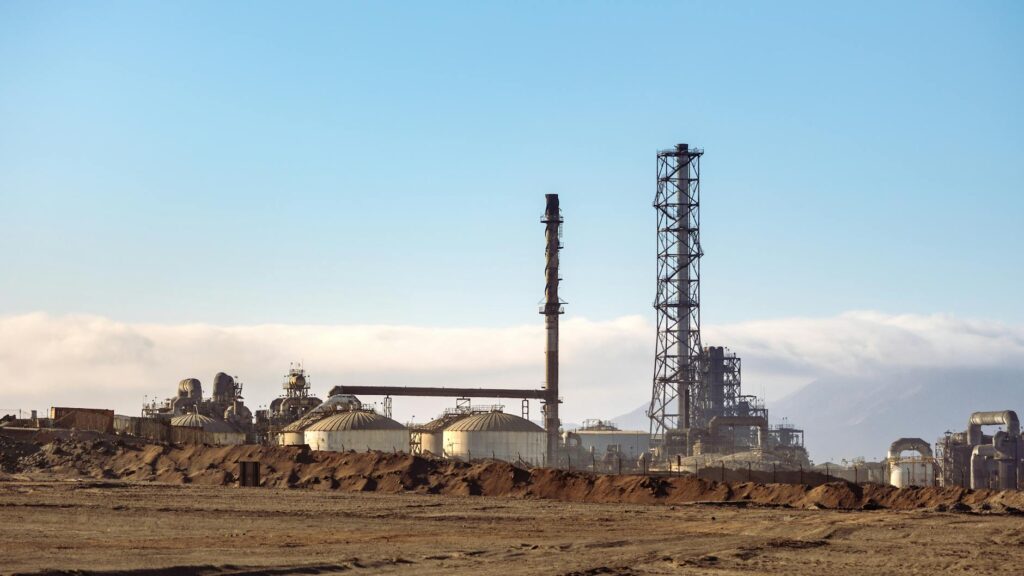
Biorefineries operate on an integrated production paradigm. A single feedstock—often regionally sourced agricultural residues such as corn stover, wheat straw or sugarcane bagasse—is routed through a cascade of conversion technologies: pretreatment (steam explosion, ionic liquids), enzymatic hydrolysis, microbial fermentation, and thermochemical upgrading (hydrothermal liquefaction, catalytic pyrolysis). The resulting product slate is deliberately diversified to capture multiple revenue streams and mitigate feedstock price volatility.
Key performance metrics underscore the systemic advantage of integration. The “biomass utilization factor” (ratio of biomass converted to final products) averaged 68 % across 2023‑2024 pilot facilities, compared with 45 % for single‑product ethanol plants [5]. Process intensification—such as simultaneous saccharification and fermentation (SSF) and membrane‑assisted product recovery—has trimmed energy intensity by 22 % relative to conventional petro‑refining (MJ output per MJ input) [6].
Likewise, novel biocatalysts based on metal‑organic frameworks (MOFs) have lowered the activation energy for lignin depolymerization, cutting catalyst turnover time from 8 h to 1.5 h [8].
Technological breakthroughs are central to scaling. Engineered yeast strains (e.g., Saccharomyces cerevisiae Y128) now achieve ethanol yields of 0.48 g g⁻¹ glucose, a 12 % uplift over the 2015 benchmark [7]. Likewise, novel biocatalysts based on metal‑organic frameworks (MOFs) have lowered the activation energy for lignin depolymerization, cutting catalyst turnover time from 8 h to 1.5 h [8]. These hard data points illustrate a trajectory where conversion efficiency converges on the thermodynamic limits of biomass, eroding the cost advantage of fossil feedstocks.
Systemic Ripple Effects Across Energy, Commodity and Institutional Landscapes
 Government & Policy
Rubio Urges More US-India Energy Trade and Venezuelan Crude Refining
Rubio discussed refining Venezuelan crude with Indian companies and described India as a “refining superpower”.
Read More →The diffusion of biorefineries initiates asymmetric shifts across several systemic dimensions.
Commodity Markets: By diverting a growing share of global agricultural residues from low‑value uses (e.g., animal bedding) to high‑value chemicals, biorefineries exert upward pressure on feedstock prices. The USDA’s 2024 “Biomass Price Index” rose 9 % year‑over‑year, prompting a re‑pricing of corn‑based ethanol contracts and a modest decline in corn grain futures (‑2 % in Q1 2025) [9]. Simultaneously, the supply of bio‑derived polymers has depressed virgin petro‑based polyethylene prices by 4 % since 2023, reflecting a nascent substitution effect [10].
Institutional Power Realignment: Traditional oil majors—Shell, ExxonMobil, BP—have reallocated $12 bn of capital in 2024–2025 toward bio‑based ventures, acquiring stakes in European biorefineries and forming joint ventures with agribusinesses. This capital redeployment signals a shift in institutional influence from upstream hydrocarbon extraction to downstream bio‑value creation. In contrast, state‑owned enterprises in Brazil (Petrobras) and Indonesia (Pertamina) have leveraged national biomass policies to embed biorefineries within sovereign energy strategies, reinforcing state‑level control over renewable feedstock chains [11].
Hybrid Energy Systems: The co‑location of biorefineries with wind and solar farms enables grid‑balancing services. Excess renewable electricity can be diverted to electro‑fermentation processes, enhancing bioproduct yields while providing demand‑response capabilities. The 2023 “Hybrid Bio‑Renewable Hub” in Denmark demonstrated a 15 % reduction in curtailment losses for offshore wind farms, attributable to real‑time biomass conversion load shifting [12].
Financing and Risk Allocation: Institutional investors are increasingly applying ESG‑linked loan covenants that tie interest rates to verified GHG reductions from biorefinery operations. The 2024 “Green Credit Facility” issued by the European Investment Bank (EIB) offers a 0.3 % rate discount for each percentage point of lifecycle emission reduction beyond a 60 % baseline, embedding performance‑based incentives into capital structures [13].
Financing and Risk Allocation: Institutional investors are increasingly applying ESG‑linked loan covenants that tie interest rates to verified GHG reductions from biorefinery operations.
These systemic ripples reinforce a feedback loop: as policy, finance and market mechanisms converge on bio‑based pathways, the relative bargaining power of fossil‑centric actors contracts, reshaping the structural equilibrium of the global energy system.
Human Capital Reallocation: Winners, Losers and the Emerging Leadership Landscape

The biorefinery transition redefines career capital across three interlocking strata: technical expertise, managerial acumen and institutional stewardship.
 Government & Policy
RBI Raises Repo Rate to 5.50%, Signaling Shift
The Reserve Bank of India has raised the repo rate to 5.50%, marking a significant shift in monetary policy. This increase is likely to impact…
Read More →Technical Talent Migration: Demand for bio‑process engineers, metabolic engineers and data‑driven process analysts has surged. The American Chemical Society reported a 27 % increase in job postings for “bioprocess development” roles in 2024, with median salaries rising from $95 k to $112 k—outpacing traditional chemical engineering roles by 8 % [14]. Rural university programs in the Midwest (e.g., Iowa State’s Bio‑Industrial Engineering track) have expanded enrollment by 38 % since 2022, reflecting a pipeline of locally sourced talent aligned with regional feedstock availability.
Economic Mobility: The geographic dispersion of feedstock—often concentrated in agrarian regions—creates asymmetric employment opportunities. In the Upper Midwest, biorefineries have generated an estimated 4,800 direct jobs and 12,000 indirect positions in logistics, agronomy and equipment maintenance, contributing an average per‑capita income uplift of $6,300 in adjacent counties [15]. This localized job creation counters the urban concentration of traditional petro‑refining employment, fostering upward economic mobility in historically under‑invested areas.
Leadership Realignment: Corporate governance structures are adapting to the interdisciplinary nature of biorefineries. Boards now routinely include agribusiness CEOs, synthetic biology scientists and sustainability officers, a departure from the historically oil‑centric composition. The 2025 “Renewable Energy Leadership Index” ranks companies with ≥ 30 % bio‑portfolio share (e.g., Neste, TotalEnergies) higher on governance scores for stakeholder integration and long‑term strategic alignment [16].
Losers and Transition Risks: Workers tied to conventional refining—particularly in regions dependent on oil processing (e.g., Gulf Coast, Texas) —face displacement risk. Union data from the United Steelworkers indicate a projected net loss of 9,200 jobs in traditional refineries by 2028, unless retraining programs for bio‑process skills are instituted [17]. The asymmetry in skill transferability underscores the need for coordinated institutional interventions (e.g., Workforce Innovation and Opportunity Act (WIOA) funding earmarked for bio‑skill certification).
The asymmetry in skill transferability underscores the need for coordinated institutional interventions (e.g., Workforce Innovation and Opportunity Act (WIOA) funding earmarked for bio‑skill certification).
Collectively, these dynamics illustrate a structural shift in the labor market, where career capital is increasingly anchored in interdisciplinary, sustainability‑focused competencies, and institutional power is diffusing from oil‑centric hierarchies to agrifood‑energy coalitions.
Outlook to 2030: Trajectory of Institutional Consolidation and Skill Evolution
Projecting a five‑year horizon, three structural trends are poised to dominate the biorefinery landscape.
- Consolidation of Feedstock Networks: By 2028, vertically integrated agribusiness‑biorefinery conglomerates are expected to control 45 % of North American lignocellulosic supply chains, leveraging contract‑ farming and digital agronomy platforms to stabilize feedstock quality and price volatility [18].
- Policy‑Driven Decarbonization Benchmarks: The EU’s “Fit for 55” package will introduce mandatory lifecycle emission caps for chemical intermediates, effectively mandating bio‑derived inputs for compliance. Companies that meet these benchmarks early will secure preferential access to carbon credit markets, creating a performance‑based hierarchy among refineries [19].
- Skill‑Based Economic Mobility: The intersection of bio‑process engineering and data analytics will become the premium career pathway. Forecasts from the World Economic Forum place “bio‑data integration specialists” among the top ten emerging roles by 2027, with median compensation projected at $138 k—signaling a new axis of career capital tied directly to the biorefinery system [20].
 Government & Policy
Peru’s Rate Hike Signals Economic Shift
Peru's Central Reserve Bank is set to raise interest rates for the first time since 2023, responding to rising inflation. This decision reflects a broader…
Read More →If these trajectories hold, biorefineries will not only displace a fraction of fossil‑fuel refining capacity but also rewire the institutional architecture of energy production, redistributing economic mobility and redefining leadership norms across the sector.
Key Structural Insights
[Insight 1]: Integrated biorefineries generate a 22 % lower energy intensity than conventional refineries, reshaping the cost‑competitiveness landscape and reallocating institutional capital from upstream extraction to downstream bio‑value creation.
[Insight 2]: Rural employment gains of up to 4,800 direct jobs per large plant illustrate a systemic shift in economic mobility, positioning biorefineries as engines of regional development and new sources of career capital.
- [Insight 3]: Policy‑mandated GHG caps and ESG‑linked financing embed performance‑based hierarchies, compelling traditional oil majors to cede leadership to bio‑focused coalitions and redefining the power dynamics of the global energy complex.
Written by Career Ahead AI. AI can make mistakes, so verify key facts. Report errors to support@careeraheadonline.com.