No products in the cart.

Tariff Traps and the SME Trajectory: How Emerging‑Market Firms Navigate a New Structural Regime

Elevated tariffs are redefining the competitive architecture for emerging‑market SMEs, shifting career capital toward firms that can institutionalize policy resilience, diversify supply chains, and adopt digital trade tools.

Dek: Rising tariff baselines are reshaping the competitive landscape for small‑ and medium‑sized enterprises (SMEs) in emerging economies. The resulting asymmetries in cost, supply‑chain exposure, and access to capital are redefining career capital and institutional power across the global value chain.
Opening: Macro Context and Systemic Significance
Since the 2022–2024 wave of retaliatory duties, average applied tariff rates on non‑agricultural products have risen from 2.9 % (2019) to 5.4 % in 2025—a level the World Economic Forum projects will remain structurally elevated through 2026 [1]. The OECD’s latest growth outlook flags “a significant toll” on global GDP, estimating a 0.4 %‑point drag on world growth per 1 % increase in average tariffs [3].
For emerging‑market SMEs, which account for 55 % of formal employment and 38 % of export value in the BRICS and ASEAN blocs [2], the macro shift translates into a systematic compression of profit margins. McKinsey’s analysis of tariff‑induced cost pass‑through finds that firms with export‑oriented revenue streams experience a median earnings‑before‑interest‑taxes (EBIT) decline of 6.2 % after a 2 % tariff hike [4]. The confluence of higher duties, supply‑chain re‑routing, and tighter financing conditions signals a structural reallocation of economic mobility away from firms that cannot absorb policy‑driven cost shocks.
Layer 1: Core Mechanism – Tariffs as a Structural Lever
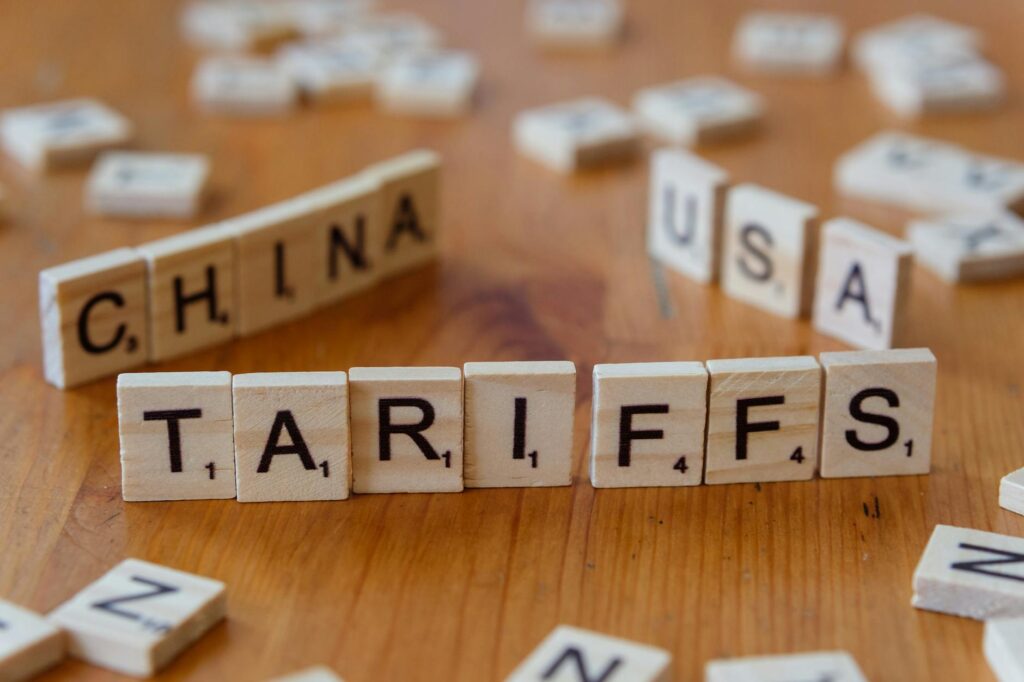
Tariffs function as a price‑based barrier, raising the landed cost of imported inputs and finished goods to protect domestic producers. The immediate effect is a shift in the relative price elasticity of demand, reducing import volumes by an average of 3.8 % for every 1 % tariff increase in the manufacturing sector [2]. This price distortion triggers reciprocal duties, creating a web of “tariff ladders” that amplify the original protectionist intent.
 Education
Mamdani Appoints Kamar Samuels as NYC Schools Chancellor
Mayor-elect Zohran Mamdani has appointed Kamar Samuels as the new NYC Schools Chancellor, a move that could reshape the education…
Read More →SMEs in emerging markets are disproportionately exposed because they lack the scale to diversify sourcing. A 2025 Grant Thornton survey of 1,200 mid‑market firms in India and Kenya shows that 68 % cannot re‑negotiate supplier contracts within a 90‑day window, compared with 34 % of large multinationals [3]. The structural shift toward “domestic‑first” sourcing reduces global trade volumes; WTO data indicate a 2.1 % decline in intra‑regional trade among emerging economies between 2023 and 2025, the first contraction since the 2008‑09 financial crisis [1].
The immediate effect is a shift in the relative price elasticity of demand, reducing import volumes by an average of 3.8 % for every 1 % tariff increase in the manufacturing sector [2].
Historical parallels reinforce the systemic nature of this mechanism. The Smoot‑Hawley Tariff Act of 1930 raised U.S. duties to an average of 20 % and precipitated a 15 % drop in global trade, deepening the Great Depression. Similarly, the 2018–2022 U.S.–China trade war generated asymmetric cost shocks that forced Chinese SMEs in the electronics sector to relocate production to Vietnam, reshaping regional value chains [2].
Layer 2: Systemic Ripples Across the Value Chain
The tariff web extends beyond the immediate import‑export pair, reverberating through logistics, finance, and labor markets. Elevated duties increase customs clearance times by an average of 2.4 days per 5 % tariff increment, inflating inventory carrying costs for SMEs by 1.7 % annually [2]. Freight forwarders report a 12 % rise in container dwell times on major Asian routes, prompting a shift toward air freight for high‑value, low‑volume goods—a cost increase of 25 % to 35 % [4].
Financial institutions respond to heightened risk by tightening trade‑finance lines. The International Finance Corporation (IFC) recorded a 14 % reduction in SME‑focused letters of credit in 2025, citing “increased sovereign risk premiums” linked to tariff volatility [3]. The contraction of trade finance narrows the capital pipeline, limiting SMEs’ ability to invest in technology upgrades or market diversification.
Sectoral asymmetries also emerge. Agriculture‑linked SMEs in Kenya experience a 9 % revenue dip due to U.S. soy tariffs, while Vietnamese electronics assemblers see a 4 % margin uplift from preferential duty reductions under the ASEAN‑EU Free Trade Agreement—a policy counterbalance that underscores the role of institutional power in shaping outcomes [1]. The net effect is a bifurcated competitive landscape where firms embedded in politically favorable trade blocs accrue structural advantages, while others confront a “tariff trap” that erodes growth prospects.
 Investment
SMC Bill seeks to end regulatory overhang; caps SEBI's inspection, probe powers at 8 years
New Delhi, India — The Securities Markets Code (SMC) Bill is set to reshape the regulatory landscape for the Securities…
Read More →SMEs that successfully navigate tariff regimes generate asymmetric career capital for their leadership teams.
Layer 3: Human Capital, Career Capital, and Institutional Power
The structural reallocation of trade flows reshapes career trajectories within emerging economies. SMEs that successfully navigate tariff regimes generate asymmetric career capital for their leadership teams. For example, a mid‑size textile firm in Bangladesh leveraged a “tariff‑avoidance” joint venture with a Sri Lankan partner, preserving export volumes to the EU and positioning its COO for a senior role in a multinational supply‑chain consortium [3]. Conversely, firms that succumb to cost pressures often witness talent outflows; a 2025 labor‑mobility study found a 22 % increase in senior‑engineer attrition from Indian component manufacturers facing U.S. duties [2].
Institutional power concentrates in firms that can influence policy through lobbying or participation in regional trade bodies. The Vietnam Chamber of Commerce’s advocacy for lower electronics duties resulted in a 1.5 % duty reduction under the Comprehensive and Progressive Agreement for Trans-Pacific Partnership (CPTPP), directly enhancing the bargaining power of participating SMEs [1]. This institutional leverage translates into a feedback loop: firms with policy access attract higher‑quality talent, which in turn reinforces their capacity to shape future trade rules.
Economic mobility at the macro level is likewise affected. World Bank estimates indicate that a 5 % increase in average tariffs reduces per‑capita income growth in low‑income countries by 0.12 % annually, widening the global inequality gap [4]. The structural barrier to upward mobility is especially pronounced for SMEs that serve as primary employers in rural regions; reduced export earnings curtail wage growth, limiting the socioeconomic ladder for entire communities.
Closing: 2027‑2030 Outlook and Structural Trajectories
Looking ahead, three structural trajectories will dominate the SME tariff landscape:
- Policy‑Driven Diversification: Emerging economies are intensifying participation in regional trade agreements (RTAs) to offset global tariff volatility. By 2029, the Asian Development Bank projects that RTAs will cover 68 % of intra‑regional trade, offering duty‑free corridors that could restore up to 3.5 % of lost SME export growth [2].
- Digital Trade Infrastructure: The WTO’s “Trade Facilitation for SMEs” initiative, slated for full implementation by 2028, aims to digitize customs procedures, cutting clearance times by 30 % on average. Early adopters in Kenya’s horticulture sector have already reported a 1.9 % increase in net margins post‑digitalization [3].
- Capital Realignment: Private‑equity funds are reallocating capital toward “tariff‑resilient” SMEs—those with diversified supply bases or strong domestic market footholds. By 2030, such funds are projected to command 22 % of emerging‑market private‑equity allocations, reshaping the leadership pipeline toward finance‑savvy entrepreneurs [4].
 Career Advice
Navigating AI-Powered Hiring: Optimizing Your Resume
Explore strategies to optimize your resume for AI-powered hiring processes in 2025, ensuring you stand out in a competitive job…
Read More →The interplay of these trajectories suggests a bifurcated future: firms that embed structural resilience into their operating models will generate new career capital, expand economic mobility, and wield greater institutional influence. Those that remain tethered to vulnerable import‑export configurations risk marginalization in a trade environment where tariffs have become a permanent structural feature rather than a temporary shock.
By 2029, the Asian Development Bank projects that RTAs will cover 68 % of intra‑regional trade, offering duty‑free corridors that could restore up to 3.5 % of lost SME export growth [2].
Key Structural Insights
> [Insight 1]: Persistent tariff elevations are reconfiguring global value chains, forcing emerging‑market SMEs into either domestic‑first sourcing or strategic RTA participation.
> [Insight 2]: The asymmetric impact on capital access and talent retention creates a feedback loop that concentrates institutional power among firms with policy‑shaping capabilities.
> * [Insight 3]: Digital trade facilitation and targeted private‑equity flows are the primary levers that can restore upward economic mobility for SMEs trapped in tariff‑induced cost structures.