

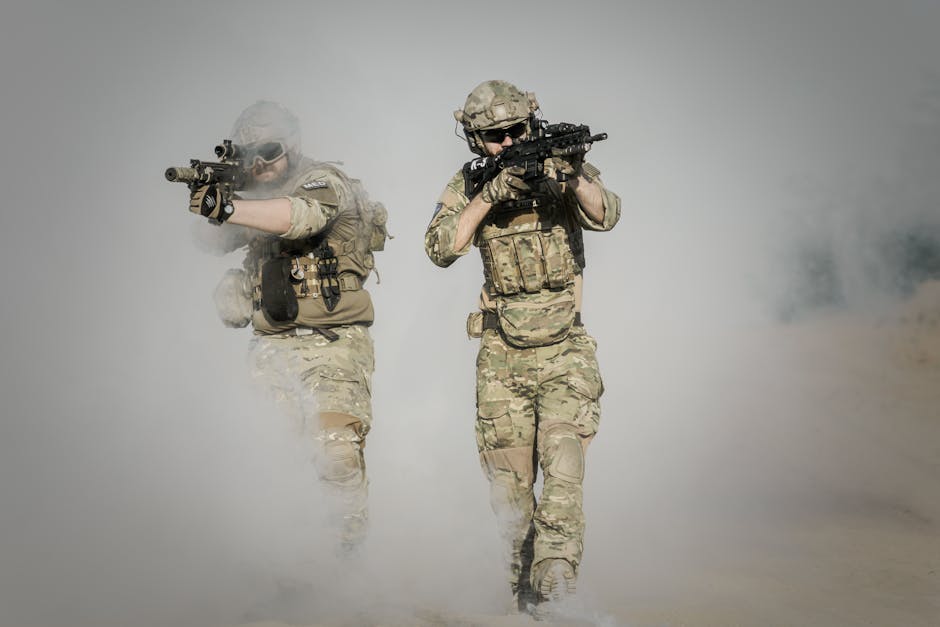
As tensions rise among global powers, the race for artificial intelligence (A.I.) supremacy in military applications intensifies. Recent reports indicate that countries like the United States, China, and Russia are heavily investing in A.I.-driven military capabilities. This competition is not just about technological advancement; it has profound implications for international security and military strategy.
The recent article from The New York Times highlights how the U.S., China, and Russia are ramping up their A.I. military capabilities, comparing the current situation to the nuclear arms race of the Cold War. These nations are developing advanced weapon systems that leverage A.I. to enhance decision-making, targeting, and operational efficiency. As a result, traditional military strategies are being fundamentally altered.
China’s military strategy increasingly emphasizes the integration of A.I. technologies. The country aims to become a global leader in A.I. by 2030, as outlined in its national strategy. This ambition includes the development of autonomous drones and advanced surveillance systems. The implications of these advancements could shift the balance of power in the Asia-Pacific region and beyond.
Economic Consequences of Military A.I. Investments
The economic ramifications of this A.I. arms race are significant. According to Bloomberg, the ongoing conflict in the Middle East is already fueling inflation and impacting consumer sentiment. As nations allocate more resources to military A.I. development, other sectors may suffer from reduced funding. This shift could lead to increased instability in global markets, especially in regions reliant on defense contracts.
Moreover, the competition for A.I. talent is intensifying. Countries are not only vying for technological supremacy but also for skilled workers in the A.I. field. This talent war could lead to higher salaries and better job opportunities for A.I. professionals, further driving innovation. However, it may also create barriers for countries with fewer resources to invest in education and training.
Countries are not only vying for technological supremacy but also for skilled workers in the A.I.
As nations ramp up their A.I. military programs, the potential for economic disruption grows. The increased focus on defense spending could divert funds from critical areas such as education and healthcare. This could exacerbate existing social inequalities and lead to public discontent, particularly in nations facing economic challenges.
Ethical and Strategic Dilemmas
 Government & Policy
UK Weighs Mandatory AI Safety Reporting as Microsoft’s Brad Smith Calls for Global Rules
The UK government is examining how serious AI incidents and near misses should be reported, and Microsoft’s Brad Smith has called for global AI safety…
Read More →The integration of A.I. into military strategy raises ethical and strategic questions. The potential for autonomous weapons systems to make life-and-death decisions without human intervention poses significant moral dilemmas. As countries develop these technologies, the risk of unintended consequences increases, leading to a potential arms race in A.I. warfare.
Additionally, the current geopolitical landscape complicates matters. As tensions rise between major powers, the likelihood of miscalculations increases. A.I.-driven systems could misinterpret data, leading to escalations that might not occur with human decision-making. This unpredictability adds a layer of risk to international relations.
Furthermore, the development of A.I. in military applications could lead to a new kind of warfare. Cyber warfare, misinformation campaigns, and A.I.-enhanced drones could redefine how conflicts are fought. Nations may need to rethink their defense strategies to account for these emerging threats, leading to a fundamental shift in military doctrine.

As the A.I. arms race continues, the implications for global security are profound. Countries must navigate the complexities of developing advanced military technologies while ensuring ethical considerations are addressed. The future of warfare may not only depend on technological superiority but also on the ability to maintain stability in an increasingly competitive landscape.
The future of warfare may not only depend on technological superiority but also on the ability to maintain stability in an increasingly competitive landscape.
International Alliances and Ethical Considerations
In response to the escalating A.I. arms race, nations are forming strategic alliances to bolster their military capabilities. For instance, the U.S. has been strengthening its partnerships with allies in Europe and Asia, focusing on collaborative A.I. research and development. This approach aims to create a unified front against adversaries who may seek to exploit A.I. technologies for aggressive military purposes.
Moreover, international organizations are beginning to address the ethical implications of A.I. in warfare. Discussions at forums such as the United Nations are increasingly centered around establishing norms and regulations governing the use of A.I. in military contexts. The goal is to prevent an unchecked arms race that could lead to catastrophic outcomes, reminiscent of the nuclear arms race of the 20th century.

 AI & Technology
Global trade retools for post‑Cold War realignment
This analysis dissects the mechanisms, systemic implications, and stakeholder impacts that define.
Read More →As the global community grapples with these challenges, the importance of transparency and dialogue among nations cannot be overstated. The potential for misunderstandings and conflicts arising from A.I. miscalculations necessitates a concerted effort to foster communication and cooperation in the realm of military A.I. development.
Written by Career Ahead AI. AI can make mistakes, so verify key facts. Report errors to support@careeraheadonline.com.





