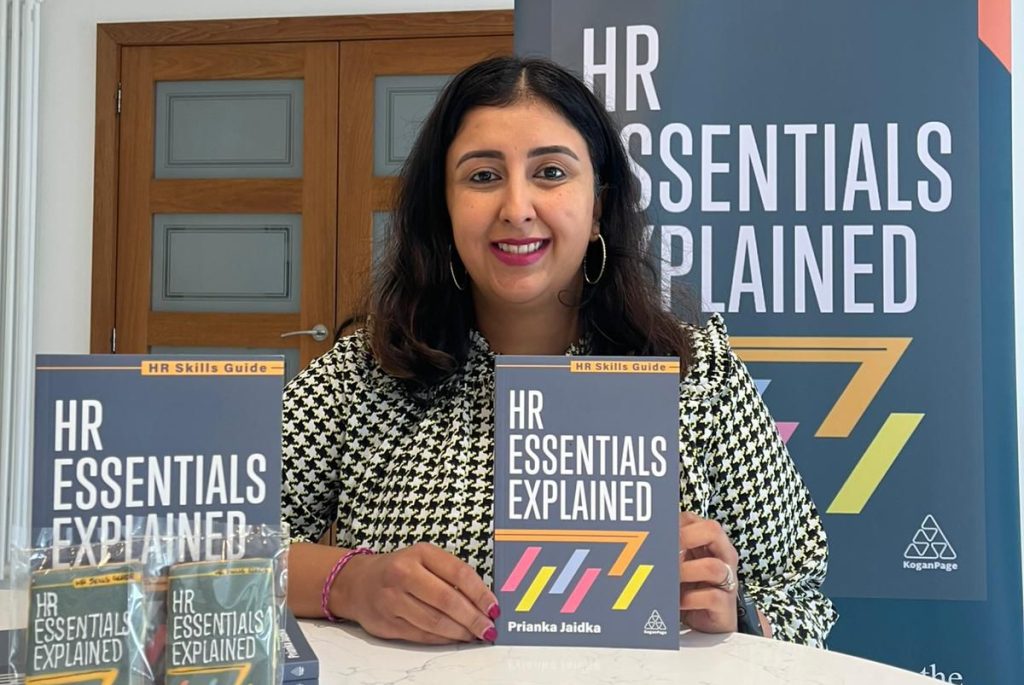
Inspired by Prianka Jaidka’s HR Essentials Explained
Human resources has always been a paradox. It’s the department everyone relies on, but few outside it truly understand. For decades, HR was shorthand for paperwork, compliance, and the occasional awkward meeting. Today, it’s something else entirely: the frontline of how organizations define culture, manage performance, and respond to the social expectations of a new generation.
That shift has left many young professionals—whether they’re stepping into HR roles or simply managing people for the first time—searching for a compass. Prianka Jaidka’s HR Essentials Explained offers one. It’s not a sweeping theory of management or a dense textbook. It’s a practical guide to the everyday realities of hiring, onboarding, performance conversations, and the increasingly urgent demands of ESG and inclusion.
The new HR reality
The workplace has changed faster than most handbooks can keep up. Hybrid schedules, generational shifts, and the demand for purpose-driven work have made HR less about enforcing rules and more about designing experiences. Employees expect fairness, transparency, and values that show up in action, not just in mission statements.
That’s where the “essentials” matter. Jaidka’s book focuses on the fundamentals that actually shape daily work:
HR Essentials Explained doesn’t pretend to solve every problem, but it does something more useful: it gives you a framework to start with.
- Recruitment and onboarding that set the tone for culture
- Performance management that balances accountability with empathy
- Employee relations that rely on consistency, not improvisation
- ESG and inclusion that move from slogans to measurable practices
Why beginners need a map
For someone starting their first HR role, the learning curve is steep. You’re expected to know the law, manage conflict, and advise managers twice your age—all while projecting calm authority. HR Essentials Explained doesn’t pretend to solve every problem, but it does something more useful: it gives you a framework to start with.
“Not being curious enough and fear of asking questions in case they sound silly,” says Prianka Jaidka. “We have confident individuals coming into the workplace which is great to see—it shows the working environment is more welcoming and inclusive. I would suggest keeping a page of questions or development areas on an ongoing basis and find ways to ask questions to different people. This can be in the lift, whilst making a drink or walking to a meeting—it doesn’t always have to be in a formal setting.”
The book’s strength lies in its accessibility. It talks to the reader, not at them. Instead of jargon, it offers scenarios and step‑by‑step approaches. Instead of lofty theory, it grounds advice in the messy realities of workplace life.
Beyond HR job titles
The truth is, HR knowledge isn’t just for HR. A café owner hiring their first barista, a startup founder building a small team, or a hospitality manager trying to reduce turnover all face the same questions: How do I hire fairly? How do I set expectations? How do I handle conflict without losing trust?
The future of work will be shaped less by technology than by how organizations treat their people—how they balance flexibility with accountability, how they embed inclusion into daily practice, and how they connect values to action.
The essentials of HR—clarity, fairness, documentation, and feedback—are universal. Jaidka’s book makes them accessible to anyone who manages people, regardless of title.
The bigger picture
Strip HR down to its core, and it’s not about policies. It’s about relationships. The future of work will be shaped less by technology than by how organizations treat their people—how they balance flexibility with accountability, how they embed inclusion into daily practice, and how they connect values to action.
“This is done by embedding them in the employee lifecycle,” Jaidka explains, “such as inclusive leadership programs, cultural inductions—not just mandatory training—inclusive meeting norms such as rotating facilitators and having accessibility considerations.”
That’s why a book like HR Essentials Explained resonates. It doesn’t promise to make HR easy. It promises to make it understandable. And in a world where the human side of work is more complex than ever, that’s no small thing.
Want to explore the book yourself? You can find HR Essentials Explained here on Amazon.
ESG and inclusion are not add‑ons: These values must be embedded in how you hire, promote, and measure success.
Top 5 Takeaways from HR Essentials Explained
- Hiring sets the culture: The way you define jobs, interview, and onboard shapes how people perceive the organization from day one.
- Feedback is a rhythm, not an event: Regular, structured conversations build trust and keep performance on track.
- Consistency beats improvisation: Document decisions, apply rules fairly, and avoid ad‑hoc fixes.
- ESG and inclusion are not add‑ons: These values must be embedded in how you hire, promote, and measure success.
- HR is everyone’s job: Even if you’re not in HR, clarity, fairness, and empathy are the backbone of effective leadership.
Explore the full book here on Amazon.
Written by Career Ahead AI. AI can make mistakes, so verify key facts. Report errors to support@careeraheadonline.com.