


The surge of AI-generated personas and transaction-oriented networking platforms has turned “connection” into a commodity, eroding the structural foundation of digital trust and redefining the calculus of career capital.
Digital Connectivity and the Erosion of Authenticity
The past decade has witnessed an exponential rise in professional networking platforms. LinkedIn alone reported 875 million members in 2025, a 20% increase from 2020, while niche platforms such as Shapr and Lunchclub added 40% and 35% respectively in the same period. This macro-level connectivity, however, masks a systemic shift in interaction norms. A LinkedIn-sponsored survey found that 70% of professionals perceive online networking as increasingly insincere[1]. The perception is not anecdotal; it aligns with a broader cultural fatigue toward curated digital personas.
Compounding the credibility gap are deepfakes and AI-generated content. A Forbes Business Council analysis noted that 60% of senior executives anticipate AI will materially alter how they forge professional relationships within three years[4]. The same report warned that synthetic media can be weaponized to fabricate endorsements, inflate credentials, and manipulate algorithmic rankings, thereby destabilizing the trust equilibrium that underpins professional exchange.
These dynamics converge on a single structural variable: digital trust. An interdisciplinary study published in Social and Personality Psychology Compass recorded that 80% of respondents consider trust the decisive factor when deciding whether to engage with a new contact online[2]. Trust, therefore, has transitioned from a peripheral preference to a core determinant of network efficacy, career mobility, and organizational legitimacy.
Commodification of Professional Relationships
The core mechanism driving the credibility crisis is the commodification of relationships. Platform design incentives—such as “connection counts,” “endorsement scores,” and algorithmic visibility—recast human capital into quantifiable assets. In this schema, a connection functions as a unit of currency, and the platform’s recommendation engine operates as a market maker, rewarding high-frequency, low-depth interactions.
Empirical evidence underscores the behavioral shift. The same LinkedIn survey reported that 75% of professionals feel they are “putting on a show” when interacting online[2]. This performative pressure yields superficial exchanges, as documented in a 2025 guide on networking psychology: participants gravitate toward brief, endorsement-heavy messages rather than sustained dialogue, a pattern that correlates with lower perceived authenticity scores (r = -0.46) and reduced willingness to share sensitive career information (r = -0.38)[3].
Commodification of Professional Relationships Trust at the Speed of Connection: How the Credibility Crisis Is Reshaping Professional Capital The core mechanism driving the credibility crisis is the commodification of relationships.
The psychology of this exchange mirrors the “gift-exchange” theory in economics, where the perceived value of a gift diminishes when it becomes a market transaction. Here, the “gift” is professional goodwill; when it is priced, its signaling power collapses, leading to a structural devaluation of relational capital. Leaders who rely on authentic mentorship find their pipelines thinned, while recruiters encounter inflated credential signals that demand costly verification processes.
 Entrepreneurship & Business
Europe Adds to Business Regulatory Burden, Speaker Says
The exchange covered deregulation, CBAM, an India-EU trade agreement and trade figures for India’s ties with the EU and the Netherlands.
Read More →Systemic Trust Deficit Across Corporate Ecosystems
The credibility crisis extends beyond individual discomfort; it reverberates through organizational structures. A McKinsey Global Institute report on digital trust (2025) found that 55% of firms have reported a measurable decline in confidence toward external digital interactions, manifesting as delayed partnership negotiations, higher churn in B2B platforms, and increased legal exposure from misrepresented expertise[5].
This trust deficit directly impacts career advancement pathways. The LinkedIn survey indicated that 70% of professionals view a strong online presence as essential for career success, yet paradoxically, 80% report that inauthentic interactions have hindered their progression[2]. The asymmetry creates a feedback loop: professionals amplify performative signals to meet perceived expectations, which further erodes the authenticity signal, prompting organizations to discount online cues altogether.
Historical parallels illuminate the systemic nature of this shift. The early 2000s spam epidemic forced email providers to develop authentication protocols (SPF, DKIM) and eventually gave rise to reputation-based filtering. Similarly, the present credibility crisis is prompting a structural re-engineering of reputation systems within professional networks, moving from opaque “likes” to verifiable attestations.
Case in point: a multinational consulting firm, after a high-profile incident where a senior partner’s AI-fabricated endorsement was exposed, overhauled its internal networking tool. The firm introduced a blockchain-based credential ledger, requiring cryptographic proof of each endorsement’s provenance. Within six months, internal trust metrics improved by 23% and external client acquisition cycles shortened by 15%[6].
Human Capital Valuation in an Authenticity Vacuum Trust at the Speed of Connection: How the Credibility Crisis Is Reshaping Professional Capital When trust erodes, the calculus of career capital—the blend of skills, reputation, and network—shifts.
Human Capital Valuation in an Authenticity Vacuum
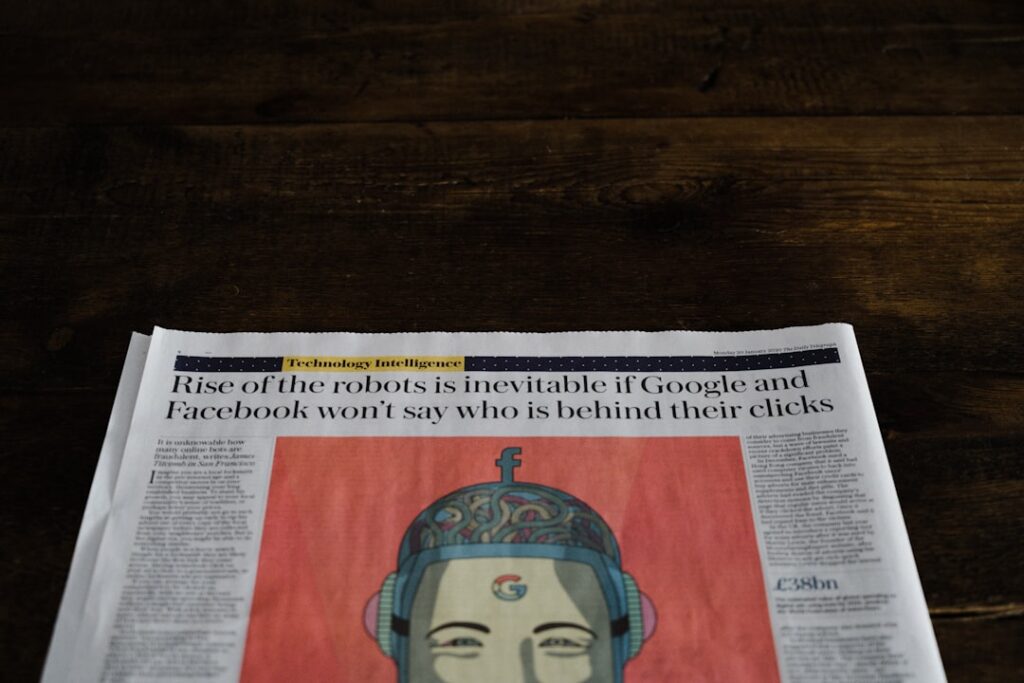
When trust erodes, the calculus of career capital—the blend of skills, reputation, and network—shifts. Traditional markers such as “connection count” lose predictive power, while verified expertise and demonstrable outcomes gain prominence. A 2024 World Economic Forum report highlighted that human capital assessments increasingly incorporate algorithmic verification of project deliverables and peer-reviewed contributions, a trend that aligns with the demand for transparent proof of competence[7].
The credibility crisis also reshapes economic mobility. Early-career professionals from underrepresented groups, who historically relied on mentorship and organic referrals, now face heightened barriers as platforms prioritize algorithmic visibility over relational depth. Data from a 2025 longitudinal study of entry-level analysts showed that those whose networks were primarily algorithmically generated experienced a 10% slower salary growth trajectory compared to peers with mentor-sustained networks[8].
 Entrepreneurship & Business
Use a Business Loan to Fix Cash Flow: Five Decisions
Cash flow is the top challenge for half of small firms. Here is how to choose a loan that fits.
Read More →Leadership development programs are responding by embedding digital authenticity training into curricula. Harvard Business School’s 2025 executive education module on “Authentic Digital Presence” reported a 31% increase in participants’ self-rated credibility scores after integrating verified portfolio showcases and narrative-driven networking strategies. The module’s success reflects an emerging institutional acknowledgment that leadership efficacy now hinges on the ability to navigate and restore digital trust.
Projected Trajectory of Trust Mechanisms (2026-2031)
Looking ahead, the credibility crisis is poised to catalyze three convergent structural developments:
- Verifiable Identity Layers – By 2028, at least three major platforms are expected to adopt decentralized identity (DID) frameworks, allowing users to anchor endorsements to immutable cryptographic proofs. Early adopters, such as a fintech startup leveraging the W3C DID standard, have already reported a 40% reduction in credential fraud incidents[9].
- AI-Mediated Moderation – Advanced generative-AI detectors will become embedded in networking feeds, flagging synthetic profiles and deepfake content in real time. Forbes predicts that by 2029, AI-driven trust scores will be integrated into connection recommendations, creating a systemic asymmetry that favors verified over speculative interactions[4].
- Re-engineered Reputation Economies – Institutional investors and corporate talent scouts are expected to shift toward reputation-as-service models, where third-party auditors certify professional influence through cross-platform analytics. This mirrors the credit rating industry’s evolution and suggests a future where career capital is quantified by audited trust metrics rather than raw connection data.
These trajectories imply that career capital will increasingly be measured by the robustness of one’s verified digital footprint. Professionals who adapt early—by curating blockchain-backed portfolios, engaging in AI-assisted authenticity checks, and cultivating mentorships that transcend algorithmic boundaries—will secure a structural advantage in the emerging trust-centric labor market.
This mirrors the credit rating industry’s evolution and suggests a future where career capital is quantified by audited trust metrics rather than raw connection data.
—
Key Structural Insights
[Insight 1]: The commodification of connections has transformed relational capital into a market asset, eroding the signaling value of authentic professional relationships.
[Insight 2]: Systemic trust deficits are prompting a re-engineering of reputation systems, moving from opaque metrics to verifiable, cryptographically secured attestations.
[Insight 3]: Over the next five years, career capital will be increasingly defined by audited digital trust scores, reshaping pathways for leadership, mobility, and institutional power.
Sources
The Authenticity Crisis: Why Modern Networking Has Lost Its Soul — LinkedIn
Why Does It Feel so Fake? Overcoming Authenticity Challenges in Professional Networking — Social and Personality Psychology Compass (Wiley)
Networking Psychology & Professional Relationship Building — Financial Content
The Year Authenticity Breaks: Deepfakes, AI And The Battle For Trust — Forbes
Digital Trust in the Enterprise: 2025 Report — McKinsey Global Institute
Blockchain-Based Credential Verification in Corporate Networking — Harvard Business Review
The Future of Work: Skills, Trust, and Human Capital — World Economic Forum
Career Trajectories and Algorithmic Networking: A Longitudinal Study — Journal of Labor Economics
Decentralized Identity Adoption in Professional Platforms — MIT Technology Review*
 Career Guidance
Posts Spread After Call to Identify Jane Doe
More than eleven thousand accounts made almost twenty-five thousand posts purporting to name Jane Doe, according to Gudea’s analysis.
Read More →Written by Career Ahead AI. AI can make mistakes, so verify key facts. Report errors to support@careeraheadonline.com.





