US teachers are changing where students write and how they are assessed as AI becomes part of schoolwork.
Teachers are moving assessment into the classroom
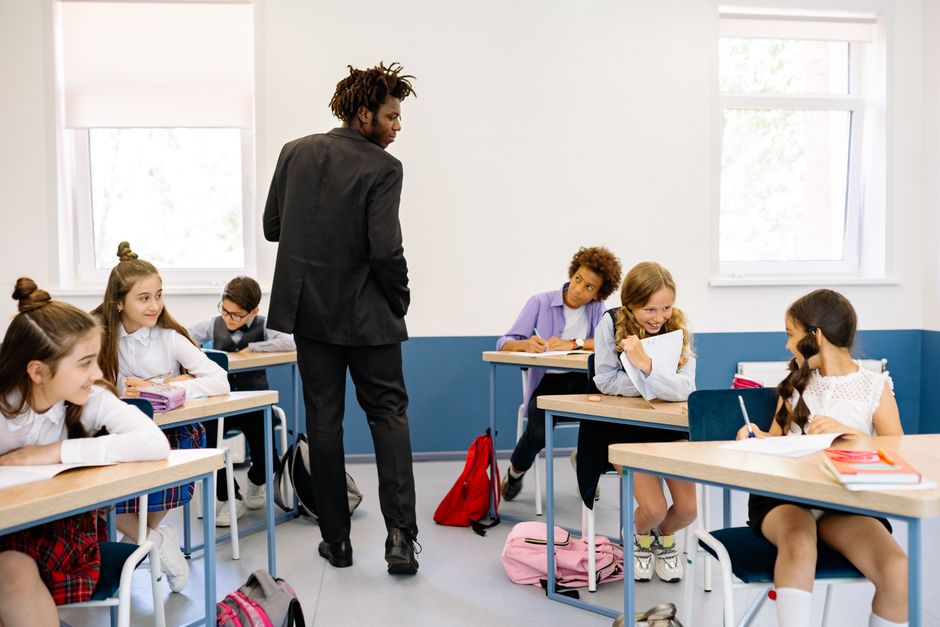
A 2025 RAND survey found that a majority of US students and English, math and science teachers reported using AI for schoolwork. Interviews with a dozen teachers and education experts across the country found educators assigning less take-home work, increasing in-class writing and discussion, and redesigning assignments to measure students’ thinking rather than simply their answers. Together, those changes shift more of the work teachers assess into settings where students do it in front of them.¹
Sixth-grade humanities teacher Tristen Chang asks students fifteen questions about character, plot, theme and metaphor. They can answer in as little as five minutes. Chang said AI is the most drastic technology change in teaching, after a long march of technology changing the work. Her oral questions test students on elements of what they have studied, replacing take-home essays with spoken answers that can be completed during class.¹
More class time gives teachers a view of student work Rusty Shabe, a middle school English teacher in San Francisco, said students often turn to AI at home when they feel overwhelmed.
More class time gives teachers a view of student work
Rusty Shabe, a middle school English teacher in San Francisco, said students often turn to AI at home when they feel overwhelmed. He is responding by devoting more classroom time to writing. With seventh-graders, he takes a month to work on an essay. The extended in-class process gives writing a larger place in the school day, rather than leaving students to complete the whole assignment at home when they may feel unable to manage it.¹
 AI & Technology
AI tools, productivity pressure and the strain of software work
AI coding tools promise faster software development, but the reality is more complicated. Developers report growing pressure to deliver sooner, while research has found that…
Read More →Bobson Wong, a high school math teacher in New York, assigns fewer homework questions and more in-class practice. He says the change helps him monitor how students are working. The adjustment changes the balance between independent practice outside school and exercises teachers can observe as they happen. Wong’s approach puts less weight on the number of completed homework questions and creates more class time to see students work through problems.¹

Studies find different effects from AI-assisted work
Two 2025 studies examined different uses of AI in learning and writing. A Harvard randomized trial found that a custom AI tutor improved learning gains and student engagement. A small MIT Media Lab study found that people using ChatGPT to write essays worked faster but appeared to do less thinking. The findings distinguish a tutor designed for learning from a chatbot used to produce an essay, and show why teachers are changing how they assess the work students submit.¹
Meghan Hyland, a high school English teacher in a New York City suburb, realized some students were going to the bathroom to access AI on their phones. Phones were already banned in her class, but she then required students to leave them behind when they left the room. She also made classwork a bigger component of grades and stopped relying on homework as practice. The changes address phone access and place more grading weight on work completed in class.¹
Teachers use reading choices and paper notebooks
One teacher assigns essays that require students to read scholarly articles typically found behind a paywall. Those readings are protected from AI chatbots, making the choice of source material part of the assignment design. The task directs students to material that chatbots cannot readily access, rather than relying only on a take-home prompt that students can send to an AI tool. It is another way teachers are changing the conditions under which students complete written work.¹
Rex Ovalle, a high school English teacher in a Chicago suburb, tells students to take a composition notebook from a box at the start of class. He limits Chromebook use to roughly ten percent of school days. The notebook gives students a paper-based way to write during lessons, while the limited device schedule reduces how often classroom work is done on a Chromebook. Ovalle’s routine changes both the materials students use and the amount of class time spent on computers.¹
 AI & Technology
AI Automation and Oil Exploration Link Two Global Risks
AI's use in oil exploration and extraction could add carbon dioxide to the atmosphere, while data centre projects face delays and cancellations.
Read More →It is another way teachers are changing the conditions under which students complete written work.¹
Shift Your Work Evidence to Visible Settings
If your role involves producing written or analytical work, expect employers to value process over final output. Teachers now assign less take-home work and grade more in-class writing and discussion, because AI makes unsupervised output hard to trust. For your own work, build evidence of your thinking in real time: keep drafts, show your problem-solving steps, and ask for opportunities to present or explain your work live. This makes your contribution verifiable in an AI-assisted workplace.¹
The Harvard and MIT studies show a clear split: AI tutors improve learning, but AI chatbots reduce thinking. When negotiating pay or choosing a role, ask which tools you are expected to use. A position that pairs you with a learning-focused AI tool may build your skills; one that expects you to produce fast with a chatbot may undercut your development. Also, plan for more in-person or observed assessment in hiring, as employers mirror teachers' shift to monitored work.¹
Sources
Written by Career Ahead AI. AI can make mistakes, so verify key facts. Report errors to support@careeraheadonline.com