University of Essex spin-out Versatile RobotX announced a £1 million-plus investment package on 13 August 2026.The funding, led by the British Design Fund, targets the launch of field-ready robots aimed at reducing labour gaps in UK farming.
Versatile RobotX, a technology company founded by University of Essex researchers, confirmed on 13 August 2026 that it had secured a funding package exceeding £1 million (approximately €1.17 million) to accelerate the commercialisation of its intelligent agricultural robots [1]. The announcement was made from the company’s headquarters in Colchester, England, and reported by multiple news outlets on 17 August 2026 [2].
The investment combines a capital injection from the British Design Fund (BDF) with additional support from university-linked innovation schemes and private investors [1]. Versatile RobotX’s leadership includes Dr Megan Hartley, co-founder and chief technology officer, and Professor David Miller, director of the University of Essex Centre for Robotics [1][2]. The funding will be allocated to final-stage prototype development, field trials, and the establishment of a manufacturing pipeline for the company’s crop-picking and field-monitoring robots [1][2].
Funding Structure and Investor Contributions
The British Design Fund contributed a primary equity investment of £750,000, representing a strategic partnership aimed at scaling UK-based design-led ventures [1][4]. An additional £250,000 was sourced from the University of Essex Innovation Fund and a consortium of angel investors with experience in agri-tech [1][3]. The combined package brings total committed capital to just over £1 million, meeting the threshold for the UK’s Advanced Manufacturing Research Centre (AMRC) support programme [2].
The funding agreement includes milestone-based disbursements tied to prototype validation, regulatory compliance, and market entry targets set for 2027 [1][2]. BDF’s investment terms stipulate a minority equity stake, with provisions for follow-on funding contingent on commercial performance [4]. The University of Essex retains a non-dilutive research grant of £100,000 to support ongoing AI algorithm development for robot perception and navigation [1].
The University of Essex retains a non-dilutive research grant of £100,000 to support ongoing AI algorithm development for robot perception and navigation [1].
Technology Development and Commercialisation Roadmap
Versatile RobotX Secures Over £1 Million to Commercialise Agricultural Robots
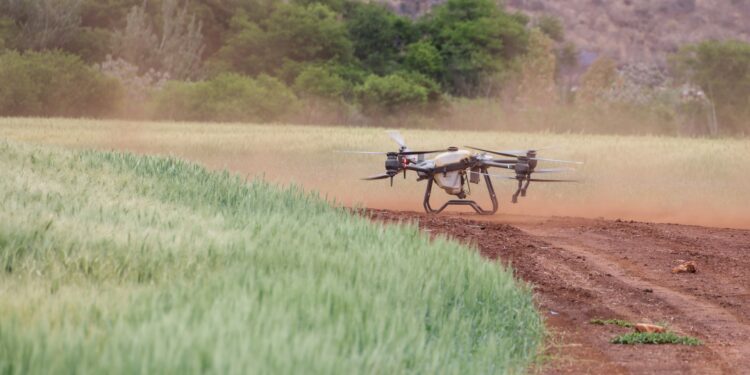
Versatile RobotX’s robot platform integrates computer-vision AI, lightweight composite actuators, and modular end-effectors designed for a range of crops, including strawberries, tomatoes, and lettuce [2][3]. The company has completed laboratory testing of its “HarvestBot” prototype, demonstrating a 30% increase in picking speed compared with manual labour under controlled conditions [2]. Field trials are scheduled for the autumn 2026 season on partner farms in East Anglia, with data collection focused on yield impact, energy consumption, and soil compaction metrics [1][3].
The commercialisation plan outlines a phased rollout: an initial limited-release of 50 units to early-adopter farms in 2027, followed by scaling to 500 units by 2029 as production lines are established in a new facility at the Colchester Business Park [2][4]. Pricing strategy targets a subscription-based model, offering farmers a per-acre usage fee that includes maintenance, software updates, and data analytics services [1]. The company also intends to license its AI perception stack to third-party equipment manufacturers, creating an additional revenue stream [2].
The NTA announced a September 2026 re‑exam for UGC‑NET English, Commerce and Sociology after finding errors in the June papers, prompting student frustration over additional…
The injection of capital enables Versatile RobotX to address acute labour shortages that have affected UK horticulture since 2022, offering a mechanised alternative that can operate continuously under varying weather conditions [3]. Farmers adopting the technology can expect reduced reliance on seasonal migrant workers, potentially lowering labour costs by up to 20% per hectare, according to internal cost-benefit analyses shared with the press [1][3].
Environmental implications include a projected 15% reduction in soil compaction due to the robot’s lightweight design, contributing to improved soil health and lower fertilizer runoff [2]. Data generated by the robots will feed into precision-farming platforms, allowing growers to optimise irrigation and pesticide applications in real time [4].
Educational institutions, including the University of Essex, will benefit from expanded research opportunities, as the commercial partnership creates pathways for graduate placements, joint research projects, and access to field data for academic studies [1]. The funding also reinforces the UK’s strategic agenda to bolster domestic agri-tech capabilities, aligning with government targets to increase the contribution of technology-enabled farming to national food security [3].
Key Facts
Farmers adopting the technology can expect reduced reliance on seasonal migrant workers, potentially lowering labour costs by up to 20% per hectare, according to internal cost-benefit analyses shared with the press [1][3].
What: Versatile RobotX secured over £1 million to commercialise intelligent agricultural robots.
When: Funding announced 13 August 2026; report published 17 August 2026.
University of Essex spin-out Versatile RobotX bags over €1.17 million to commercialise its agricultural robots – https://www.eu-startups.com/2026/08/university-of-essex-spin-out-versatile-robotx-bags-over-e1-17-million-to-commercialise-its-agricultural-robots/
University of Essex spin-out secures £1m investment for crop-picking robots – https://uk.news.yahoo.com/university-essex-spin-secures-1m-160000319.html
Versatile RobotX in Colchester secures £1 million investment – https://www.gazette-news.co.uk/news/26461024.versatile-robotx-colchester-secures-1million-investment/




 News
NewsNews