Vertical farming’s convergence of space multiplication, resource recirculation, and precision climate control positions it as a systemic lever capable of reshaping urban food supply chains, reallocating institutional power, and redefining career capital in the agri‑tech era.
Dek: As urban populations swell and climate volatility erodes traditional arable land, vertically stacked, soilless farms are converting from a venture‑capital curiosity into a systemic lever for economic mobility and institutional power. The next five years will determine whether the sector scales to reshape supply chains, labor markets, and policy agendas worldwide.
Rising Demand Meets Urban Constraints
The United Nations projects a global population of 9 billion by 2050, with urban dwellers accounting for 68 % of that total—a demographic trajectory that compresses food demand into shrinking metropolitan footprints while climate‑induced yield volatility threatens staple supplies [3][5]. Historically, the Green Revolution of the 1960s mitigated a looming famine through high‑yield varieties and centralized input regimes, yet it also entrenched agribusiness dominance and amplified water‑use externalities [6]. Today’s structural challenge differs: the scarcity is spatial as well as climatic, and the solution must integrate production within the cityscape itself.
Vertical farming—defined by multilayered, controlled‑environment agriculture (CEA) that employs hydroponic, aeroponic, or aquaponic media—offers a direct response to this dual pressure. Market intelligence from Bloomberg Intelligence estimates the global vertical farming market will expand from $2.5 bn in 2020 to $13.1 bn by 2026, a compound annual growth rate (CAGR) exceeding 35 % [4]. The capital influx is mirrored by policy signals: the European Union’s Horizon Europe program earmarked €1.2 bn for CEA research in 2023, while Singapore’s “30 by 30” food security plan mandates that 30 % of locally consumed vegetables be produced domestically by 2030, half of which is slated for vertical farms [7]. These macro‑level forces constitute the structural backdrop against which vertical farming’s institutional relevance is being negotiated.
Vertical Farming Architecture and Yield Mechanics
Vertical Farming’s Structural Shift: From Niche Experiment to Core Pillar of Global Food Security
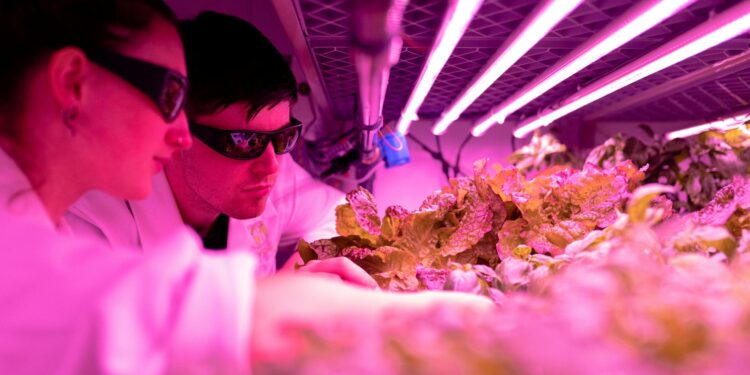
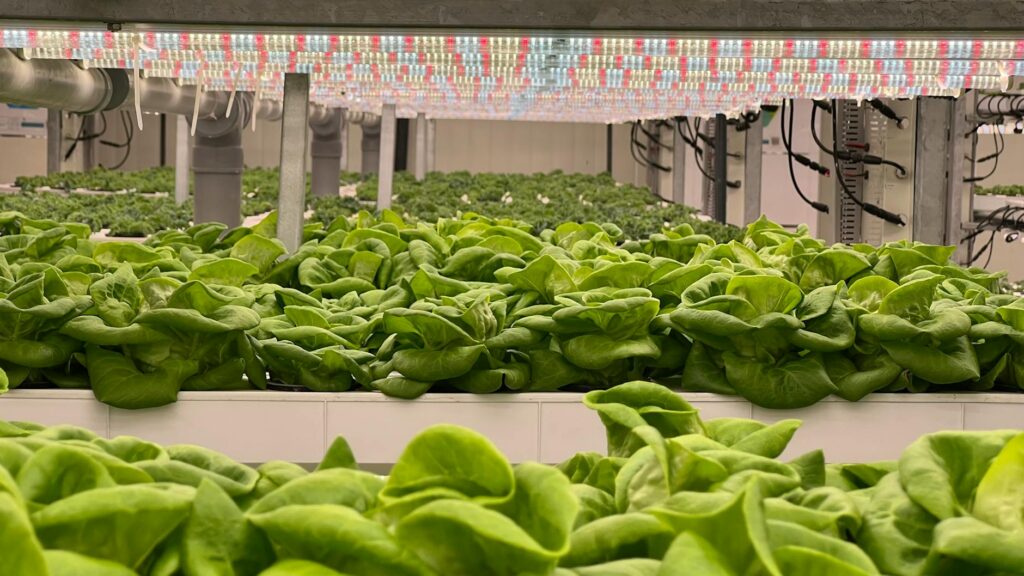
At its core, vertical farming leverages three technological pillars: (1) Space Multiplication—stacking crops in racks up to 12 m high, thereby achieving a land‑use efficiency of 10–20 × that of conventional field agriculture; (2) Resource Recirculation—closed‑loop hydroponic systems that recycle up to 95 % of water, a stark contrast to the 70 % loss rates typical of flood irrigation [2]; and (3) Precision Climate Control—LED spectra tuned to photosynthetic peaks, coupled with AI‑driven environmental sensors that maintain optimal temperature, humidity, and CO₂ levels.
Empirical trials from the University of Arizona’s Controlled Environment Agriculture Center show that lettuce yields in a 12‑layer system can reach 30 kg m⁻² per year, a 30 % uplift over the best field yields under comparable genetics [1]. Energy consumption remains the sector’s primary cost driver; however, integrating renewable micro‑grids can reduce net electricity intensity by 40 %—as demonstrated by AeroFarms’ 2022 retrofit of a 2 MW solar array powering its Newark, New Jersey facility [8].
Empirical trials from the University of Arizona’s Controlled Environment Agriculture Center show that lettuce yields in a 12‑layer system can reach 30 kg m⁻² per year, a 30 % uplift over the best field yields under comparable genetics [1].
Marico has increased its stake in Satiya Nutraceuticals to 84.09%, a strategic move expected to enhance revenue growth amid rising consumer demand for health-focused products.…
The precision layer also introduces a reduction in post‑harvest loss. By harvesting at peak maturity and delivering directly to urban retailers, vertical farms can cut waste from 15 % (global average for fresh produce) to under 3 % [9]. This waste reduction translates into a measurable economic gain: the USDA estimates a $1 bn annual saving in avoided spoilage if 5 % of U.S. fresh produce were sourced from CEA operations [10].
Systemic Ripple Effects Across Supply Chains
Vertical farming’s spatial proximity to end‑consumers reconfigures the traditional agri‑food logistics network. Transportation distances shrink from an average of 1,200 km for bulk grain shipments to under 50 km for leafy greens delivered from a city‑based farm, slashing diesel‑derived CO₂ emissions by an estimated 80 % per kilogram of produce [2]. The resulting logistical simplification reduces the need for cold‑chain intermediaries, a cost component that historically accounts for 12 % of fresh‑produce retail price in the United States [11].
Beyond emissions, the sector’s shift toward modular, container‑based farms introduces a new asset class for institutional investors. Real‑estate investment trusts (REITs) are already structuring vertical farm portfolios as “agri‑tech infrastructure” assets, offering predictable cash flows tied to lease agreements with grocery chains. For example, the 2023 acquisition of a 15‑acre indoor farm by a European REIT generated a 7.2 % yield for investors, outperforming the sector’s median 5.5 % return on agricultural land [12].
Policy implications are equally structural. The United Nations Food and Agriculture Organization (FAO) has incorporated CEA into its 2024 “Sustainable Food Systems” framework, recommending that national agricultural strategies allocate at least 2 % of public R&D budgets to indoor farming technologies [13]. This institutional endorsement signals a reallocation of research capital from conventional extension services toward urban agronomy labs, potentially reshaping the power dynamics between ministries of agriculture and ministries of urban development.
Career Capital and Institutional Power Shifts
Vertical Farming’s Structural Shift: From Niche Experiment to Core Pillar of Global Food Security
The vertical farming value chain creates a distinct hierarchy of career capital. At the operational front, demand for “farm technologists”—engineers proficient in photobiology, fluid dynamics, and data analytics—is projected to rise by 22 % annually through 2028, according to a Labor Department projection for the emerging “controlled‑environment agriculture” occupational series [14]. These roles command median salaries of $95,000, a premium over traditional greenhouse positions, reflecting the asymmetry of specialized skill sets.
This institutional endorsement signals a reallocation of research capital from conventional extension services toward urban agronomy labs, potentially reshaping the power dynamics between ministries of agriculture and ministries of urban development.
Mid‑tier managerial positions—farm operations directors, supply‑chain integrators, and sustainability compliance officers—are increasingly sourced from corporate leadership pipelines, embedding vertical farming within broader corporate ESG (environmental, social, governance) strategies. The “green premium” in executive compensation packages is evident: Bowery’s 2022 proxy statement disclosed a 15 % equity grant tied to carbon‑reduction milestones, aligning leadership incentives with systemic climate goals.
College students are increasingly influencing the A.I. investment landscape, with initiatives like Dorm Room Fund raising substantial capital. This shift highlights the growing importance of…
At the capital‑allocation level, venture capital flows have surged from $300 m in 2019 to $2.1 bn in 2023, with a notable concentration among sovereign wealth funds seeking food‑security diversification [15]. This influx not only fuels technological acceleration but also reconfigures institutional power: traditional agribusiness conglomerates, such as Cargill and Bayer, are acquiring vertical farming startups to integrate CEA into their global supply chains, thereby extending their influence from field to city.
The labor market implications are uneven. While high‑skill positions proliferate, low‑skill farm labor—historically a source of upward mobility in rural economies—faces displacement. The International Labour Organization estimates that automation in CEA could reduce manual labor demand by 40 % per hectare relative to field agriculture, prompting a structural shift in workforce development priorities toward technical training programs sponsored by municipal governments [16].
Trajectory Toward 2030: Investment, Policy, and Scale
The next three to five years constitute a decisive inflection point. Scaling vertical farms from pilot projects to city‑wide networks requires convergence across three structural levers:
> * [Insight 3]: Career capital is polarizing—high‑skill technologists and ESG‑aligned executives gain asymmetric advantage, while low‑skill labor faces displacement, prompting a policy imperative for technical upskilling.
Capital‑Intensive Infrastructure – The average CAPEX for a 10,000 sq ft indoor farm sits at $30 m, a barrier that can be mitigated through public‑private partnership (PPP) models. The 2025 “Urban Food Hubs” initiative in Los Angeles, which blends municipal land leases with federal low‑interest loans, aims to catalyze 12 GW of indoor farm capacity by 2030.
Regulatory Alignment – Zoning codes historically exclude intensive agricultural uses from commercial districts. Recent amendments in Tokyo’s “Smart City” ordinance now permit “vertical agritech zones” with streamlined permitting, a precedent that could be replicated in other megacities.
Technology Standardization – The lack of interoperable data standards hampers cross‑farm analytics. The International Organization for Standardization (ISO) is drafting the ISO 22000‑CEA amendment, expected to be ratified in 2026, which will facilitate supply‑chain traceability and unlock insurance products for indoor farms.
If these levers coalesce, vertical farming could supply up to 12 % of global leafy‑green consumption by 2030, reducing agricultural water withdrawals by an estimated 300 km³ annually—a volume equivalent to the annual flow of the Mekong River [2]. Conversely, failure to address energy intensity and policy inertia could stall growth, relegating the sector to a niche premium market with limited impact on systemic food security.
Key Structural Insights
> [Insight 1]: Vertical farming’s land‑use efficiency and water recirculation create a systemic lever that can offset up to 12 % of global leafy‑green demand, reshaping urban supply chains.
> [Insight 2]: The sector’s capital architecture redirects institutional power from traditional agribusiness to integrated agri‑tech REITs and sovereign investors, redefining governance of food production.
> * [Insight 3]: Career capital is polarizing—high‑skill technologists and ESG‑aligned executives gain asymmetric advantage, while low‑skill labor faces displacement, prompting a policy imperative for technical upskilling.
Tiffany McGhee emphasizes the need for companies to demonstrate the effectiveness of their AI investments in earnings reports, as global AI spending is projected to…



 Entrepreneurship & Business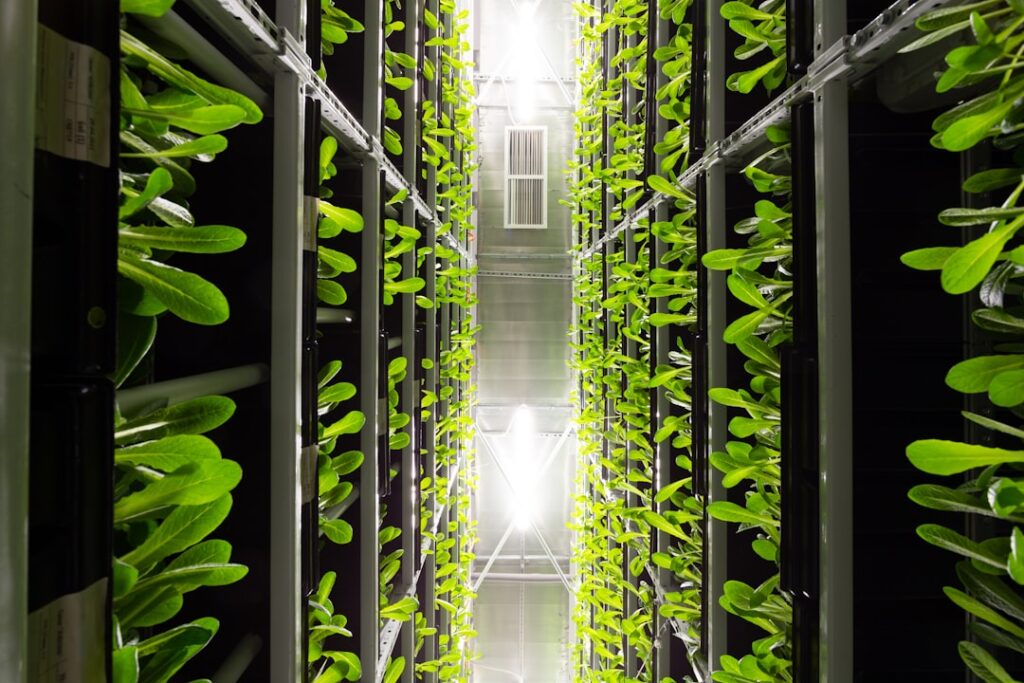
 Entrepreneurship & Business
Entrepreneurship & Business