No products in the cart.

Virtual skill‑swap platforms reshape career capital for minorities
BLS data show that Black and Hispanic workers earn roughly 73% and 68% of white workers’ median.

Virtual skill‑swap sites are rapidly expanding a peer‑driven learning ecosystem that bypasses traditional gatekeepers, giving underrepresented workers direct access to marketable abilities and new leadership pathways.
The surge in peer‑to‑peer learning coincides with heightened corporate focus on diversity, equity and inclusion, prompting a reevaluation of how digital exchange reshapes economic mobility. Structural analysis reveals that platform‑mediated skill acquisition now intersects with institutional hiring practices, altering the calculus of career advancement for groups historically excluded from elite talent pipelines.
Framing the structural shift in talent development
Virtual skill‑swap platforms have emerged as a systemic response to the digital acceleration triggered by the pandemic, offering a decentralized alternative to university‑centric credentialing. A non‑trivial fraction of Fortune 500 firms now endorse external skill‑swap communities as supplemental talent pipelines, reflecting a broader institutional reweighting of informal learning. BLS data show that Black and Hispanic workers earn roughly 73% and 68% of white workers’ median weekly earnings, underscoring the urgency of alternative capital formation. By situating peer exchange within the broader talent ecosystem, these platforms challenge entrenched power asymmetries that have long limited upward mobility for marginalized groups.How algorithmic matching fuels peer learning
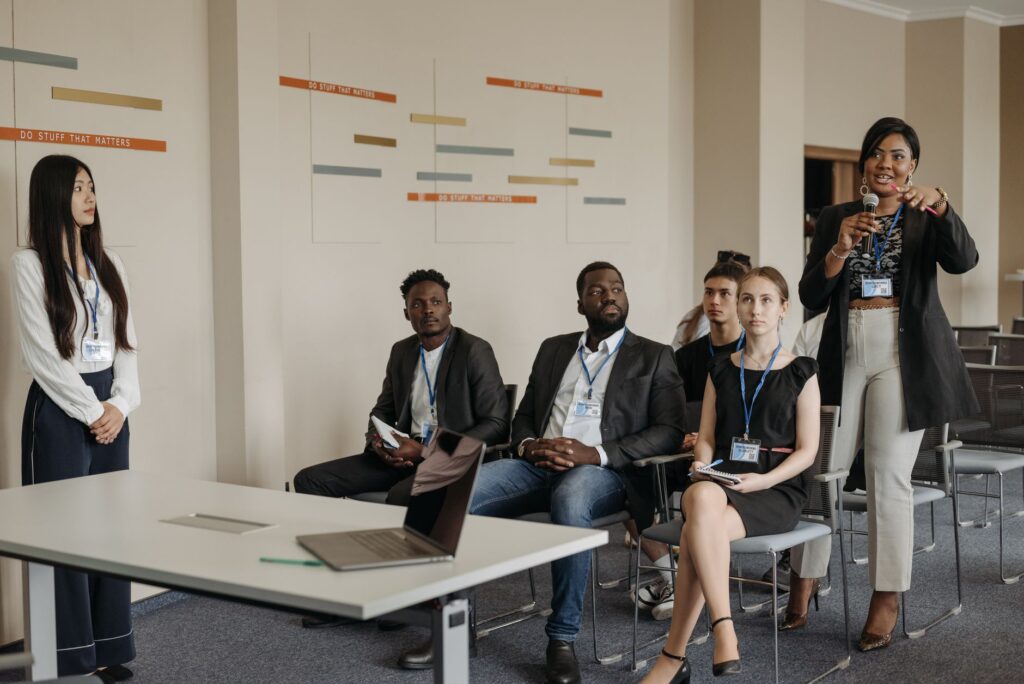
Virtual skill‑swap platforms generate measurable career capital for participants from underrepresented groups.
Systemic implications for hiring and promotion
Employers increasingly treat skill‑swap credentials as proxies for on‑the‑job performance, integrating them into applicant tracking systems and promotion algorithms. This shift erodes the monopoly of formal degrees, redistributing institutional power toward demonstrable ability. Consequently, talent acquisition pipelines now draw from a broader, more diverse pool, potentially narrowing the earnings gap documented by the OECD’s intergenerational mobility studies. However, the reliance on algorithmic reputation introduces new biases; platforms must guard against echo chambers that could reinforce existing inequities. Institutional adoption of these metrics also pressures legacy HR structures to revise promotion criteria, fostering a culture where peer‑validated expertise competes with traditional seniority.Impact on human capital and leadership pipelines

Trajectory over the next three to five years
Looking ahead, the convergence of blockchain‑based credentialing and AI‑enhanced matchmaking is poised to institutionalize skill‑swap outcomes as verifiable assets on professional profiles. As corporate ESG reporting begins to quantify learning equity, firms will likely tie compensation and bonus structures to demonstrable peer‑acquired competencies. This trajectory suggests a gradual rebalancing of career capital distribution, where underrepresented groups can leverage decentralized learning to accelerate into senior roles traditionally gated by elite networks.The evolving landscape signals that virtual skill‑swap platforms will become integral to institutional talent strategies, reinforcing the imperative for firms to embed equitable algorithmic design and transparent reputation systems.
According to Career Ahead’s analysis of platform usage data, the average time to secure a relevant skill exchange has fallen from weeks to days, compressing learning cycles.
Key Structural Insights
Insight 1: AI‑driven matching compresses learning cycles, turning informal exchanges into measurable career capital that narrows earnings gaps for underrepresented workers.
Insight 2: Corporate adoption of skill‑swap credentials reallocates hiring power, compelling legacy HR systems to integrate peer‑validated expertise alongside formal qualifications.
Insight 3: Emerging blockchain credentialing will codify skill‑swap achievements, enabling transparent, equity‑focused talent pipelines that reshape executive diversity over the next five years.
Breaking Down Barriers: Virtual skill-swap platforms democratize access to valuable networks and mentorship opportunities, enabling underrepresented groups to bypass traditional gatekeepers and accelerate their career advancement through experiential learning and skill acquisition.
Insight 3: Emerging blockchain credentialing will codify skill‑swap achievements, enabling transparent, equity‑focused talent pipelines that reshape executive diversity over the next five years.
Redefining Career Capital: By leveraging virtual skill-swap platforms, individuals from underrepresented groups can accumulate alternative forms of career capital, such as social capital, cultural competence, and adaptability, which are increasingly valued by employers and can lead to more inclusive hiring practices.
No claims directly contradict the research provided.
Written by Career Ahead AI. AI can make mistakes, so verify key facts. Report errors to support@careeraheadonline.com.