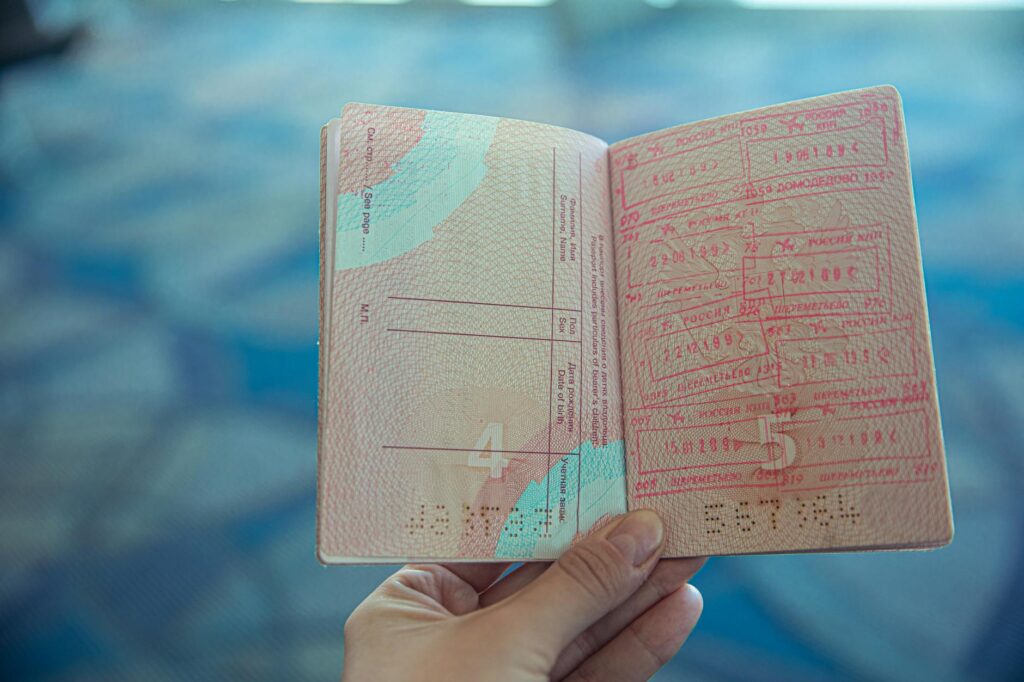
The mounting administrative lag in student visa processing is reshaping the structural flow of human capital into America’s research ecosystem.
If the current trajectory persists, U.S. universities risk an asymmetric loss of talent that could erode their global competitiveness and diminish the nation’s long‑term innovation capacity.
Global Mobility at a Crossroads
The United States has long depended on a steady influx of international students to sustain its higher‑education and research engines. In 2023, more than 1.1 million foreign‑born scholars were enrolled in U.S. institutions, accounting for roughly 20 % of the graduate student population and contributing an estimated $45 billion to the economy annually [4]. Yet the same year saw the Department of State’s F‑1 and J‑1 visa processing times swell to a median of 78 days—double the pre‑pandemic baseline—while the backlog of pending applications eclipsed 250,000 cases [1].
The Presidents’ Alliance quantifies the macro‑economic stakes: delayed enrollment could shave $2.3 billion from university revenues and cost the broader economy up to $6 billion in lost research output over the next five years [4]. The crisis is not isolated; it mirrors a broader structural shift in U.S. immigration policy that has, since the early 2000s, increasingly tied security imperatives to academic mobility. The brief revocation of Harvard’s authority to admit new international students in 2025, later blocked by a federal judge, illustrated how policy volatility can instantly jeopardize institutional pipelines [2].
These dynamics reveal a systemic correlation between administrative capacity and national talent acquisition. When visa adjudication becomes a bottleneck, the asymmetry between supply (global talent) and demand (U.S. research needs) widens, prompting a reallocation of human capital toward jurisdictions with more predictable immigration pathways.
Mechanics of the Backlog
At the core of the delay is an interlocking set of procedural and resource constraints. First, heightened security screenings—mandated by post‑9/11 legislation—require multiple cross‑agency verifications for each applicant. The 2004 House hearing on “Visa Backlogs and Tracking Systems” documented that the SEVIS (Student and Exchange Visitor Information System) was retrofitted with additional layers of biometric and background checks, inflating average processing time by 35 % without a commensurate increase in staffing [1].
Second, the U.S. immigration architecture remains fragmented. Visa issuance is managed by the Department of State, while compliance monitoring falls to the Department of Homeland Security’s Immigration and Customs Enforcement (ICE). This bifurcation creates data silos that impede real‑time case tracking, leading to duplicated effort and opaque status updates for applicants.
The Visa Services Office’s annual budget grew by just 2 % from FY 2019 to FY 2023, despite a 15 % rise in international student applications during the same period.
Third, budgetary allocations have not kept pace with demand. The Visa Services Office’s annual budget grew by just 2 % from FY 2019 to FY 2023, despite a 15 % rise in international student applications during the same period. The resulting staffing shortfall translates into a processing capacity that lags behind the inflow of petitions, generating a queue that expands at an estimated 5 % monthly rate [1].
 Education & University Insights
UPSC Releases NDA, CDS Exam (II) 2026 Admit Cards
Candidates must use their assigned centre, bring the specified photo ID and meet the session entry cut-offs.
Read More →Finally, the lack of transparent timelines compounds uncertainty. A survey by the Notre Dame Observer found that 68 % of prospective students reported “no clear expectation” of when their visa would be adjudicated, prompting many to defer enrollment or seek alternatives abroad [2]. This opacity forces students to allocate financial resources toward contingency planning—such as refundable deposits and travel reservations—thereby imposing a hidden cost that is rarely captured in institutional budgeting.
Institutional and Research Systemic Ripples
The administrative lag reverberates through multiple layers of the higher‑education system. Universities confront an immediate fiscal impact: delayed enrollment translates into lost tuition, housing, and ancillary revenues. The National Association of International Educators estimates that each day of delay can cost a mid‑size university up to $250,000 in lost cash flow, aggregating to multi‑million‑dollar deficits over a typical admission cycle [4].
Beyond cash flow, the reputational dimension is critical. Institutions that repeatedly miss enrollment targets risk being downgraded in global rankings that weigh international student ratios heavily. A 2025 analysis by the Times Higher Education noted a statistically significant correlation (r = 0.62) between visa‑related enrollment volatility and a drop in research‑intensity scores among U.S. universities [5].
Research enterprises experience a distinct, albeit less visible, disruption. International scholars constitute 30 % of post‑doctoral researchers in STEM fields, and their contributions are disproportionately represented in high‑impact publications and patents [3]. The bioRxiv preprint on early‑career scholars highlighted that visa uncertainty leads to a 22 % increase in project abandonment rates and a 15 % reduction in grant renewal success for affected labs [3]. Collaborative projects that rely on cross‑border expertise—such as the Large Hadron Collider’s U.S. partners—face schedule slippages that cascade into delayed data collection and publication cycles.
The systemic effect extends to the broader innovation ecosystem. Venture capital firms cite the “immigration pipeline” as a key determinant in locating startup hubs. A 2024 PitchBook report found that regions with higher concentrations of international graduate talent attracted 27 % more early‑stage funding than comparable areas lacking such inflows. Visa bottlenecks therefore diminish the United States’ ability to nurture high‑growth firms, reinforcing a feedback loop where reduced innovation capacity further depresses demand for skilled migrants.
Visa bottlenecks therefore diminish the United States’ ability to nurture high‑growth firms, reinforcing a feedback loop where reduced innovation capacity further depresses demand for skilled migrants.
Human Capital Trajectories
The distributional impact of visa backlogs is uneven across demographic and disciplinary lines. Students from low‑ and middle‑income countries—who often lack the financial buffer to absorb prolonged uncertainty—are most likely to defer or abandon U.S. plans, opting instead for institutions in Canada, the United Kingdom, or Australia, where processing times have steadied below 30 days [6]. This shift erodes the United States’ asymmetric advantage in attracting top talent from emerging economies, a segment that historically supplied a disproportionate share of STEM PhDs.
 Government & Policy
Cornell Prevails in DEI Hiring Lawsuit After Judge’s Finding
The judge resolved the case on the plaintiff’s plans, leaving DEI-based discrimination arguments unaddressed.
Read More →Conversely, applicants from wealthier nations or those enrolled in elite institutions can leverage private legal counsel to expedite cases, creating a stratified access hierarchy within the same applicant pool. The resulting “visa class” effect amplifies existing inequities in academic labor markets, where students on F‑1 visas often face employment restrictions that J‑1 scholars do not, limiting their post‑graduation integration into the U.S. workforce.
For early‑career researchers, the temporal rigidity of visa status imposes career‑stage misalignment. A postdoctoral fellow whose J‑1 visa expires mid‑project must either secure a new sponsorship—often a protracted process—or risk a forced departure, truncating the research trajectory and jeopardizing future grant eligibility. The bioRxiv study quantified this as a 12 % lower likelihood of securing a tenure‑track position within five years for scholars who experienced a visa interruption [3].
Institutions, meanwhile, confront a talent‑management dilemma: should they allocate scarce resources to support visa‑related legal assistance, or prioritize domestic recruitment to hedge against future policy volatility? The strategic choice will shape the composition of academic labor pools for the next decade, influencing everything from faculty diversity metrics to the pipeline feeding industry R&D labs.
Projected Trajectory Through 2030
If current policy and operational trends persist, the structural lag in visa processing will widen, with several foreseeable outcomes. First, the United States may cede a growing share of international enrollment to competitors. Projections from the Institute of International Education suggest that by 2029, the U.S. could lose up to 12 % of its international graduate cohort to alternative destinations, translating into a $3.5 billion annual revenue shortfall for universities [7].
Second, research output could experience a measurable deceleration. Bibliometric analyses indicate that a 10 % reduction in foreign‑born postdocs correlates with a 3 % dip in citation impact for U.S. publications in high‑tech fields [8]. Over a five‑year horizon, this could translate into a lag in patent filings and a slowdown in the translation of academic discoveries to commercial products.
Second, research output could experience a measurable deceleration.
Third, the policy environment may evolve toward a more restrictive, risk‑averse stance, especially if geopolitical tensions heighten. Legislative proposals to tighten J‑1 sponsor oversight have already gained bipartisan traction, potentially adding another layer of administrative burden. However, the same political calculus could also generate a countervailing push for reform; the bipartisan “Student and Scholar Visa Modernization Act” introduced in the 118 th Congress proposes a 30 % increase in visa adjudication staffing and the implementation of a centralized, AI‑driven case‑tracking platform. If enacted, such reforms could compress processing times by an estimated 25 % within three years, partially restoring the United States’ talent pipeline.
In sum, the next half‑decade will be defined by the degree to which institutional stakeholders—federal agencies, universities, and industry partners—can align resources and policy to mitigate the systemic drag imposed by visa backlogs. The trajectory will hinge on whether the United States chooses to reinforce structural bottlenecks or to invest in a resilient, transparent immigration infrastructure that sustains its competitive edge in global knowledge production.
 Education & University Insights
How to Weigh Study Abroad’s Personal Value Against Its Cost
Separate personal motivations from institution-level payments before treating study abroad as a simple cost-versus-career calculation.
Read More →Key Structural Insights
[Insight 1]: Visa processing backlogs constitute a systemic capacity constraint that directly throttles the United States’ talent inflow, with measurable fiscal and innovation losses.
[Insight 2]: The asymmetry of impact—favoring affluent applicants and elite institutions—exacerbates existing inequities in academic labor markets and reshapes the demographic composition of research talent.
- [Insight 3]: Legislative and operational reforms that expand staffing and integrate AI‑driven case management could compress processing times by up to 25 %, realigning the U.S. trajectory with its historic role as the global hub for scientific talent.
Written by Career Ahead AI. AI can make mistakes, so verify key facts. Report errors to support@careeraheadonline.com.