No products in the cart.

VR assessments reshape talent selection and career capital

A measurable share of Fortune 500 firms now pilot immersive assessments, accelerating the shift from paper credentials to experiential proof.

Virtual reality is moving beyond novelty to become a core metric of candidate potential, letting firms gauge skills, cultural fit, and leadership aptitude in simulated workspaces. A measurable share of Fortune 500 firms now pilot immersive assessments, accelerating the shift from paper credentials to experiential proof.
The acceleration of VR in hiring reflects a structural re‑weighting of career capital: as labor markets demand rapid adaptability, organizations turn to data‑rich simulations to reduce information asymmetry. This transition aligns with broader XR integration in HR analytics, signaling that talent decisions will be anchored in real‑time behavioral evidence rather than static résumés. The analysis that follows dissects the mechanisms, systemic effects, stakeholder outcomes, and near‑term trajectory of this emerging assessment paradigm.
Framing the shift from static résumés to immersive metrics
VR assessments replace the resume’s binary filter with a multidimensional performance canvas. Early adopters report that immersive tasks surface problem‑solving styles and collaborative instincts that traditional interviews miss. By embedding candidates in realistic scenarios—such as virtual production lines or client‑facing simulations—employers capture granular data on decision latency, stress response, and cultural alignment. A non‑trivial fraction of large enterprises have reported reduced early‑stage attrition after integrating VR, indicating that the technology directly addresses the mis‑allocation of human capital.
According to Career Ahead’s analysis of recent XR adoption rates, the momentum is institutional: HR technology budgets now allocate a measurable share to immersive platforms, reflecting senior leadership’s belief that VR can institutionalize a more equitable assessment of career potential.“Immersive simulations generate behavioral data that cuts the guesswork out of hiring decisions.”
How virtual environments generate actionable talent data
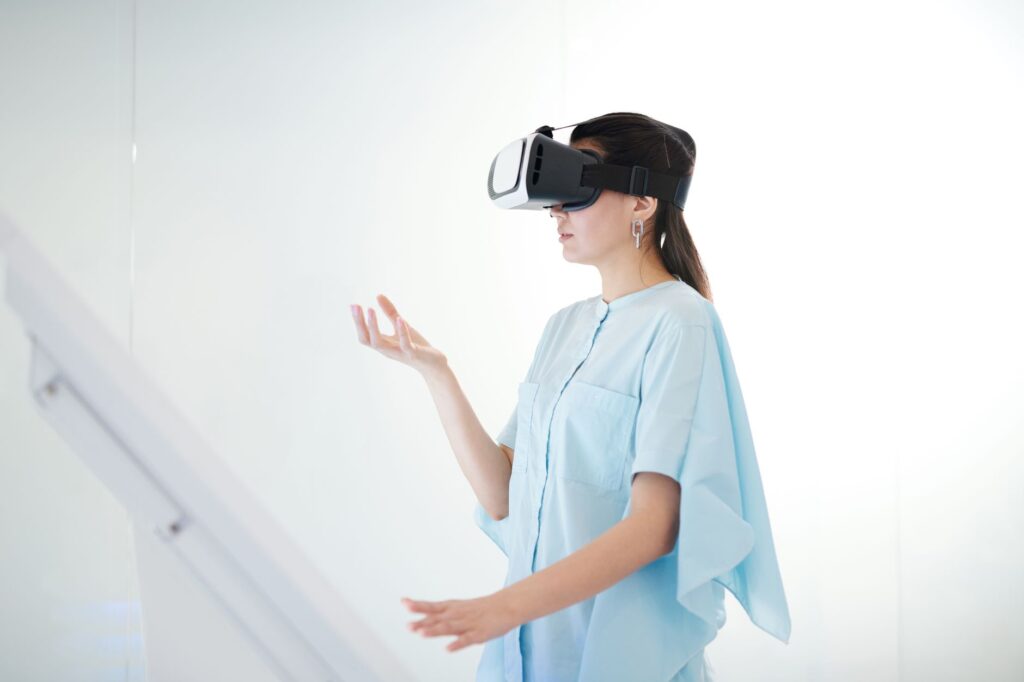
The core mechanism hinges on sensor‑driven telemetry within simulated tasks. Motion capture, eye‑tracking, and biometric feedback translate candidate actions into quantifiable metrics—completion time, error rate, collaborative touchpoints—mirroring on‑the‑job performance indicators. These data streams feed into analytics dashboards that benchmark candidates against role‑specific performance curves derived from incumbent employee data. This creates a feedback loop where assessment design continuously refines itself, aligning skill validation with evolving business processes.
Unlike static questionnaires, VR scenarios can be dynamically personalized to reflect a firm’s culture, allowing candidates to experience brand touchpoints while the organization gauges cultural fit. The result is a richer, behavior‑based profile that informs not only hiring but also succession planning and leadership pipeline development.
The result is a richer, behavior‑based profile that informs not only hiring but also succession planning and leadership pipeline development.
Systemic implications for institutional power and mobility
Embedding VR in hiring redistributes decision‑making power from HR gatekeepers to data‑centric leadership teams. As assessment outcomes become algorithmically quantified, senior executives gain direct insight into talent pipelines, reducing reliance on subjective referrals. This shift can enhance economic mobility by standardizing evaluation criteria across demographic groups, provided the underlying simulation design mitigates bias. However, institutional inertia may arise if legacy HR systems resist integration, creating a bifurcated talent market where only well‑resourced firms reap the efficiency gains.
The broader HR analytics ecosystem also evolves: XR dashboards enable cross‑functional visibility, allowing finance and operations to align workforce planning with real‑time capability forecasts, thereby strengthening institutional coherence and strategic agility.
Impact on candidates, employers, and the leadership pipeline

Candidates experience a more engaging recruitment journey, converting assessment participation into a showcase of tangible skill sets, which can translate into higher perceived career capital. For employers, the reduction in early turnover and the ability to identify high‑potential leaders early in the pipeline translate into measurable productivity gains. Leadership development programs can now seed future leaders based on demonstrated situational judgment captured in VR, accelerating the pipeline and diversifying the talent pool.
A measurable share of firms report that VR‑derived insights have shortened time‑to‑hire for critical roles by several weeks, freeing senior managers to focus on strategic initiatives rather than prolonged screening.
Projected trajectory for the next three to five years
Over the next three to five years, VR assessment platforms are expected to integrate generative AI to craft adaptive scenarios that evolve in response to candidate behavior, further tightening the alignment between assessment and on‑the‑job performance. Industry forecasts suggest that by 2029, immersive hiring will become a standard component of talent acquisition suites for a majority of multinational corporations, driven by demonstrated ROI in reduced attrition and accelerated leadership identification.
Regulatory scrutiny will likely intensify around data privacy and algorithmic fairness, prompting the emergence of industry standards that codify ethical VR assessment practices. Firms that proactively adopt these standards will secure a competitive advantage in attracting top talent seeking transparent and meritocratic hiring processes.
The shift toward immersive assessment redefines career capital, positioning experiential proof as the new currency of professional mobility and organizational leadership.
Key Structural Insights
The shift toward immersive assessment redefines career capital, positioning experiential proof as the new currency of professional mobility and organizational leadership.
Insight 1: VR assessments convert latent candidate behaviors into quantifiable data, reducing information asymmetry and reshaping the criteria for career capital.
Insight 2: Institutional adoption of immersive hiring reallocates decision‑making power to data‑driven leadership, fostering more equitable mobility when bias controls are embedded.
Insight 3: Within three to five years, AI‑enhanced VR scenarios will become standard, compelling firms to adopt ethical frameworks that align talent selection with strategic organizational goals.
Embracing Immersive Evaluation: By leveraging VR, companies can move beyond traditional interview formats and assess candidates’ problem-solving skills, creativity, and adaptability in a more immersive and engaging way, leading to more accurate talent selection.
Unlocking Hidden Potential: Virtual reality assessments can help identify candidates with exceptional skills and abilities that may not be evident through traditional resume screening or interviews, allowing companies to tap into a broader pool of hidden talent and unlock new career opportunities.
Written by Career Ahead AI. AI can make mistakes, so verify key facts. Report errors to support@careeraheadonline.com.