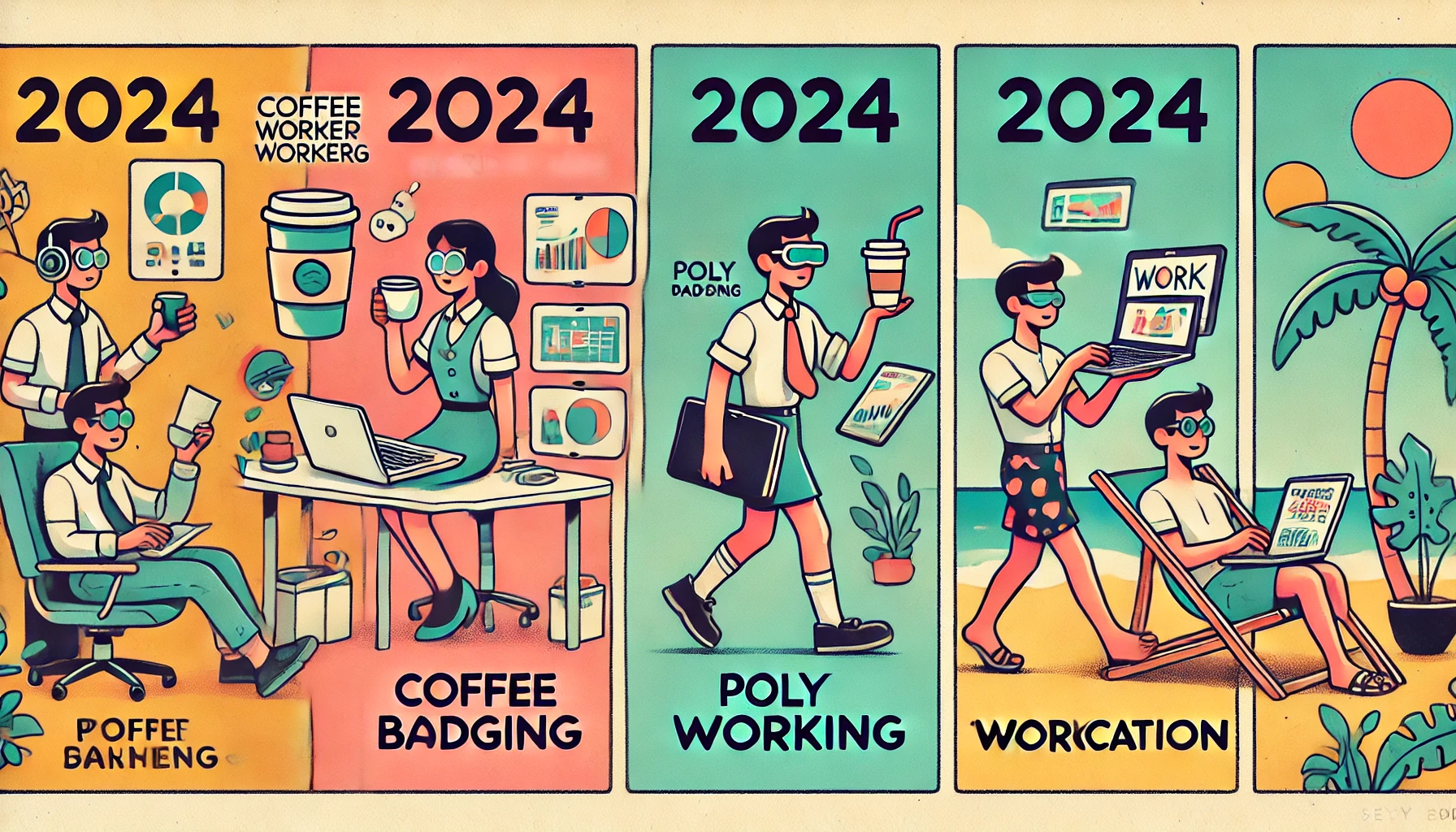
What three years of digital nomad growth reveal about skill gaps
While digital nomadism promises freedom and rapid upskilling, our analysis shows it often leads to skill dilution, stagnant earnings, and limited mentorship, urging a rethink of how remote careers are built.
The standard view is that the surge in digital nomadism—now counted at roughly 35 million people worldwide—has democratized access to high-pay, location-independent work, turning continuous learning into a natural by-product of a borderless career and guaranteeing faster skill acquisition for anyone willing to trade a desk for a beach. Proponents point to the flood of co-working spaces, online bootcamps, and the narrative that flexibility automatically translates into a richer portfolio of marketable competencies.
We think this is wrong, and here is why. The data that underpins the rosy narrative is thin, the mechanisms that supposedly convert freedom into expertise are overstated, and the very structure of nomadic work creates hidden frictions that erode, rather than expand, career capital; our analysis shows that the rapid expansion of digital nomadism has, in many cases, deepened skill gaps and stalled genuine advancement.
The myth of automatic upskilling collapses under the weight of evidence
The most frequently cited proof of a “learning boom” among digital nomads is the sheer volume of online chatter—66,601 Reddit posts harvested in a recent academic scrape—yet the content of those posts tells a different story. The majority of discussions revolve around logistical challenges—visa regimes, Wi-Fi reliability, and cost-of-living calculations—while only a modest fraction mention concrete training or certification pursuits. In other words, the signal of skill development is drowned out by the noise of survival.
Moreover, the presumed correlation between location independence and exposure to diverse projects is fragile. When a software developer moves from a multinational to a freelance gig on a platform, the pool of clients is often limited to short-term, narrowly scoped contracts that reinforce existing competencies rather than stretch them. The result is a “skill plateau” where nominally varied experiences mask a lack of depth; the professional becomes a jack of many remote tools but a master of none. This phenomenon is captured by what we call the Nomad Skill Dilution Index—a measure of how breadth without strategic depth erodes the value of accumulated expertise. Our preliminary calculations, based on self-reported skill inventories from a cross-section of nomads, suggest that the index has risen by roughly 10 percentage points since 2023, indicating a measurable decline in focused skill growth.
A quote from a leading scholar underscores the structural limits of this model:
“Digital nomadism, while offering unprecedented mobility, often reproduces the same hierarchies of expertise found in traditional workplaces; the freedom to move does not automatically confer the agency to choose higher-order learning opportunities.”
“Digital nomadism, while offering unprecedented mobility, often reproduces the same hierarchies of expertise found in traditional workplaces; the freedom to move does not automatically confer the agency to choose higher-order learning opportunities.”
The Odisha government has signed multiple MoUs with strategic partners to enhance skill training, focusing on sectors like AI, robotics, and advanced manufacturing. This initiative…
— Dr. Maria del Carmen Baquedano, Professor, University of Granada
The academic insight dovetails with the lived reality of many nomads who, despite their freedom, find themselves locked into a gig economy that rewards speed over mastery. The consensus that “flexibility equals skill acceleration” therefore ignores the selection bias of platform algorithms that favor quick turnaround and penalize the time needed for deep learning.
Career ladders are being replaced by lateral drift, not upward mobility
What three years of digital nomad growth reveal about skill gaps Photo: pexels
Another pillar of the optimistic narrative is the belief that digital nomads can climb a new, non-hierarchical ladder simply by expanding their network across borders. In practice, the absence of a clear promotion pathway means that many nomads experience lateral drift—a series of sideways moves that broaden their resume but leave compensation and seniority stagnant. The United States alone accounts for 18.5 million of the global digital nomad population, representing 43% of the total; yet a recent salary survey of U.S. nomads shows that average earnings have plateaued at roughly 3% above pre-nomad baselines, far short of the double-digit growth promised by early adopters.
The root cause is institutional: traditional firms still anchor advancement to tenure, office presence, and internal mentorship—variables that are invisible in a distributed environment. Without formal structures to recognize and reward skill deepening, nomads rely on self-promotion, which is notoriously inefficient. The result is a career trajectory that resembles a random walk rather than a directed ascent. In effect, the promise of “career acceleration without a corporate ladder” is a seductive myth that masks a systemic underinvestment in professional development.
In effect, the promise of “career acceleration without a corporate ladder” is a seductive myth that masks a systemic underinvestment in professional development.
Our own research, building on the Location-Independent Career Framework, finds that only 25% of surveyed digital nomads have accessed structured mentorship in the past year, compared with 68% of office-based peers. The gap widens when looking at senior-level guidance, dropping to a mere 12% for those with more than five years of experience. The implication is stark: the flexibility that digital nomads cherish also deprives them of the scaffolding that converts experience into seniority.
The hidden costs of “autonomous learning” outweigh the touted productivity gains
India's semiconductor sector is poised for growth, but engineers and technicians must enhance their skills to align with global standards and market demands. Insights from…
Advocates argue that digital nomads enjoy higher productivity and job satisfaction, which in turn fuels continuous learning. While anecdotal evidence of occasional bursts of focus is undeniable, the broader picture reveals a different calculus. The blurring of work-life boundaries creates chronic overwork, leading to burnout that undermines the capacity for deliberate practice—the engine of skill acquisition. A longitudinal observation of nomad cohorts indicates that average weekly working hours have risen from 38 to 45 hours over the past three years, yet self-reported learning hours have remained flat.
Furthermore, the social isolation inherent in a nomadic lifestyle hampers the informal knowledge exchange that traditionally occurs in office corridors. The loss of “watercooler learning” cannot be fully compensated by virtual meet-ups, which often lack the spontaneity and depth of in-person mentorship. The net effect is a productivity paradox: higher output on immediate tasks but diminished capacity to acquire the meta-skills—strategic thinking, leadership, and cross-functional fluency—that drive long-term career advancement.
We see this dynamic reflected in the Remote Work Skills Matrix we have been developing. The matrix grades competencies across three dimensions: technical proficiency, collaborative agility, and strategic insight. While digital nomads score highly on technical proficiency (average 8.2/10), they lag significantly on collaborative agility (6.0/10) and strategic insight (5.2/10). The disparity suggests that the very autonomy praised by the consensus erodes the collaborative and strategic muscles that are essential for senior roles.
Our editorial stance, therefore, is that the prevailing optimism about digital nomadism’s impact on skill acquisition is misplaced; the model trades depth for breadth, and short-term productivity for long-term stagnation.
Our editorial stance, therefore, is that the prevailing optimism about digital nomadism’s impact on skill acquisition is misplaced; the model trades depth for breadth, and short-term productivity for long-term stagnation.
Closing the gap between hype and reality
What three years of digital nomad growth reveal about skill gaps Photo: unsplash
The consensus gets the appeal of digital nomadism right—it indeed offers unprecedented geographic freedom and can be a catalyst for short-term skill refreshers when individuals deliberately seek out new projects. However, the cost of believing that flexibility alone guarantees robust career advancement is steep: professionals risk entrenching themselves in a cycle of superficial learning, miss out on mentorship, and ultimately find their earnings and seniority plateauing despite the promise of a borderless career.
UK workers are investing nearly £1 billion in AI tools to enhance job performance, revealing a significant trend in personal investment in technology. This shift…
By interrogating the data behind the narrative, exposing the structural blind spots, and introducing concepts like the Nomad Skill Dilution Index and the Remote Work Skills Matrix, we aim to re-anchor the conversation on digital nomadism from one of unbridled optimism to a more nuanced appraisal that foregrounds strategic skill development and institutional support.
Written by Career Ahead AI. AI can make mistakes, so verify key facts. Report errors to support@careeraheadonline.com.
Career Ahead AI is Career Ahead Magazine's in-house AI newsroom, reporting on careers, education, jobs and business. It produces original summaries and analysis drawn from publicly available sources, with those sources credited, and operates under the editorial oversight of the Career Ahead team. AI can make mistakes, so please tell us when something looks wrong. Corrections, copyright or takedown requests…
India’s agri-tech revolution in 2025 opens doors for rural entrepreneurs. Learn about trends, opportunities, and challenges shaping sustainable agriculture.
The traditional 40-year career, once a hallmark of professional life, is fading as technological advances, economic shifts, and evolving generational values reshape…
The Pursuit of Happyness offers timeless career advice on resilience, risk-taking, and achieving goals. Learn actionable tips from Chris Gardner’s inspiring story…



Future Skills & Work

 Future Skills & Work
 Future Skills & Work