No products in the cart.

Circular Threads: How the Textile Industry’s Shift to a Circular Economy Reshapes Career Capital

Circularity is recasting the textile industry's talent landscape, shifting value from mass production to regenerative design, service models, and data‑driven sustainability, thereby redefining pathways for economic mobility.

The transition from linear to circular models is redefining the skill set, investment streams, and institutional power structures that govern fashion. As waste‑intensive production gives way to regenerative design, new pathways for economic mobility emerge while legacy roles face systemic displacement.
Global Stakes: Textile Pollution and the Circular Turn
The textile sector accounts for roughly 10 percent of global greenhouse‑gas emissions, consumes 93 billion m³ of water annually, and generates 150 million tons of solid waste each year [1]. These externalities have moved the industry from a peripheral sustainability concern to a central agenda item for regulators, investors, and consumers.
Consumer sentiment surveys show that 73 percent of shoppers under 35 consider a brand’s environmental impact when purchasing apparel, and 57 percent are willing to pay a premium for recycled or up‑cycled garments [2]. Simultaneously, the European Union’s “Textiles Strategy” and the United States’ “Sustainable Apparel Coalition” have introduced mandatory reporting on water usage, chemical disclosures, and extended producer responsibility (EPR) by 2027 [3].
These macro forces converge on a structural inflection point: the circular economy—defined by design for reuse, closed‑loop material flows, and service‑based ownership—offers a systemic response to the industry’s resource strain. The shift is not merely a branding exercise; it reconfigures the institutional architecture that allocates career capital and determines who can ascend within the sector.
Mechanisms of Circularity in Textiles
Design for Regenerative Use
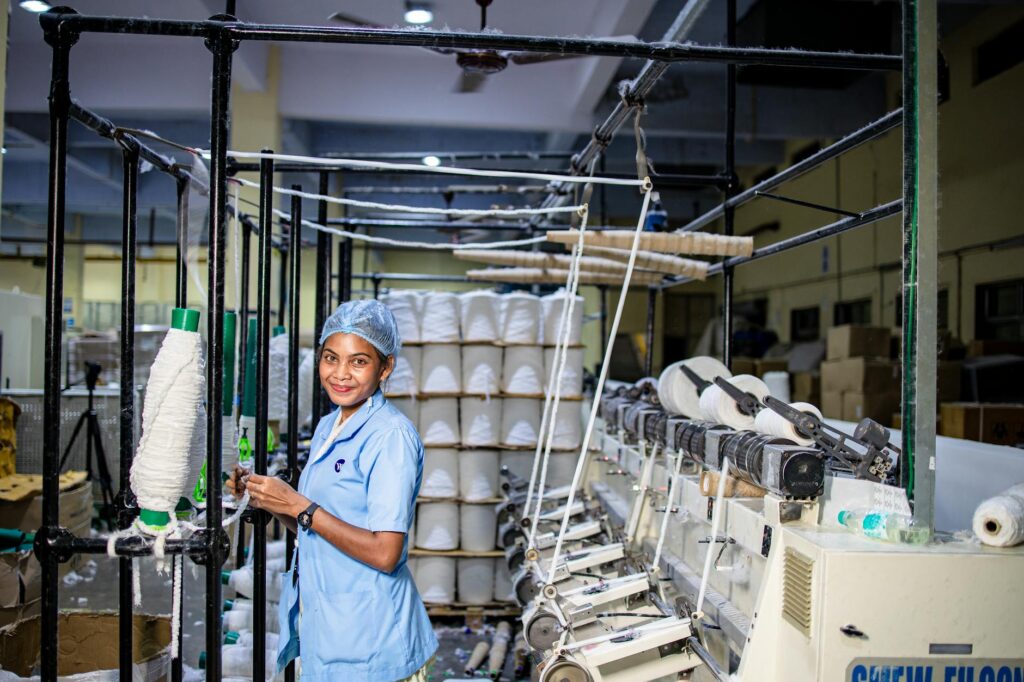
Circular design embeds recyclability and durability at the product’s inception. Companies such as Patagonia and H&M’s “Take‑Back” program have increased the proportion of garments made from recycled fibers from 2 percent in 2015 to 12 percent in 2023 [4]. Material innovations—bio‑based polyester derived from waste PET, cellulose‑based lyocell, and closed‑loop nylon (e.g., ECONYL®)— reduce virgin feedstock demand by 30‑40 percent per ton of output [5].
Closed‑Loop Production Networks
Closed‑loop factories capture post‑consumer fibers, chemically or mechanically recycle them, and reintegrate the output into new yarns. The adoption rate of such loops grew from 5 percent of global textile capacity in 2018 to 18 percent in 2024, driven by investments exceeding $12 billion in Europe and North America [6]. This operational shift requires integrated material‑tracking systems (e.g., blockchain‑enabled product passports) and re‑engineered dyeing processes that tolerate recycled content without compromising colorfastness.
These models demand expertise in asset management, data analytics, and consumer‑experience design—skill sets historically absent from conventional manufacturing hierarchies.
Service‑Based Ownership Models
You may also like
 Digital Innovation
India’s Election Tech: From Local Innovation to Global Inspiration
US President Donald Trump cited India's voter ID system, putting India's election technology in the global spotlight. This opens up exciting career paths and business…
Read More →Leasing, subscription, and resale platforms extend product lifecycles while generating recurring revenue. Rent the Runway reported a 45 percent increase in active subscribers between 2021 and 2023, correlating with a 28 percent reduction in average garment turnover per user [7]. These models demand expertise in asset management, data analytics, and consumer‑experience design—skill sets historically absent from conventional manufacturing hierarchies.
Collectively, these mechanisms constitute a systemic redesign of value creation, moving the locus of competitive advantage from volume‑driven cost minimization to resource stewardship and service orchestration.
Systemic Ripple Effects Across the Value Chain
Supply‑Chain Reconfiguration
Circularity forces upstream suppliers to certify material provenance, adopt low‑impact processing, and integrate reverse logistics. The Global Sustainable Apparel Coalition’s Higg Index now incorporates a “Circularity Score,” prompting 63 percent of Tier‑1 fabric mills to invest in water‑recycling loops between 2020 and 2024 [8]. Consequently, supply‑chain managers must master multi‑modal tracking, carbon accounting, and partnership contracts that embed take‑back obligations.
Regulatory and Policy Catalysts
EPR schemes in the EU impose fees on producers proportional to the recyclability of their products, incentivizing design changes. In the United States, the “Textile Waste Reduction Act” (proposed 2025) would allocate $1.8 billion in federal grants for regional recycling hubs, effectively creating a public‑private infrastructure layer that reshapes market entry barriers [9]. These policies elevate the role of compliance officers, sustainability auditors, and public‑policy liaison positions within firms.
Consumer Literacy and Market Signals
Education campaigns—such as the “Circular Fashion Lab” initiative in Denmark, which reached 2 million consumers in 2023—have increased the willingness to participate in garment take‑back programs by 34 percent [10]. Retail environments now feature interactive labeling (QR codes linking to lifecycle data) and in‑store repair stations, creating demand for circular design consultants and on‑site technicians.
These systemic ripples rewire institutional power: firms that internalize circular metrics gain access to capital at lower cost, while those clinging to linear models face higher financing spreads and regulatory penalties.
Human Capital Reconfiguration and Investment Flows
Emergent Career Pathways
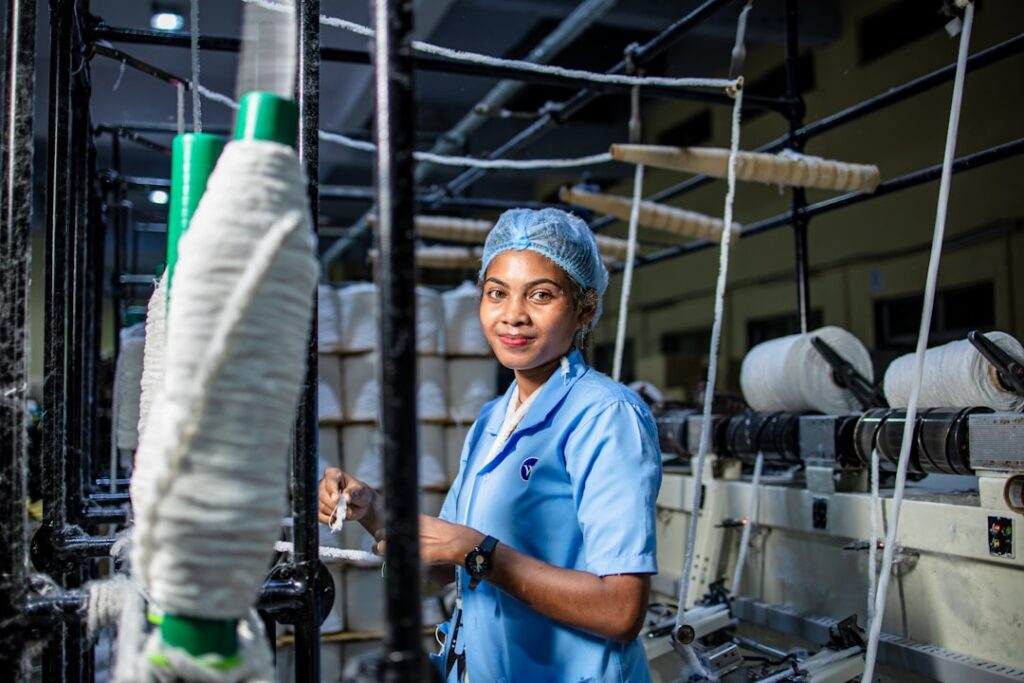
The circular transition spawns roles that blend technical, analytical, and relational competencies.
| Emerging Role | Core Competency | Typical Salary (US) |
|—————|—————-|———————-|
| Circular Design Engineer | Material science, life‑cycle assessment | $110k‑$140k |
| Reverse Logistics Manager | Supply‑chain analytics, EPR compliance | $95k‑$120k |
| Sustainable Business Model Analyst | Financial modeling, ESG reporting | $105k‑$130k |
| Textile Recycling Technologist | Chemical processing, process optimization | $90k‑$115k |
| Consumer Circularity Experience Designer | UX/UI, behavioral economics | $85k‑$110k |
You may also like
 Business Insights
The Impact of AI on Competitive Skills in Business
As businesses increasingly adopt artificial intelligence, a pressing concern emerges: are they losing the very skills that make them competitive? AI technologies promise efficiency and…
Read More →Data from the World Economic Forum’s “Future of Jobs” report projects that 23 percent of textile‑industry jobs will be transformed by 2027, with 12 percent of total employment shifting to these new categories [11].
These systemic ripples rewire institutional power: firms that internalize circular metrics gain access to capital at lower cost, while those clinging to linear models face higher financing spreads and regulatory penalties.
Capital Allocation Trends
Venture capital directed at circular textile technologies reached $4.3 billion in 2023, a 68 percent increase from 2020, with notable exits such as the acquisition of a textile‑recycling startup by a major apparel conglomerate for $850 million [12]. Impact‑focused funds, including the Global Impact Investing Network’s “Sustainable Textiles Fund,” allocate capital based on circularity KPIs, linking performance fees to verified waste‑reduction outcomes.
These financial flows generate asymmetric opportunities for professionals adept at data‑driven ESG metrics, creating a new axis of economic mobility that bypasses traditional apprenticeship pathways.
Reskilling Imperatives
Legacy workers—particularly in low‑skill manufacturing—face displacement unless reskilled. The International Labour Organization estimates that 1.2 million textile workers in South Asia require upskilling to operate advanced recycling equipment by 2026 [13]. Public‑private partnerships, such as Germany’s “Circular Skills Initiative,” provide subsidized certification programs, yet uptake remains below 30 percent, highlighting a structural gap between policy intent and workforce execution.
The asymmetry in reskilling access will crystallize a bifurcated labor market: those with digital‑enabled, sustainability‑focused credentials will command premium wages, while workers lacking such pathways risk marginalization.
Outlook to 2030: Trajectories and Institutional Levers
Over the next five years, three structural dynamics will dominate the circular textile ecosystem:
You may also like
 Business Insights
AI Could Democratize One of Tech’s Most Valuable Resources
AI is emerging as a game-changer in chip design and software optimization, democratizing access to these vital resources and reshaping the tech landscape. This shift…
Read More →- Institutionalization of Circular Metrics – Standardized circularity scores will become a prerequisite for public‑contract eligibility and ESG‑linked financing, embedding sustainability into the core governance framework of fashion firms.
- Scaling of Distributed Recycling Hubs – By 2028, regional micro‑recycling facilities capable of processing 5 tons of post‑consumer fabric per day are projected to increase from 120 to 560 worldwide, reducing transportation emissions and creating localized technical workforces.
- Convergence of Digital Identity and Material Traceability – Blockchain‑based product passports will achieve 70 percent industry adoption, enabling automated compliance reporting and facilitating secondary‑market transactions that reward circular behavior with tokenized incentives.
Professionals who internalize these levers—through cross‑functional expertise in material science, data analytics, and policy navigation—will capture the emerging “circular capital” that underwrites leadership trajectories in the sector. Conversely, firms and workers that remain entrenched in linear production will encounter escalating capital costs, regulatory exposure, and talent attrition.
Key Structural Insights
> [Insight 1]: The circular economy reframes career capital from volume‑driven manufacturing expertise to regenerative design and service orchestration, creating asymmetric wage premiums for sustainability‑savvy professionals.
> [Insight 2]: Institutional mechanisms—EPR policies, standardized circularity scores, and public‑private recycling infrastructure—act as systemic levers that reallocate economic mobility toward actors who embed traceability and waste‑reduction into core operations.
> * [Insight 3]: The convergence of digital product passports and decentralized recycling hubs will institutionalize circularity as a market prerequisite, reshaping leadership pipelines and consolidating power within firms that master integrated ESG data ecosystems.