Virtual reality is redefining workplace productivity by turning spatial constraints into programmable assets, delivering measurable efficiency gains while reshaping talent pipelines and institutional power structures.
VR is moving from prototype to enterprise‑scale tool, offering a systemic alternative to the fragmented home‑office model. Early adopters are already quantifying a 10‑15 % lift in task speed, while new career tracks are emerging around immersive experience design.
Opening: A Structural Shift in the Remote‑Work Landscape
The pandemic‑induced surge in remote work created a “distributed office” that, by 2023, housed roughly 30 % of the U.S. labor force full‑time [1]. The model delivered flexibility but also exposed a productivity paradox: employees traded commuting time for makeshift workstations, ambient distractions, and fragmented collaboration tools. In the same period, the global virtual‑reality market expanded from $12 billion in 2020 to $30 billion in 2025, with enterprise applications accounting for 45 % of the growth [2].
These converging trends signal a structural shift: firms are no longer experimenting with VR as a novelty but are embedding it into the core architecture of work. The technology promises to replace the physical office’s spatial constraints with a programmable, distraction‑free environment that can be scaled across geographies. As a result, the locus of institutional power—once anchored in real‑estate, corporate campuses, and commuting logistics—is migrating toward digital‑infrastructure owners and the talent that can shape immersive experiences.
Layer 1: Core Mechanisms and Hard Data
Immersive Workspaces: How Virtual Reality Is Reshaping Productivity and Power Structures
Immersive Work Environments
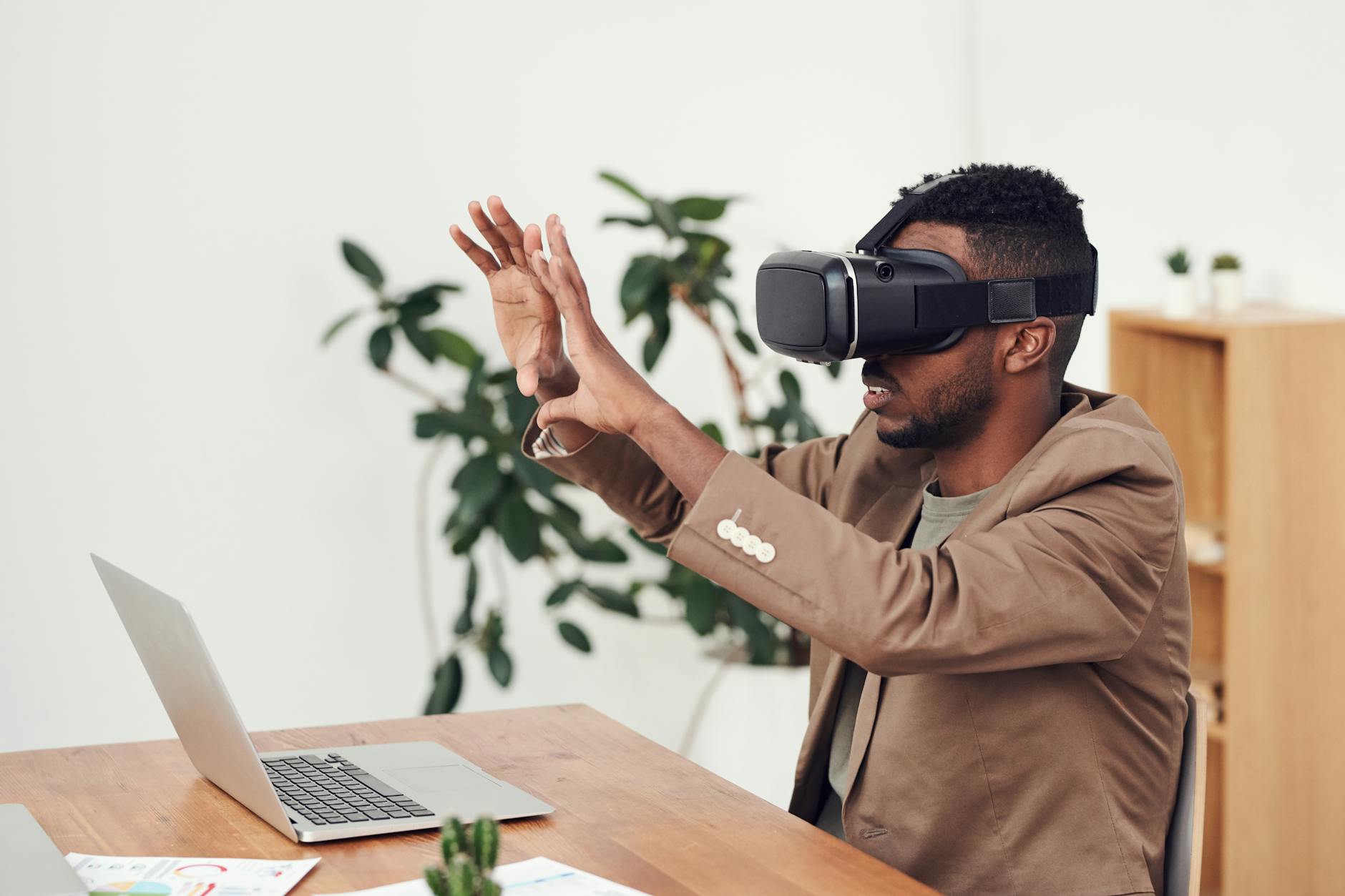
VR headsets now support up to 12 virtual monitors, haptic feedback, and eye‑tracking, enabling a “spatial desktop” that eliminates the physical desk’s ergonomic limits. Microsoft Research’s pilot with 150 remote engineers showed a 15 % reduction in task completion time for code reviews when participants used a mixed‑reality workspace versus dual‑screen setups [3]. The same study recorded a 22 % decrease in self‑reported distraction scores, suggesting that the immersive envelope directly mitigates the “attention‑fragmentation” endemic to home offices.
Interactive Training and Simulation
Training retention rates in VR environments exceed traditional e‑learning by 30 % to 40 % according to PwC’s 2024 analysis of 2,000 corporate learners [4]. Walmart’s rollout of VR safety modules for 150,000 hourly workers cut incident reports by 18 % within six months, while Boeing reported a 25 % reduction in design‑iteration cycles after integrating VR mock‑ups into its assembly line planning [5]. These outcomes reflect a systemic advantage: VR compresses the experiential learning loop, turning abstract procedures into embodied practice.
Microsoft Research’s pilot with 150 remote engineers showed a 15 % reduction in task completion time for code reviews when participants used a mixed‑reality workspace versus dual‑screen setups [3].
Unlike 2‑D video conferencing, VR avatars convey spatial cues, gestural nuance, and shared manipulation of 3‑D objects. Accenture’s “Virtual Design Studio” in Dublin, launched in 2024, reduced cross‑regional project latency by 28 % by allowing architects in New York, Berlin, and Mumbai to co‑model building facades in real time [6]. The platform’s usage data indicate an average session length of 45 minutes—double that of conventional video calls—implying deeper engagement and more substantive decision‑making.
Layer 2: Systemic Implications
Workforce Adaptation and Skill Realignment
The transition to immersive workforces demands a reallocation of human capital. A 2025 Deloitte survey of 1,200 executives found that 68 % anticipate new “spatial fluency” competencies—such as 3‑D navigation, virtual‑object manipulation, and avatar etiquette—becoming core to mid‑level roles within three years [7]. Consequently, corporate learning budgets are reallocating 12 % of L&D spend toward VR‑centric curricula, a shift that mirrors the early 1990s upskilling wave for personal‑computer proficiency.
Infrastructure Investment and Real‑Estate Reconfiguration
Enterprise‑grade VR headsets average $1,200 per unit, with ancillary sensors and workstation kits adding $800. A Fortune 500 firm that equipped 5,000 employees in 2024 reported a total hardware outlay of $10 million, offset by a 12 % reduction in office‑space lease costs and a 9 % cut in travel expenses [8]. The financial calculus is prompting a wave of “digital‑first” office redesigns, where former floor space is repurposed into VR‑calibration labs and sensor‑rich zones, creating a new market for real‑estate developers specializing in “mixed‑reality campuses.”
Data Privacy, Security, and Institutional Governance
VR platforms collect biometric streams—eye‑tracking, facial expressions, and motion data—that fall outside traditional data‑protection frameworks. The European Union’s GDPR has been extended in 2025 via the “VR‑Data Directive,” mandating explicit consent for biometric processing and requiring “privacy‑by‑design” architectures for enterprise headsets [9]. Companies that fail to integrate these safeguards face fines up to 4 % of global revenue, incentivizing the emergence of a compliance niche akin to the early‑2000s cybersecurity boom.
Layer 3: Human Capital Impact
Immersive Workspaces: How Virtual Reality Is Reshaping Productivity and Power Structures
New Career Trajectories
The VR ecosystem is spawning roles that blend technical, creative, and pedagogical skill sets.
Layer 3: Human Capital Impact
Immersive Workspaces: How Virtual Reality Is Reshaping Productivity and Power Structures
New Career Trajectories
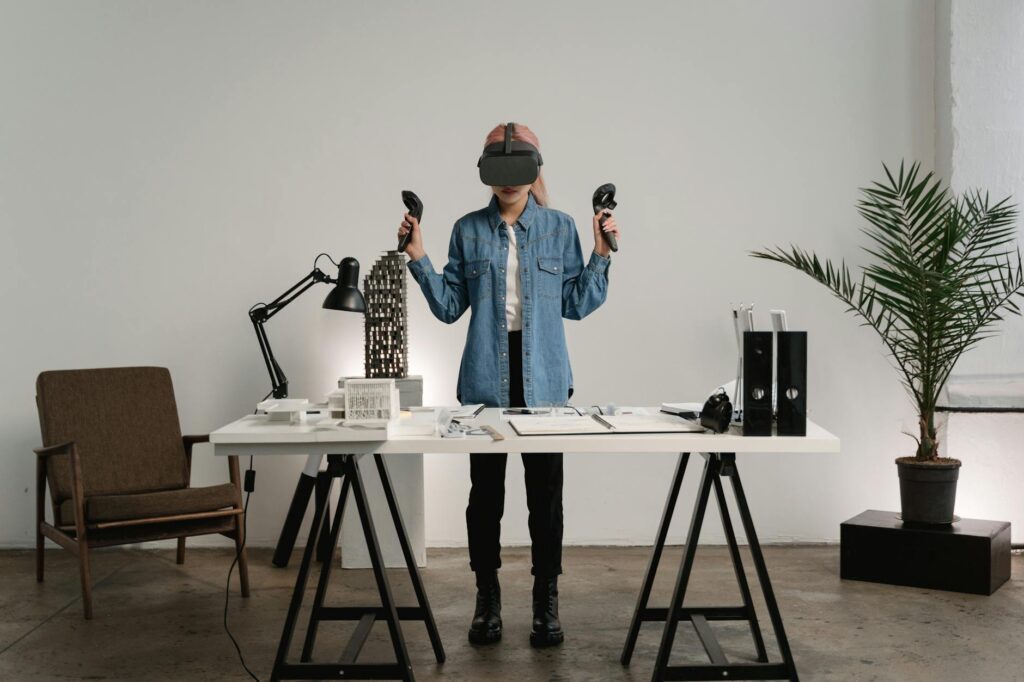
The VR ecosystem is spawning roles that blend technical, creative, and pedagogical skill sets. According to Burning Glass Technologies, job postings for “VR Experience Designer” grew from 1,200 in 2022 to 7,800 in 2025—a 550 % increase [10]. Parallel growth appears in “Spatial Data Analyst” and “Immersive Learning Engineer,” positions that sit at the intersection of data science and experiential design. Universities are responding with dedicated master’s programs; MIT’s Media Lab launched a “Spatial Computing” degree in 2024, feeding a pipeline of talent directly into corporate VR labs.
Venture capital invested $4.2 billion in workplace‑focused VR startups in 2025, a 3.2× jump from 2022 levels [11]. Corporate venture arms—Microsoft’s M12, Google’s GV, and Siemens’ Next47—are leading the charge, targeting firms that promise measurable productivity gains. The capital influx is creating a feedback loop: higher valuations attract talent, which in turn accelerates product maturation and reinforces the productivity narrative.
Competitive Asymmetry
Early adopters are converting immersive productivity into a competitive moat. A 2026 case study of a multinational consulting firm revealed a 6 % higher billable‑hour utilization rate after deploying VR collaboration suites across its European and Asian offices [12]. Simultaneously, employee Net Promoter Scores rose by 14 points, suggesting that immersive environments also improve retention—a dual advantage that can reshape market share dynamics in professional services, design, and engineering sectors.
Closing: Outlook to 2029
Over the next three to five years, three structural trajectories will define the VR‑productivity frontier:
Standardization of Spatial Workflows – Industry consortia (e.g., the Immersive Business Alliance) are drafting interoperable file formats and interaction protocols, reducing friction for cross‑vendor collaboration. By 2029, a “spatial OS” layer is expected to support seamless handoff between VR, AR, and traditional desktop tools.
Hybrid Physical‑Digital Campus Models – Firms will allocate 30‑40 % of their real‑estate budgets to “VR‑ready” zones, where employees can transition fluidly between physical desks and immersive pods. This reallocation will depress commercial‑real‑estate demand in major metros while expanding demand for high‑density data‑center footprints that host VR rendering farms.
Regulatory Maturation and Ethical Governance – As biometric data becomes integral to productivity analytics, governance frameworks will crystallize around “spatial ethics,” encompassing consent, mental‑health monitoring, and algorithmic transparency. Companies that embed these standards early will capture talent wary of surveillance, reinforcing asymmetric advantage.
In sum, virtual reality is not a peripheral productivity gadget; it is a systemic re‑architecting of work’s spatial and cognitive dimensions. Institutions that master the technology’s core mechanisms, anticipate its ripple effects, and align human‑capital strategies accordingly will shape the next epoch of economic mobility and institutional power.
Standardization of Spatial Workflows – Industry consortia (e.g., the Immersive Business Alliance) are drafting interoperable file formats and interaction protocols, reducing friction for cross‑vendor collaboration.
Key Structural Insights [Insight 1]: VR converts the office from a fixed physical asset into a programmable, data‑rich environment, shifting institutional power toward digital‑infrastructure owners. [Insight 2]: The productivity gains—averaging 10‑15 % in task speed and 30 % in training retention—create a measurable asymmetry that early adopters can leverage for market‑share growth.
[Insight 3]: Emerging “spatial fluency” skill requirements and privacy regulations are restructuring career pathways and compliance ecosystems, echoing the PC‑adoption wave of the 1990s.



Artificial Intelligence

 News
NewsCareer Advice