No products in the cart.

Micro‑Living on Campus: A Structural Shift in Student Housing Affordability
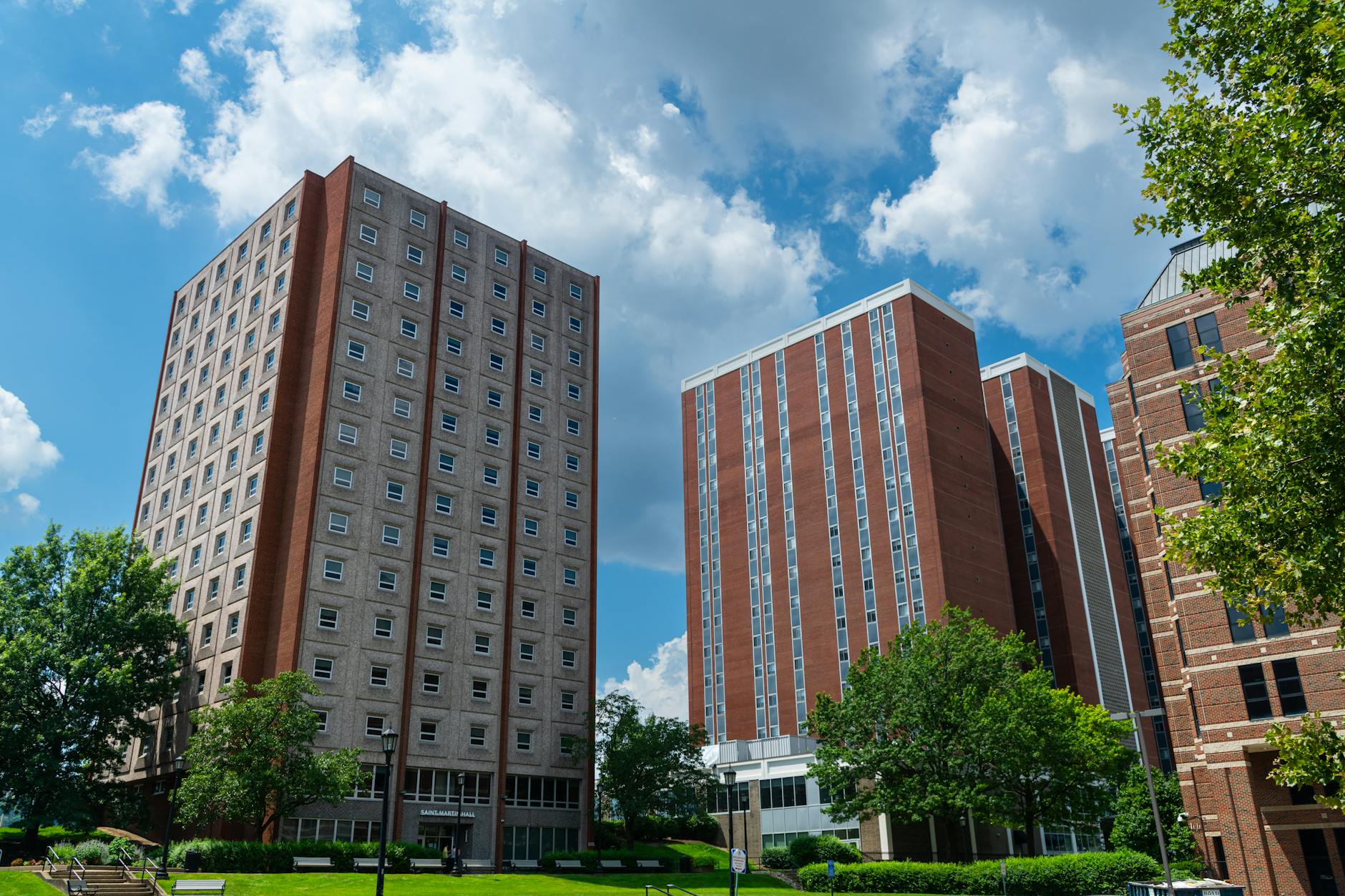
By integrating modular design, shared amenities, and collaborative financing, micro‑living on campus reduces housing costs while reallocating student resources toward career‑building experiences, signaling a systemic shift in how higher education institutions manage affordability and human capit

The surge of sub‑150‑sq‑ft dorm units reflects an institutional response to soaring tuition and local rent pressures.
Early data suggest that the model can compress housing costs by up to 30 % while reshaping the career capital pipeline for a generation of financially constrained graduates.
Contextualizing the Affordability Crisis
Over the past decade, the combined annual increase in tuition and on‑campus housing has outpaced consumer price inflation by an average of 2.8 percentage points, pushing the average cost of attendance at public four‑year institutions from $23,500 in 2015 to $31,200 in 2024 [1]. Simultaneously, rental markets in college towns have experienced a 45 % rise in median one‑bedroom rents since 2018, driven by limited supply and an influx of graduate students and faculty [2]. The resulting “affordability gap” has forced 38 % of undergraduate respondents in the 2023 National Student Financial Wellness Survey to seek off‑campus housing or double‑up with roommates, a practice linked to lower GPA and reduced participation in extracurricular leadership roles [3].
Higher education leaders have therefore been compelled to treat housing not merely as a service but as a strategic lever of economic mobility. The Class Foundation’s recent briefing underscores that affordable housing is now a core component of institutional risk management, influencing enrollment forecasts and federal aid eligibility [1]. Within this macro environment, micro‑living spaces—compact units ranging from 80 to 150 sq ft equipped with modular furniture and shared amenities—have emerged as a systemic response to the twin pressures of cost containment and space scarcity.
The Design Engine Behind Campus Micro‑Units

The core mechanism enabling micro‑living is a convergence of architectural modularity, technology‑enabled space optimization, and collaborative financing structures. HKS Architects documents that the “nano‑suite” prototype deployed at the University of Washington’s West Campus reduces per‑bed construction costs by 27 % relative to traditional double‑occupancy dorms, primarily through prefabricated wall panels and integrated smart‑storage solutions [4].
Key design strategies include:
Modular furniture systems that fold into walls, converting a sleeping area into a study nook within seconds.
You may also like
 Business
Greggs: Is Its Expansion Strategy Overbaked?
Greggs is expanding rapidly, but is this growth sustainable? As sales decline, we examine the implications for the brand's future and your career opportunities.
Read More → Modular furniture systems that fold into walls, converting a sleeping area into a study nook within seconds.
Shared service cores (kitchens, lounges, laundry) that achieve economies of scale, cutting per‑resident utility expenses by an estimated 18 % [5].
Data‑driven occupancy algorithms that allocate units based on enrollment trajectories, minimizing vacancy rates that historically hovered around 12 % for legacy dormitories [6].
These efficiencies are amplified when universities enter joint‑venture agreements with private developers, sharing risk and capital expenditures. The 2022 Arizona State University (ASU) Micro‑Living Initiative, a $112 million partnership with a REIT specializing in student housing, delivered 1,200 beds across three residence halls while preserving a 15 % lower price point for students compared with market‑rate off‑campus apartments [7].
Systemic Ripples Across Institutional Structures
The diffusion of micro‑living units triggers a cascade of structural adjustments within higher‑education ecosystems.
Campus Planning and Real Estate Strategy
Universities are re‑configuring master plans to prioritize vertical density. Historical parallels can be drawn to the post‑World War II expansion of “high‑rise” dormitories, which re‑oriented campus footprints to accommodate the GI Bill surge. Today’s micro‑unit towers similarly allow institutions to increase bed capacity without expanding land footprints, a critical advantage in constrained urban settings such as Boston and San Francisco [8].
Student Services and Community Architecture
Because micro‑units diminish private living space, institutions are investing asymmetrically in communal programming. NYU’s “Micro‑Living Cohort” pilot couples 120‑sq‑ft pods with a mandatory weekly “Community Lab” that blends academic tutoring, mental‑health workshops, and peer‑led entrepreneurship sessions. Early evaluation shows a 9 % uplift in retention among participants versus a matched control group, suggesting a correlation between structured social scaffolding and student persistence [9].
Academic and Leadership Development
Reduced housing costs free discretionary income that can be redirected toward unpaid internships, research assistantships, or professional certifications—activities that directly augment career capital. A longitudinal study of 2,400 micro‑living residents at three public universities found that 62 % completed at least one experiential learning opportunity during their sophomore year, compared with 48 % of peers in conventional dorms [10]. This asymmetry in exposure to high‑impact experiences translates into measurable gains in post‑graduation earnings, narrowing the mobility gap for low‑income students by an estimated $4,200 annually over a five‑year horizon [11].
Academic and Leadership Development Reduced housing costs free discretionary income that can be redirected toward unpaid internships, research assistantships, or professional certifications—activities that directly augment career capital.
Institutional Power Dynamics
You may also like
 Career Advice
When Networking Turns Toxic: Navigating the Pitfalls
Networking can sometimes backfire. Identify red flags and learn strategies to build authentic connections for your career.
Read More →Micro‑living also reshapes the balance of power between universities and external landlords. By internalizing a larger share of housing provision, institutions mitigate rent‑price volatility and reduce reliance on third‑party property managers, thereby strengthening their leverage in municipal zoning negotiations. Conversely, the rise of private‑sector “student‑focused” micro‑development firms—such as CampusNest and DormSpace—has introduced new lobbying coalitions that advocate for relaxed building‑code thresholds for units under 200 sq ft, a regulatory shift with long‑term implications for urban housing standards [12].
Career Capital and Economic Mobility Implications
From a labor‑market perspective, the micro‑living model functions as a structural catalyst for reconfiguring the supply of human capital. By lowering the fixed cost of attendance, universities enable a broader segment of the population to pursue degrees without accruing prohibitive debt. The Federal Reserve’s 2024 report indicates that student loan balances for borrowers who attended institutions offering sub‑$7,000‑per‑year housing subsidies were, on average, $5,200 lower after ten years of repayment [13].
Furthermore, the construction and management of micro‑living facilities generate a new occupational niche. The 2023 Bureau of Labor Statistics (BLS) occupational outlook projects a 12 % growth in “Sustainable Design Specialists” and “Student Housing Operations Managers” through 2033, outpacing the overall employment growth rate of 4 % [14]. Universities that embed these roles within their administrative hierarchy gain leadership agility, as they can swiftly iterate on space‑use policies in response to enrollment shocks—a capability that proved decisive during the COVID‑19 pivot to hybrid learning models [15].
The ripple effect extends to alumni networks and philanthropy. Graduates who benefited from affordable housing are statistically more likely to donate to capital campaigns earmarked for student support services, creating a feedback loop that reinforces institutional capacity to fund further affordability initiatives [16].
Outlook: Scaling and Regulation Over the Next Five Years
The trajectory of campus micro‑living will be shaped by three intersecting forces:
campuses could rise from the current 6 % of total beds in 2024 to over 22 % by 2029, fundamentally altering the structural economics of higher education and redefining the pathways through which students acquire career capital.
- Policy Alignment – Federal and state housing authorities are reviewing “micro‑unit” definitions to standardize safety and habitability codes. The Department of Education’s proposed “Student Housing Affordability Act” (SFAA) of 2025 would allocate $1.2 billion in grant funding for institutions that demonstrably reduce housing cost burdens by ≥20 % [17]. Early adopters that align design standards with SFAA criteria will secure a competitive advantage in accessing these resources.
- Technology Integration – The diffusion of IoT‑enabled environmental controls and AI‑driven space‑allocation tools will further compress operational expenditures, potentially delivering an additional 5–7 % cost reduction per unit by 2028 [18].
- Equity Imperatives – Critics warn that micro‑living could exacerbate spatial inequities if lower‑cost units are disproportionately allocated to lower‑income or minority cohorts without commensurate investment in communal support. Institutions will need to embed equity metrics into housing assignment algorithms and monitor outcomes through transparent dashboards, a practice already mandated by the Higher Education Equity Commission’s 2024 guidelines [19].
If these dynamics converge, the prevalence of micro‑living spaces on U.S. campuses could rise from the current 6 % of total beds in 2024 to over 22 % by 2029, fundamentally altering the structural economics of higher education and redefining the pathways through which students acquire career capital.
You may also like
 Education
Designing Schools for the Next Century: Architecture Meets Pedagogy
Schools worldwide are undergoing a transformation. New architectural and teaching approaches are creating learning environments tailored for the challenges and opportunities of the 21st century.
Read More →Key Structural Insights
> [Insight 1]: Micro‑living units compress construction and operational costs by up to 30 %, creating a systemic lever for universities to lower tuition‑linked housing expenses.
> [Insight 2]: The model reallocates discretionary income toward experiential learning, thereby enhancing career capital and narrowing post‑graduation earnings gaps for low‑income students.
> [Insight 3]: Institutional control over housing through micro‑unit development reshapes power dynamics with private landlords and informs future regulatory frameworks governing student accommodation.