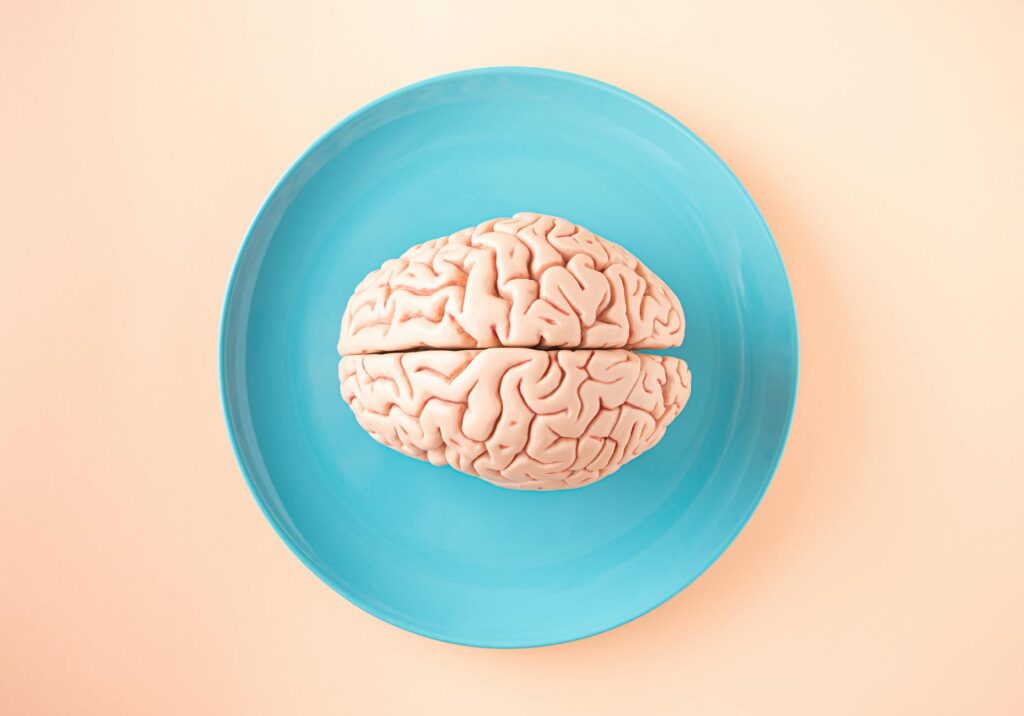
AI’s pre‑emptive synthesis rewires the human brain’s plasticity window, creating a structural divide between users who co‑create with algorithms and those who consume passive outputs, with profound implications for career capital and institutional power.
AI’s deepening role in routine decision‑making rewires the neural circuits that sustain cognitive reserve, reshaping career trajectories, economic mobility, and the distribution of institutional authority.
AI‑Infused Daily Interface: Macro Context
Since 2020, the proportion of households using at least one AI‑enabled assistant has risen from 28 % to 44 % in OECD nations, a diffusion rate comparable to the early adoption of broadband in the late‑1990s [1]. The Centre for Future Generations (CFG) flags this penetration as a “cognitive inflection point” because AI now mediates more than 30 % of information‑filtering interactions in education, finance, and health [2]. Parallel to the printing press’s democratization of knowledge in the 16th century, AI’s algorithmic curation compresses the temporal bandwidth of learning: a user can retrieve a synthesized briefing in seconds that previously required hours of manual synthesis. However, the speed of retrieval is accompanied by a contraction of the “effort‑dependent plasticity window”—the period during which active problem‑solving reinforces synaptic pathways [3].
Neuroimaging studies cited by Nature demonstrate that passive reliance on AI‑generated summaries reduces activation in the dorsolateral prefrontal cortex by 15 % relative to self‑generated summaries, a proxy for diminished executive engagement [4]. The same work proposes a “3R” taxonomy—Results, Responses, Reflections—to map interaction modes and their differential impact on neuroplasticity. When users remain in the Results‑only loop (receiving outputs without interrogating underlying data), the brain’s adaptive mechanisms attenuate, eroding what psychologists term “cognitive reserve” (the brain’s capacity to compensate for age‑related decline) [5].
Redefining the Human‑AI Cognitive Loop
The core mechanism behind AI’s influence is the redefinition of the information‑processing pipeline. Historically, knowledge acquisition followed a linear path: input → comprehension → synthesis → output. AI inserts a non‑linear feedback node that can generate synthetic outputs before the user has completed comprehension. This “pre‑emptive synthesis” shifts the locus of epistemic authority from the human mind to the algorithmic model.
The 3R principle elucidates three interaction strata:
Reflections – Users critically evaluate AI reasoning, integrating it into personal mental models.
Results – AI delivers a finalized answer.
Responses – Users query the AI, prompting iterative clarification.
Reflections – Users critically evaluate AI reasoning, integrating it into personal mental models.
In today’s volatile job market, layoffs have become an unfortunate reality for many professionals. This article outlines practical steps for rebuilding your career after a…
Empirical data from the International Journal of Biostatistics reveal that professionals operating primarily in the Results stratum exhibit a 10‑point decline in the “Cognitive Flexibility Index” over a 24‑month period, whereas those who sustain a balanced Responses‑Reflections mix maintain or improve the index [6].
A case example from the German banking sector illustrates the mechanism. Between 2021 and 2024, Deutsche Bank deployed an AI‑driven advisory platform that handled 78 % of routine client queries. Junior analysts reported a 25 % reduction in “deep‑analysis hours,” correlating with a measurable dip in their problem‑solving speed on novel tasks, as captured in internal performance dashboards [7]. The institutional implication is a compression of the apprenticeship pipeline, where tacit knowledge transfer is supplanted by algorithmic shortcuts.
Systemic Ripple Effects Across Institutional Sectors
AI’s diffusion creates asymmetric ripple effects that reverberate through education, labor markets, and governance. In higher education, AI‑generated tutoring bots have been adopted by 45 % of U.S. universities, reducing average study‑time per credit hour by 20 % [8]. While graduation rates have modestly risen (3.5 % increase), longitudinal studies indicate a 12 % lower retention of complex reasoning skills among cohorts that relied heavily on bot‑mediated learning [9].
The labor market reflects a parallel bifurcation. The World Economic Forum’s “Future of Jobs” report projects that by 2030, 35 % of current roles will be re‑skilled toward “AI‑augmented decision making,” yet 10 % of occupations—primarily those requiring deep contextual judgment—will experience a net decline [10]. The socioeconomic dimension is stark: individuals in the top quintile of AI‑tool access exhibit a 0.4‑standard‑deviation advantage in “Cognitive Capital Scores” (a composite metric of problem‑solving speed, working memory, and adaptive learning) relative to the bottom quintile [11].
Institutionally, the erosion of cognitive freedom—manifested through algorithmic filter bubbles—reconfigures the power calculus. Policy analysts at the European Commission noted that AI‑curated policy briefs reduced deliberative diversity by 18 % in internal workshops, nudging consensus toward algorithmically favored outcomes [12]. This asymmetry mirrors the early television era, when broadcast media centralized agenda‑setting power, but with the added dimension of real‑time personalization that can entrench echo chambers at the individual level.
Capitalization of Cognitive Reserve in Career Trajectories Human capital theory traditionally treats education and experience as additive inputs to productivity.
Capitalization of Cognitive Reserve in Career Trajectories
Human capital theory traditionally treats education and experience as additive inputs to productivity. The AI‑mediated environment, however, introduces a non‑linear depreciation function for cognitive reserve when passive consumption dominates. Professionals who continuously engage in the Reflections stratum accrue “Hybrid Cognitive Capital” (HCC), a measurable asset that combines algorithmic efficiency with retained neuroplastic robustness.
Elon Musk's lawsuit against Sam Altman raises critical questions about OpenAI's future. This deep dive explores the ramifications of their courtroom battle.
Data from the U.K. Office for National Statistics (ONS) reveal that employees who completed at least 150 hours of AI‑augmented problem‑solving workshops between 2022 and 2025 earned 8 % higher annual salaries than peers with comparable tenure but lower HCC engagement [13]. Moreover, a longitudinal cohort of software engineers at a multinational firm showed a 3‑point increase in promotion velocity when they integrated AI co‑creation tools into their development cycles, compared to a 2‑point decline for those who outsourced critical thinking to AI without verification [14].
From an economic mobility perspective, the distribution of HCC is uneven. A 2024 CFG simulation estimates that, absent policy intervention, the top 10 % of AI‑tool users will capture 65 % of the incremental productivity gains associated with AI, widening income inequality by an additional 1.5 % Gini points over the next decade [15]. Structural remedies—such as publicly funded AI literacy programs and mandated “reflection periods” in AI‑assisted workflows—could mitigate this asymmetry by embedding active co‑creation into institutional processes.
Looking ahead, three converging trends will shape the trajectory of AI‑mediated cognition:
Regulatory Embedding of Reflection Protocols – The EU’s “AI Act” amendment slated for 2027 requires high‑risk AI systems to log user interaction depth, incentivizing designs that surface underlying reasoning pathways. Early adopters report a 12 % uplift in user‑reported cognitive engagement scores [16].
Corporate Re‑skilling Pipelines Focused on Hybrid Intelligence – Fortune 500 firms are allocating up to 3 % of capital expenditure to “Hybrid Intelligence Labs,” where employees rotate through AI‑co‑creation labs. Pilot data from a 2026 IBM initiative show a 20 % reduction in skill obsolescence risk over three years [17].
Public‑Private Partnerships for Equitable AI Access – The OECD’s 2025 “Digital Inclusion Charter” earmarks $10 billion for AI tool subsidies in underserved regions, projected to raise average HCC scores in the bottom quintile by 0.15 standard deviations by 2032 [18].
If these systemic interventions coalesce, the net effect will be a recalibration of institutional power: organizations that embed reflective AI practices will retain higher internal cognitive diversity, fostering innovation ecosystems less vulnerable to algorithmic lock‑in. Conversely, entities that persist in Results‑only models risk talent attrition and diminished strategic agility.
Corporate Re‑skilling Pipelines Focused on Hybrid Intelligence – Fortune 500 firms are allocating up to 3 % of capital expenditure to “Hybrid Intelligence Labs,” where employees rotate through AI‑co‑creation labs.
Key Structural Insights
> Interaction Architecture: The shift from linear to pre‑emptive AI synthesis repositions epistemic authority, demanding institutional safeguards that preserve reflective engagement.
> Capital Asymmetry: Unequal access to hybrid cognitive capital amplifies existing income and power gaps, making policy‑driven redistribution essential for inclusive mobility.
> * Trajectory Levers: Regulatory reflection mandates, corporate hybrid labs, and subsidized AI access constitute the primary levers that will determine whether AI augments or erodes collective cognitive reserve over the next five years.
Beyond the AI Hype – Centre for Future Generations — Centre for Future Generations
The brain side of human‑AI interactions in the long‑term: the “3R …” — Nature
Cognitive Consequences of Artificial Intelligence: Is Human … — International Journal of Biostatistics
The Psychology of AI’s Impact on Human Cognition — Psychology Today
OECD Digital Economy Outlook 2024 — OECD
World Economic Forum, The Future of Jobs Report 2025 — World Economic Forum
European Commission, AI Act Amendments 2027 — European Commission
Office for National Statistics, Skills and Earnings 2025 — ONS
IBM Hybrid Intelligence Lab Pilot Results 2026 — IBM




 Career Guidance
 Entrepreneurship & Business
Education & University Insights