


The shift from mass‑produced inventory to on‑demand additive manufacturing is redefining institutional power, reallocating capital, and creating asymmetric career pathways across the manufacturing ecosystem.
—
Macro Context – A Structural Re‑orientation of Global Production
Over the past decade, the convergence of digital design, materials science, and high‑speed additive manufacturing has triggered a structural re‑orientation of supply‑chain logistics. The global additive‑manufacturing (AM) market, valued at $22 billion in 2023, is projected to exceed $55 billion by 2030, driven largely by the need to shorten lead times and reduce the carbon intensity of production [1].
At the macro level, three interlocking forces are accelerating this transition. First, the “just‑in‑time” inventory model, perfected by Toyota in the 1980s, has reached its limits in a world of geopolitical volatility and pandemic‑induced disruptions. Second, sustainability imperatives—codified in the Paris Agreement and SDG 13—have placed pressure on firms to cut scope‑3 emissions, a category dominated by transportation and material waste. Third, the democratization of digital twins and open‑source design platforms is lowering entry barriers for firms outside the traditional OEM sphere.
Collectively, these forces signal a systemic shift from centralized, volume‑driven production toward distributed, demand‑driven manufacturing networks. The implications extend beyond cost curves; they reverberate through institutional hierarchies, labor markets, and the very definition of career capital in engineering and supply‑chain disciplines.
—
Core Mechanism – Additive Manufacturing as a Systemic Lever
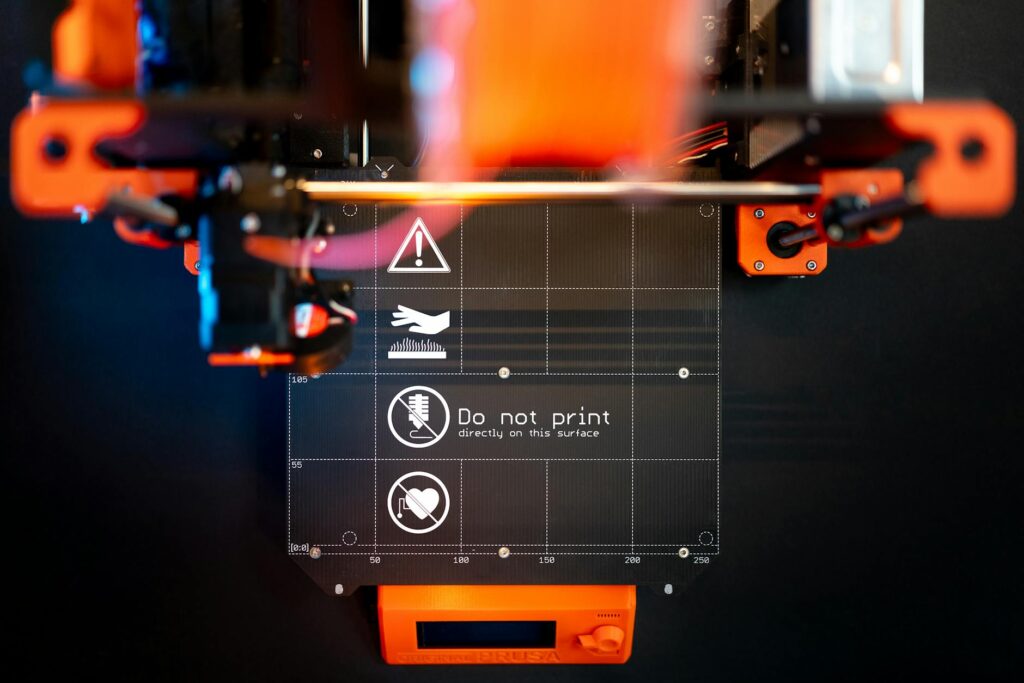
Additive manufacturing (AM) replaces subtractive processes with layer‑by‑layer deposition of material, enabling geometries that were previously infeasible. The technology’s material palette now spans high‑strength titanium alloys, recyclable thermoplastics, and bio‑ceramics, each selected for performance and environmental profile [2].
The technology’s material palette now spans high‑strength titanium alloys, recyclable thermoplastics, and bio‑ceramics, each selected for performance and environmental profile [2].
Two quantitative levers illustrate AM’s systemic potency.
- Lead‑time compression – Empirical studies at GE Aviation show that 3‑D‑printed fuel‑nozzle assemblies move from design to delivery in under 48 hours, a 70 percent reduction relative to conventional casting [3].
- Material efficiency – Additive processes generate up to 90 percent less scrap than CNC milling, translating into a 30 percent reduction in inventory carrying costs for firms that adopt “design for recyclability” principles [2].
 Career Guidance
How to Switch Industries Mid-Career Without Starting Over
Bridge roles can reduce risk, while targeted skills and industry-specific applications help you make the case for a new field.
Read More →Beyond the immediate cost metrics, AM introduces a structural decoupling of design and manufacturing. Digital files become the primary capital asset, shifting value creation from physical tooling to intellectual property (IP). This asymmetry reconfigures the power balance between large multinational OEMs—who traditionally owned the tooling—and smaller, agile firms that can now license designs and produce locally.
—
Systemic Ripple Effects – From Logistics to Institutional Realignment
The diffusion of AM generates cascading effects across the supply‑chain architecture.
Inventory and Logistics
On‑demand printing erodes the economic rationale for safety stock. A McKinsey analysis of 2022‑2024 pilot programs found that firms reduced average inventory levels by 25‑30 percent after integrating AM hubs within 200 km of end‑users, cutting last‑mile freight emissions by 15 percent [4]. The resulting logistics simplification lowers the total cost of ownership (TCO) for both manufacturers and retailers, while also diminishing exposure to trade‑policy shocks.
Regional Production Ecosystems
Localized AM hubs foster “micro‑clusters” that co‑locate design studios, material recyclers, and post‑processing facilities. The German “Additive‑Manufacturing Valley”—anchored by Siemens and a consortium of Mittelstand firms—has demonstrated a 12 percent increase in regional GDP per capita since 2020, attributed to higher‑value employment and reduced outbound logistics [5]. This mirrors the post‑World‑War II rise of aerospace clusters in Southern California, where technology spillovers amplified regional economic mobility.
Emerging Career Capital Additive Design Engineers – Mastery of topology optimization and multi‑material simulation now constitutes premium skill capital.
Institutional Power and Policy
Governments are responding with targeted subsidies and standards. The European Union’s “Additive Manufacturing for Sustainable Industry” program allocates €1.2 billion through 2028 to support pilot factories that meet circular‑economy criteria [6]. In the United States, the Department of Defense’s “Rapid Manufacturing Initiative” has earmarked $250 million for battlefield‑ready 3‑D‑printing units, reinforcing a strategic shift in defense procurement toward decentralized production. These policy levers institutionalize the structural shift, embedding AM within national industrial strategies.
—
Human Capital Impact – Winners, Losers, and the New Career Trajectory

 Entrepreneurship & Business
Storm Boelo Brings Wind, Rain and Travel Disruption to UK
Power outages, airport cancellations, ferry crossings and flooded roads added to the storm's effects across the UK.
Read More →The redistribution of manufacturing capability reshapes the labor market in three distinct dimensions.
Emerging Career Capital
Additive Design Engineers – Mastery of topology optimization and multi‑material simulation now constitutes premium skill capital. Salary surveys from the IEEE indicate a 45 percent premium for engineers certified in AM software compared with traditional CAD credentials.
Supply‑Chain Orchestrators – Professionals who can integrate digital order flows with decentralized production nodes are in demand. A 2023 Deloitte report notes that 38 percent of Fortune 500 supply‑chain leaders plan to hire “digital production managers” within the next two years.
Materials Scientists – Expertise in recyclable polymers and metal‑powder feedstocks is translating into higher‑margin roles in R&D labs and start‑ups focused on closed‑loop recycling.
Displacement Risks
Conversely, workers whose competencies are tied to mass‑production tooling—such as CNC machinists and assembly line operatives—face asymmetric risk. The International Labour Organization estimates that up to 1.2 million manufacturing jobs in the EU could be re‑skilled or displaced by 2028 as firms adopt AM for low‑volume, high‑complexity parts [7].
Economic Mobility
The diffusion of AM lowers entry barriers for entrepreneurs in emerging economies. In Kenya, a consortium of university labs and micro‑finance institutions launched a “Print‑to‑Earn” program that enabled 350 artisans to produce custom prosthetic components locally, raising average household income by 22 percent within 18 months [8]. This illustrates a structural pathway for upward mobility that bypasses traditional apprenticeship pipelines.
Leadership Imperatives
Corporate leadership must now navigate a bifurcated value chain: a digital design layer governed by IP policy, and a physical production layer governed by local regulatory and sustainability standards. CEOs who embed AM into corporate strategy—evidenced by Siemens’ 2022 “Digital Factory” roadmap—are positioning their firms to capture both cost savings and new revenue streams from design licensing.
Leadership Imperatives Corporate leadership must now navigate a bifurcated value chain: a digital design layer governed by IP policy, and a physical production layer governed by local regulatory and sustainability standards.
—
Outlook – The Next Three to Five Years
By 2029, three converging trends will solidify AM’s systemic role in global supply chains.
- Hybrid Production Networks – Approximately 40 percent of automotive OEMs will operate a hybrid model, combining mass‑produced chassis with on‑demand printed interior modules, reducing total vehicle weight by 5‑7 percent and associated fuel consumption.
- Standardized Material Certification – The ASTM International and ISO committees are expected to finalize a unified material‑performance framework by 2027, enabling cross‑border trade of printed parts without duplicate testing—a structural reduction in regulatory friction.
- Capital Reallocation to Digital Assets – Corporate balance sheets will increasingly treat design libraries and digital twins as intangible assets, with amortization schedules reflecting a 3‑5‑year useful life, mirroring software‑as‑a‑service accounting.
Firms that fail to integrate additive capabilities into their core logistics and talent strategies risk losing both market share and strategic relevance. Conversely, organizations that leverage AM to build localized, circular production ecosystems will capture asymmetric advantages in cost, sustainability, and talent attraction, reshaping the institutional architecture of manufacturing for the next decade.
 Entrepreneurship & Business
Qualcomm Plans Global Job Cuts After Annual Reviews
A memo from chief executive Cristiano Amon links the reductions to performance culture and says business priorities and required skills will guide decisions.
Read More →Key Structural Insights
> [Insight 1]: Additive manufacturing decouples design from tooling, shifting institutional power from centralized OEMs to digitally enabled regional hubs.
> [Insight 2]: On‑demand printing compresses lead times and inventory, generating a systemic reduction in logistics‑related carbon emissions and capital tied up in safety stock.
> [Insight 3]: The emergence of AM‑centric career capital creates new pathways for economic mobility while imposing asymmetric displacement risks on traditional manufacturing labor.
Written by Career Ahead AI. AI can make mistakes, so verify key facts. Report errors to support@careeraheadonline.com.





