No products in the cart.

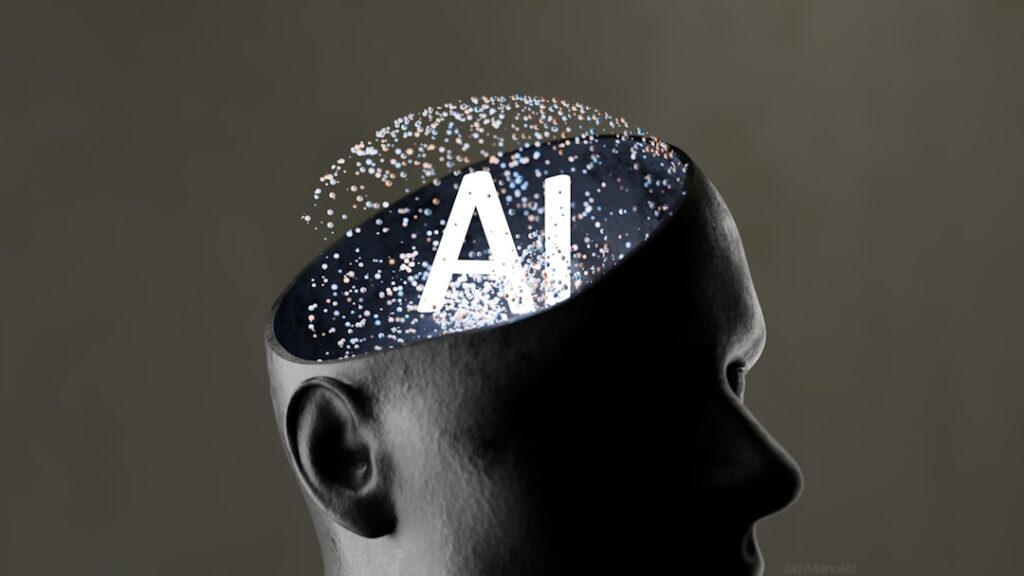
AI augmentation threatens core human skill sets

According to Career Ahead's analysis of the emerging research, this dynamic reconfigures the.

The rise of generative AI tools is reshaping workplace cognition, yet evidence shows that unchecked reliance erodes critical thinking, decision‑making depth, and long‑term career capital. Institutions must redesign deployment to safeguard skill development.
The acceleration of AI‑driven workflows coincides with mounting concerns about a systemic skill deficit. As firms embed large‑language models into daily operations, the paradox of heightened short‑term efficiency versus long‑term competency loss becomes a structural risk. Understanding this shift is essential for leaders seeking to preserve economic mobility and institutional resilience in an era of pervasive automation.
Framing the structural shift in skill development
AI’s diffusion across sectors is not a neutral technological wave but a reallocation of cognitive labor. Recent analysis highlights that when organizations prioritize speed over skill stewardship, they create a feedback loop where workers offload judgment to algorithms, diminishing the very expertise that fuels innovation. According to Career Ahead’s analysis of the emerging research, this dynamic reconfigures the hierarchy of career capital, privileging tool fluency while marginalizing deep domain mastery. Historical parallels to the spreadsheet era reveal similar patterns: early adopters captured efficiency gains, yet a generation of analysts later struggled with analytical reasoning absent from automated outputs. The current trajectory amplifies that legacy, demanding a policy lens that treats skill erosion as a systemic externality rather than an individual shortfall.Core mechanism: cognitive offloading and productivity traps

Systemic implications for institutional power and mobility
When skill decay concentrates within firms, power consolidates around AI vendors and data‑rich executives who control model updates. This asymmetry curtails upward mobility for employees whose career trajectories depend on demonstrable expertise. The APA’s recent monitoring report warns that regular AI exposure correlates with reduced confidence in independent judgment, a factor that can stall promotions and limit access to leadership roles. Moreover, organizations that fail to counteract skill erosion may see widening wage gaps, as high‑skill premiums diminish and compensation aligns more closely with tool proficiency—a shift that reshapes labor market stratification and threatens meritocratic advancement.Human capital impact and leadership response
Projected trajectory over the next three to five years
If current deployment patterns persist, the next half‑decade will see a consolidation of AI‑dependent roles and a contraction of deep‑skill positions, especially in knowledge‑intensive industries. Conversely, firms that embed skill‑preservation mandates are likely to generate a competitive edge, as their workforce retains the adaptive expertise needed for rapid market shifts. Forecasts suggest that institutional leaders who embed governance around AI‑augmented work will shape a new equilibrium where productivity and human skill development reinforce rather than undermine each other, redefining the architecture of career progression.The analysis underscores that safeguarding human skill development is integral to preserving institutional strength and equitable economic mobility as AI becomes ubiquitous.
Key Structural Insights
Career Ahead’s framework for skill sustainability identifies three levers: (1) transparent model design, (2) structured skill‑refresh cycles, and (3) cross‑functional mentorship that anchors AI use in domain expertise.
[Insight 1]: Unchecked AI augmentation creates a systemic feedback loop that degrades critical thinking, threatening the foundational elements of career capital across industries.
[Insight 2]: Institutions that embed transparent AI design and structured skill‑refresh cycles can mitigate cognitive offloading, preserving both leadership pipelines and economic mobility.
[Insight 3]: Over the next three to five years, firms that prioritize skill sustainability will gain a strategic advantage, reshaping the labor market toward a balanced AI‑human productivity model.
Relying on AI erodes creativity. As AI takes over routine tasks, human workers may struggle to develop creative problem-solving skills, leading to a decline in innovation and original thinking in various industries.
[Insight 2]: Institutions that embed transparent AI design and structured skill‑refresh cycles can mitigate cognitive offloading, preserving both leadership pipelines and economic mobility.
Automation widens skill gaps. The increasing use of AI in the workforce may exacerbate existing skill disparities, particularly for those in lower-skilled or entry-level positions, who may be left behind in the transition to a more automated economy.
Written by Career Ahead AI. AI can make mistakes, so verify key facts. Report errors to support@careeraheadonline.com.