No products in the cart.

AI Automation Threatens Human Ingenuity in Tech
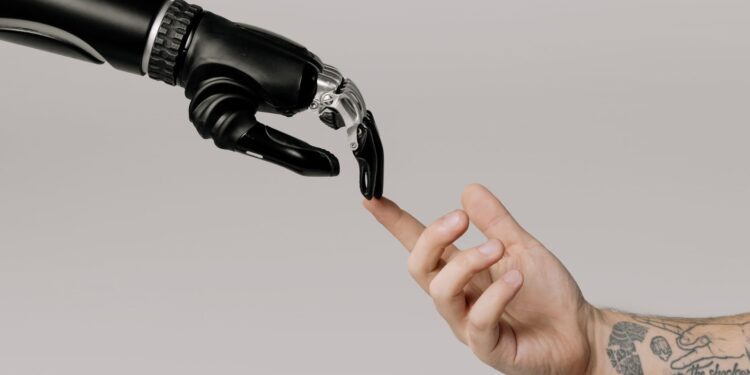
The tool churned out a significant number of concepts in minutes, but the engineers dismissed the half-baked suggestions. Within weeks,...

The product team at a midsize software firm swapped nightly brainstorming for an AI-generated idea feed. The tool churned out a significant number of concepts in minutes, but the engineers dismissed the half-baked suggestions. Within weeks, the prototype lacked the quirky twists that once defined the brand.
When the lead designer asked why the team felt uninspired, the manager pointed to the metric dashboard. The dashboard showed a drop in cycle time, but it also recorded a dip in internal idea-generation scores. The team celebrated speed while the creative spark faded.
The Automation Paradox in Practice
The team’s switch mirrors a wave sweeping across tech firms. Companies prize throughput, reward short-term efficiency, and equip workers with generative AI assistants. Those assistants supply ready-made outputs, so employees skip the messy, divergent thinking that fuels breakthrough.
When AI drafts the first draft, people edit the second. The edit loop shortens, but the habit of exploring “what if” erodes. Over time, staff rely on the model’s priors instead of probing their own intuition.
Our analysis shows that there is a growing concern about creative displacement, yet the same poll flags rising anxiety about AI’s impact on human work.
The paradox deepens as talent pipelines favor algorithmic fluency over craft. Universities now teach prompt engineering alongside coding, and recruiters flag “creative problem-solving” with AI-test scores. The hiring filter amplifies the bias toward automation-savvy candidates, crowding out those who thrive on analog ideation.
Our analysis shows that there is a growing concern about creative displacement, yet the same poll flags rising anxiety about AI’s impact on human work. When executives chase the headline of AI supremacy, they often ignore the quiet loss of human nuance that underpins long-term value.
Our view is that AI reflects the values and society that created it, and its impact on human work is a complex issue. We see the pattern as a feedback loop between capital expectations and talent development. Venture funds reward rapid MVP launches, startups double down on AI-first roadmaps, and employees internalize the mantra “move fast, automate faster.” The loop hardens, making it harder to re-inject unstructured creativity without a costly cultural overhaul.
The structural pull toward automation also skews risk assessment. Boards measure success by quarterly growth, not by the depth of a product’s cultural resonance. As a result, firms allocate budgets to AI licenses while cutting funds for design sprints, mentorship programs, and cross-disciplinary workshops.
We argue that preserving ingenuity requires intentional counter-measures. Companies should earmark a portion of R&D spend for “human-first” experiments, track idea diversity alongside velocity, and celebrate failures that arise from unguided exploration. Without such guardrails, the efficiency gains become a hollow victory.
Edge Cases: When Automation Amplifies, Not Replaces, Creativity
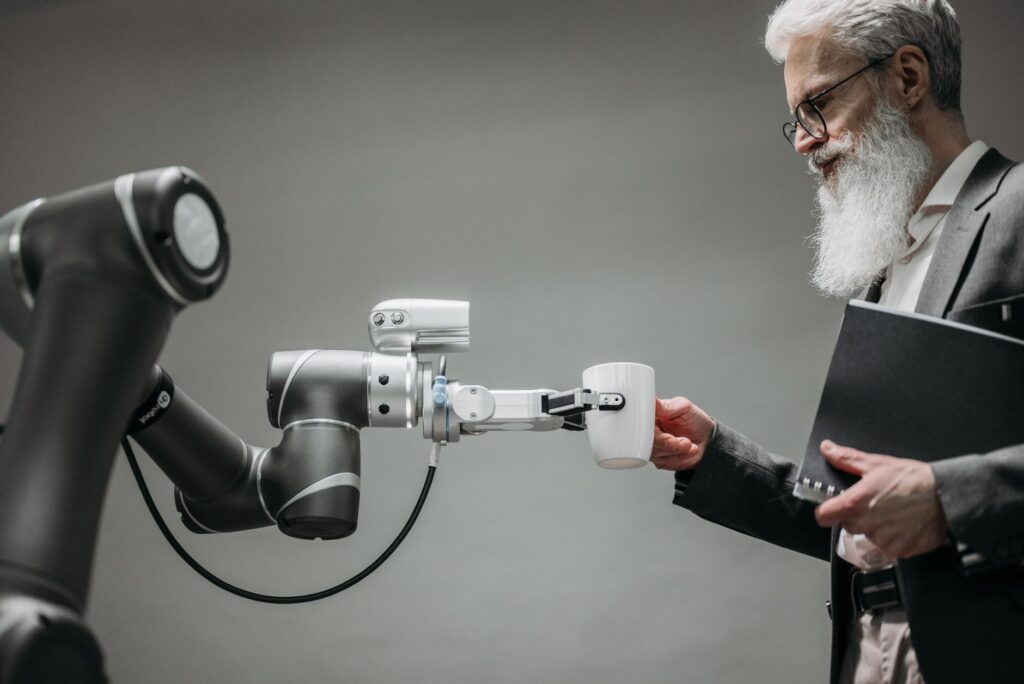
Some sectors harness AI as a collaborator rather than a substitute. In generative music, artists feed a model a motif and then improvise over the AI’s variations, producing hybrid works that neither could achieve alone. The key lies in treating the model as a muse, not a crutch.
You may also like
 AI & Technology
Amazon Invests $1 Billion Amid AI Data Center Criticism
This significant financial commitment comes as Amazon faces increasing scrutiny over the environmental impact of its AI operations.
Read More →Boards measure success by quarterly growth, not by the depth of a product’s cultural resonance.
In healthcare diagnostics, clinicians use AI to flag anomalies but retain the final interpretive judgment. The partnership sharpens expertise while keeping the human narrative central. These examples show that a balanced design can boost both speed and depth.
If firms embed these partnership principles, they can sidestep the creativity drain. Leaders must audit every AI deployment for its impact on human agency, and they must redesign workflows to keep the human mind in the decision loop.
Takeaway: Prioritize hybrid processes that keep humans at the creative helm, measure ingenuity as rigorously as efficiency, and allocate resources to nurture the intuitive skills AI cannot replicate.