

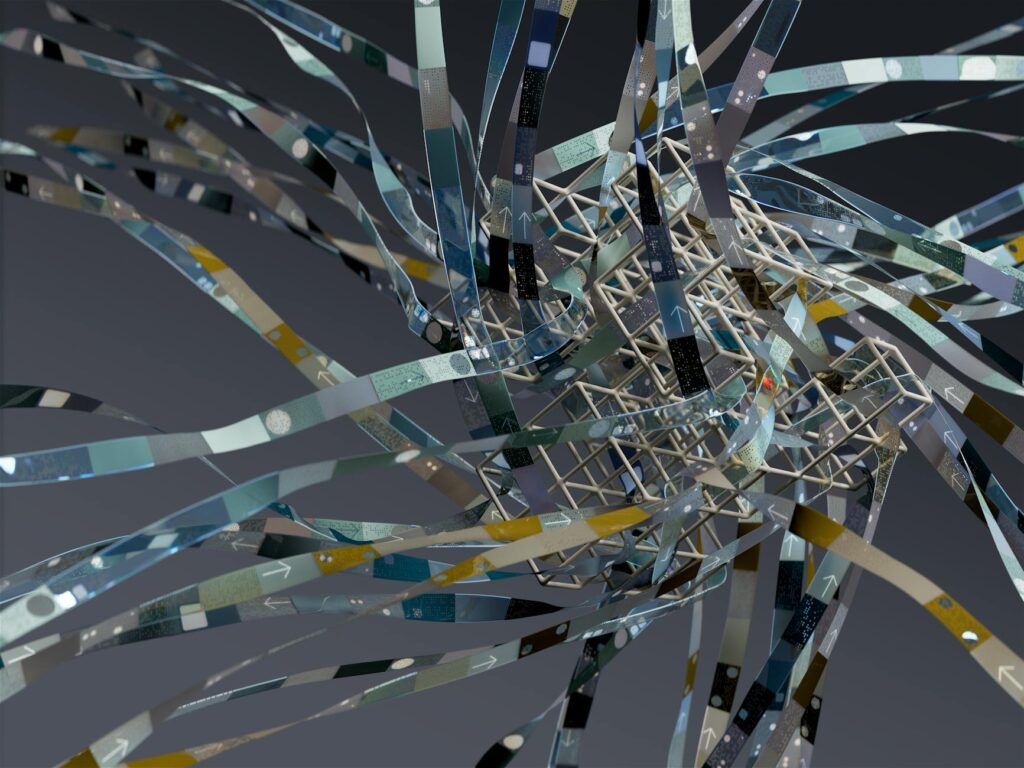
Human designers who partner with generative AI are producing fresher, riskier work than they could alone.
The Creative Partnership
A recent study by Tech Xplore found that design teams using an AI sketch assistant produced 27% more unique concepts than groups that relied on pen and paper alone. The study measured novelty, feasibility, and emotional impact, and the AI-augmented teams outperformed the control on every metric.
This partnership is not about machines replacing artists, but about algorithms amplifying ideas. The buzz around AI-generated art has sparked heated debates on forums from Reddit’s r/Design to the Stanford Graduate School of Business blog, where commentators warn that unchecked automation could erode the craft of design.
The Benefits of Human-AI Collaboration
Research from Carnegie Mellon University shows that when musicians paired with an AI composer, their pieces scored higher on originality while still retaining a human “voice.” The same principle translates to visual design: AI can suggest color palettes, composition tweaks, or even whole motifs in seconds.
The buzz around AI-generated art has sparked heated debates on forums from Reddit’s r/Design to the Stanford Graduate School of Business blog, where commentators warn that unchecked automation could erode the craft of design.
However, critics point to the “black-box” nature of many models, arguing that designers lose control over the creative process when an algorithm decides the next brushstroke. Moreover, a Frontiers paper notes that users often defer to AI suggestions, even when they conflict with their own instincts, leading to “automation bias.”
The Stakes: Artistic Identity and Economic Impact
When AI-generated art floods the market, consumers win on price and variety, but artists risk marginalization. A Stanford case study documented a 12% drop in commission rates for freelance illustrators after a major stock-image platform integrated AI-created assets.
Beyond earnings, the debate touches identity. Many designers argue that art’s value lies in lived experience, cultural nuance, and emotional depth—qualities they claim AI cannot replicate. Yet supporters counter that AI can surface patterns and references that human creators might overlook, expanding the palette of cultural expression.
Responding to the Challenge
Design schools are already rewiring curricula. The Rhode Island School of Design announced a pilot where students spend half the semester learning prompt design, data ethics, and AI-tool integration. Industry leaders at Autodesk have released a “Co-Creation Toolkit” that bundles AI generators with version-control features, enabling designers to track how an idea evolves from prompt to final render.
Freelancers are forming collectives to negotiate fair compensation for AI-augmented work. One such group, the Creative Futures Guild, offers a licensing model that splits revenue between the human creator and the AI service provider, aiming to preserve the economic value of human input.
The Future of Human-AI Co-Creation
 Industry & Global Trends
Agarwal Says India Can Attract Data Centre Investment
Agarwal cites data-centre construction costs around half the US and Europe level, renewable energy, a 1.5 billion population and coastline.
Read More →Looking ahead, the trajectory points toward tighter integration. A Frontiers survey found that 68% of respondents now view AI as their preferred co-creation partner, up from 42% three years ago. As models learn from larger, more diverse datasets, the risk of homogenization may rise, but so does the potential for cross-cultural mash-ups previously unimaginable.
The Rhode Island School of Design announced a pilot where students spend half the semester learning prompt design, data ethics, and AI-tool integration.
The outlook is not uniformly rosy. Regulatory bodies are beginning to draft guidelines on AI-generated content attribution, which could impose new compliance costs on studios. Meanwhile, the “creative fatigue” some designers report—feeling less inspired after prolonged AI use—remains an open research question.
For designers willing to experiment, the partnership offers a chance to push beyond personal style constraints and explore uncharted visual territories. For those who cling to a purely human process, the market may soon favor the hybrid model. The next decade will likely be defined not by AI versus artist, but by how skillfully the two can dance together.
Written by Career Ahead AI. AI can make mistakes, so verify key facts. Report errors to support@careeraheadonline.com.





