

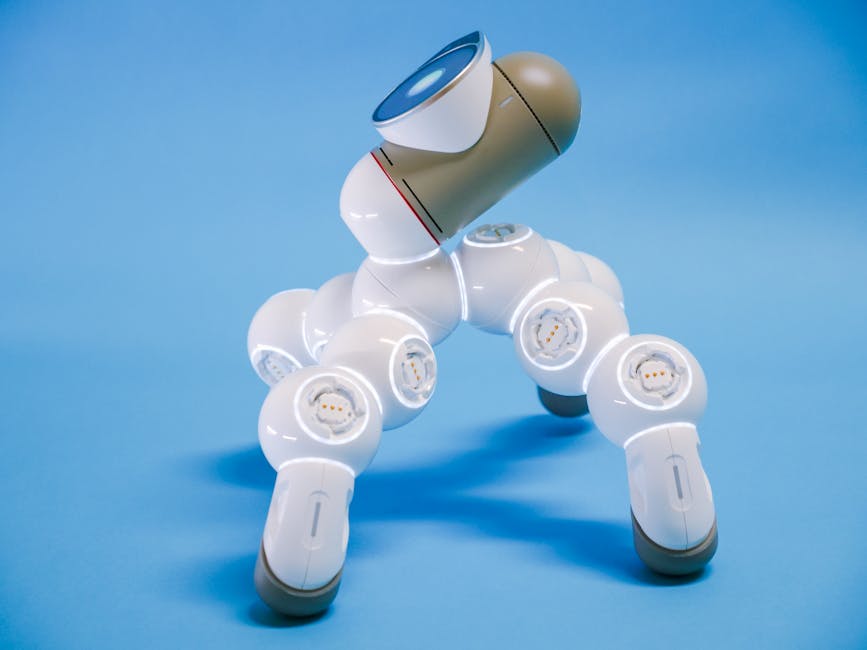
As artificial intelligence matures from a supportive assistant to a co‑creator, product teams worldwide are reshaping every stage of development. This article maps the five most consequential AI‑driven design trends emerging in February 2026, shows how leading innovators are applying them, and offers actionable guidance for firms that want to stay ahead of the curve.
1. generative Design Becomes the Default Engine
Generative design is revolutionizing the product development process by enabling the creation of complex designs that meet specific constraints and requirements. According to [1], CrafterCMS has launched an MCP Client Plugin to enable AI-powered digital experiences, which includes generative design capabilities. This technology allows designers to create multiple design options and iterate on them quickly, reducing the time and cost associated with traditional design methods. For instance, a company like Boeing can use generative design to create lightweight aircraft components that meet strict safety and performance requirements.
2. AI‑Powered User‑Experience Prototyping
AI-powered user-experience prototyping is another trend that is gaining traction in the product development industry. As reported by [2], the acoustic panels market is expected to grow significantly by 2035, driven by stricter building standards. This growth is likely to be fueled by the use of AI-powered design tools that can simulate and optimize the acoustic performance of buildings. For example, a company like Autodesk can use AI-powered design tools to create virtual prototypes of buildings and simulate their acoustic performance, allowing architects to make data-driven decisions about design and materials.
generative Design Becomes the Default Engine Generative design is revolutionizing the product development process by enabling the creation of complex designs that meet specific constraints and requirements.
3. Data‑Centric Design Governance & Ethics
As AI-driven design tools become more prevalent, there is a growing need for data-centric design governance and ethics. According to [3], the engineering service outsourcing market is expected to grow at a CAGR of 28% by 2026, driven by the increasing adoption of AI-driven design tools. This growth is likely to be accompanied by an increased focus on data governance and ethics, as companies seek to ensure that their design processes are transparent, fair, and compliant with regulatory requirements. For instance, a company like IBM can use AI-powered design tools to analyze and optimize the design of complex systems, while ensuring that the design process is transparent and auditable.
4. Collaborative AI Across Distributed Teams
Collaborative AI is another trend that is transforming the product development industry. As reported by [4], there are many profitable AI business ideas that can be started in 2026, including collaborative AI platforms for product development. These platforms enable distributed teams to work together more effectively, using AI-powered design tools to collaborate and iterate on designs in real-time. For example, a company like Microsoft can use collaborative AI platforms to enable distributed teams to work together on complex product development projects, using AI-powered design tools to facilitate communication and collaboration.
5. Monetising AI‑Generated Innovation
Finally, there is a growing trend towards monetizing AI-generated innovation in the product development industry. According to [5], artificial intelligence hardware investment is accelerating in San Francisco, driven by the growing demand for AI-powered design tools. This trend is likely to be accompanied by an increased focus on monetizing AI-generated innovation, as companies seek to capitalize on the value created by AI-driven design tools. For instance, a company like NVIDIA can use AI-powered design tools to create and license intellectual property, such as AI-powered design modules, to other companies.
# Key Takeaways:
Generative design is becoming the default engine for product development, enabling the creation of complex designs that meet specific constraints and requirements.
AI-powered user-experience prototyping is gaining traction, allowing companies to simulate and optimize the performance of products and buildings.
Data-centric design governance and ethics are becoming increasingly important, as companies seek to ensure that their design processes are transparent, fair, and compliant with regulatory requirements.
Collaborative AI is transforming the product development industry, enabling distributed teams to work together more effectively using AI-powered design tools.
Monetizing AI-generated innovation is a growing trend, as companies seek to capitalize on the value created by AI-driven design tools.
- Explore opportunities to monetize AI-generated innovation, such as licensing AI-powered design modules or creating and selling AI-generated intellectual property.
# Actionable Advice:
To stay ahead of the curve in the product development industry, companies should consider the following strategies:
Invest in AI-powered design tools, such as generative design and AI-powered user-experience prototyping.
Develop data-centric design governance and ethics frameworks, to ensure that design processes are transparent, fair, and compliant with regulatory requirements.
Implement collaborative AI platforms, to enable distributed teams to work together more effectively.
Written by Career Ahead AI. AI can make mistakes, so verify key facts. Report errors to support@careeraheadonline.com.





