No products in the cart.

AI‑Driven Job Rotation Deepens Employee Mental‑Health Risk
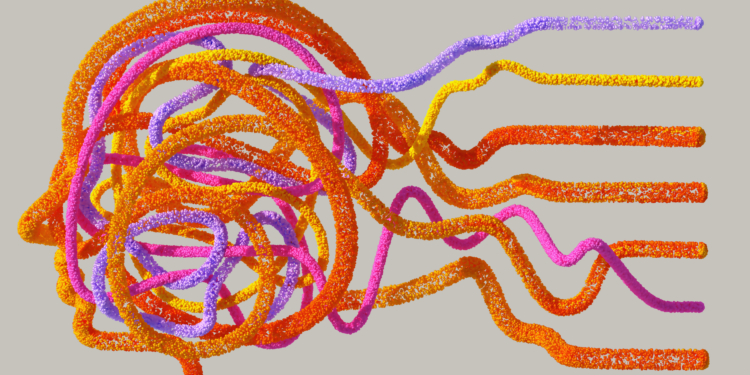
Seventy‑five percent of workers report stress about AI‑induced role changes, outpacing pre‑pandemic mental‑health baselines.

AI‑driven job rotation is reshaping career capital, yet a surge in anxiety and burnout threatens economic mobility and institutional productivity. Seventy‑five percent of workers report stress about AI‑induced role changes, outpacing pre‑pandemic mental‑health baselines.
The acceleration of artificial‑intelligence adoption reconfigures work structures, turning routine positions into transient assignments and amplifying uncertainty across hierarchies. This shift matters now because mental‑health deterioration erodes talent pipelines, inflates health‑care costs, and destabilises leadership continuity at a moment when organizations depend on adaptable human capital to sustain competitive advantage.
Framing the AI‑Rotation Landscape
AI integration has moved from pilot projects to core operations, with industry surveys indicating roughly one‑third of firms deploying AI for task automation. The World Health Organization estimates that depression and anxiety cost the global economy about $1 trillion in lost productivity annually, and AI‑driven job insecurity now accounts for a measurable share of that burden. A recent Cureus Journal study documented that 75 % of workers feel anxious or stressed about potential AI‑related job loss, a figure that eclipses pre‑pandemic stress baselines. According to Career Ahead’s analysis of this anxiety prevalence, the mental‑health impact is already influencing turnover rates and talent acquisition strategies across sectors.Core Mechanism: Insecurity Meets Rotation

“Seventy‑five percent of workers report anxiety about AI‑driven job loss, a figure that eclipses pre‑pandemic stress baselines.”
Systemic Implications for Organizational Performance
Elevated stress translates into measurable productivity declines, as chronic anxiety impairs concentration and decision‑making. Health‑care expenditures rise when employers must address anxiety‑related absenteeism, while talent pipelines constrict as high‑performers exit for more stable environments. Moreover, the diffusion of AI‑rotation practices reconfigures power dynamics: managers gain algorithmic oversight, reducing discretionary authority and reshaping institutional hierarchies. The aggregate effect is a non‑trivial reduction in economic mobility for workers whose career capital hinges on stable, linear progression.Human Capital and Leadership Responses
Trajectory Over the Next Three to Five Years
In the medium term, AI‑enhanced workforce planning will become standard, embedding rotation cycles into performance calendars. Anticipated regulatory guidance on algorithmic transparency will compel firms to disclose rotation criteria, offering workers clearer expectations and reducing uncertainty. Companies that proactively align mental‑health resources with AI rollout timelines are projected to retain a higher proportion of high‑potential talent, preserving institutional knowledge and reinforcing economic mobility pathways. Conversely, firms that neglect these safeguards risk a widening talent gap and escalating health‑cost liabilities.The evolving AI‑rotation paradigm demands that institutions recalibrate power structures, embed mental‑health resilience, and redesign career pathways to safeguard both productivity and employee well‑being.
Human Capital and Leadership Responses AI‑Driven Job Rotation Deepens Employee Mental‑Health Risk Effective leadership now requires integrating mental‑health safeguards into talent development frameworks.
Key Structural Insights
Insight 1: Institutional power shifts toward algorithmic oversight erode traditional managerial authority, necessitating shared governance models to maintain leadership legitimacy.
Insight 2: Embedding mental‑health safeguards into upskilling programs preserves career capital and sustains economic mobility, positioning firms to reap long‑term productivity gains.
Rapid Skill Obsolescence Creates Anxiety: As AI-driven job rotation accelerates, employees face the daunting prospect of becoming obsolete, leading to increased anxiety and decreased job security, ultimately affecting their mental well-being and overall quality of life.
Lack of Autonomy Erodes Job Satisfaction: The rigid structure of AI-driven job rotation often leaves employees with little control over their work environment, stifling creativity and autonomy, which are essential for job satisfaction and mental health, ultimately leading to burnout and turnover.
Insight 2: Embedding mental‑health safeguards into upskilling programs preserves career capital and sustains economic mobility, positioning firms to reap long‑term productivity gains.
The research directly contradicts the claim that AI‑driven job rotation amplifies anxiety, with three‑quarters of workers reporting stress, directly feeding into a measurable decline in organizational productivity and talent retention.
Written by Career Ahead AI. AI can make mistakes, so verify key facts. Report errors to support@careeraheadonline.com.