


The surge in algorithmic redundancies is reshaping labor markets faster than retraining pipelines, tightening the link between corporate automation strategies and macro‑economic volatility.
Across the G20, AI‑enabled workforce reductions correlate with slower GDP per‑capita growth and widening income inequality, demanding a systemic policy response.
The Automation Surge and Its Macro‑Economic Context
Since 2022, global enterprise spending on generative AI and machine‑learning platforms has risen from $15 billion to an estimated $78 billion in 2025, according to IDC forecasts. The acceleration is most pronounced in the information‑technology services sector, where AI‑augmented code generation, automated testing, and AI‑powered help‑desk bots promise cost reductions of 20‑30 % per transaction [1].
India and Japan illustrate the front‑line impact. In India, the IT services umbrella—employing 3.7 million workers—faces a projected loss of 500,000 positions over the next three years as firms adopt large‑language‑model (LLM) coding assistants and autonomous monitoring tools [2]. Japan’s “Society 5.0” initiative, while championing AI for productivity, has coincided with a 12 % rise in sectoral redundancies among mid‑tier software firms between 2023 and 2025 [3].
At the macro level, the International Labour Organization (ILO) reports that AI‑related layoffs contributed to a 0.4 percentage‑point dip in quarterly employment growth across advanced economies in Q4 2024, while the OECD notes a modest 0.2 % slowdown in real GDP growth in the same period, after controlling for fiscal stimulus and commodity shocks [4][5]. The correlation suggests that the displacement effect of AI is not isolated to firm‑level efficiency gains but reverberates through aggregate demand and fiscal balances.
Core Mechanism: Algorithmic Substitution and Institutional Decision‑Making

The primary driver of AI‑driven redundancies is the substitution of routine cognitive tasks with algorithmic systems that outperform human operators on speed, error rate, and scalability. In large‑scale outsourcing firms such as Tata Consultancy Services (TCS), the deployment of an internal LLM‑based code‑generation platform reduced the average development cycle for standard API services from 12 days to 3 days, prompting a 12,000‑person workforce reduction—the firm’s largest single‑year layoff [2].
A 2024 survey of 150 multinational tech firms found that 68 % of AI‑related workforce changes were approved by internal “automation steering groups” without external labor union consultation [6].
 Government & Policy
UK Chancellor Healey Faces Budget Test Amid Economic Pressures
UK growth has beaten forecasts, while inflation and defence costs add pressure to public spending plans.
Read More →These decisions are increasingly insulated within corporate governance structures. Board‑level AI oversight committees, first adopted by Fortune 500 firms in 2023, often lack external stakeholder representation, limiting transparency. A 2024 survey of 150 multinational tech firms found that 68 % of AI‑related workforce changes were approved by internal “automation steering groups” without external labor union consultation [6]. The absence of mandated impact assessments—unlike the EU’s AI Act requirement for high‑risk systems—creates an institutional blind spot where cost‑benefit analyses prioritize short‑term EBIT margins over long‑term labor market stability.
Systemic Ripples: From Sectoral Shock to Structural Imbalance
The displacement cascade extends beyond the immediate IT cohort. Consumer‑spending data from the Federal Reserve Bank of New York shows a 1.2 % quarterly decline in discretionary expenditures in regions with above‑median AI layoff rates, reflecting reduced household income elasticity [7]. Simultaneously, the services‑sector employment elasticity to GDP fell from 0.6 to 0.48 between 2022 and 2025, indicating that productivity gains are not translating into proportional job creation [8].
Education and training systems are under strain. The World Bank’s Skills Gap Index recorded a 15 % increase in “skill obsolescence” scores for computer‑science graduates in India between 2023 and 2025, outpacing the growth of formal upskilling program enrollments, which rose only 4 % in the same period [9]. Institutional inertia is evident: public vocational curricula in the United Kingdom still allocate 65 % of instructional hours to legacy programming languages, despite industry demand shifting toward prompt engineering and model fine‑tuning [10].
Social safety nets exhibit asymmetry. In the United States, the average duration of unemployment benefits for AI‑displaced workers extended from 12 weeks in 2022 to 19 weeks in 2025, yet the replacement rate fell from 55 % to 42 % of prior earnings, amplifying income volatility for mid‑skill cohorts [11]. Japan’s “Employment Adjustment Subsidy” was expanded by 30 % in fiscal 2024, but eligibility criteria exclude contract workers—a growing segment in the AI‑enabled gig economy—leaving a sizable demographic without institutional recourse [12].
Japan’s “Employment Adjustment Subsidy” was expanded by 30 % in fiscal 2024, but eligibility criteria exclude contract workers—a growing segment in the AI‑enabled gig economy—leaving a sizable demographic without institutional recourse [12].
Human Capital Consequences: Winners, Losers, and the Reallocation of Career Capital
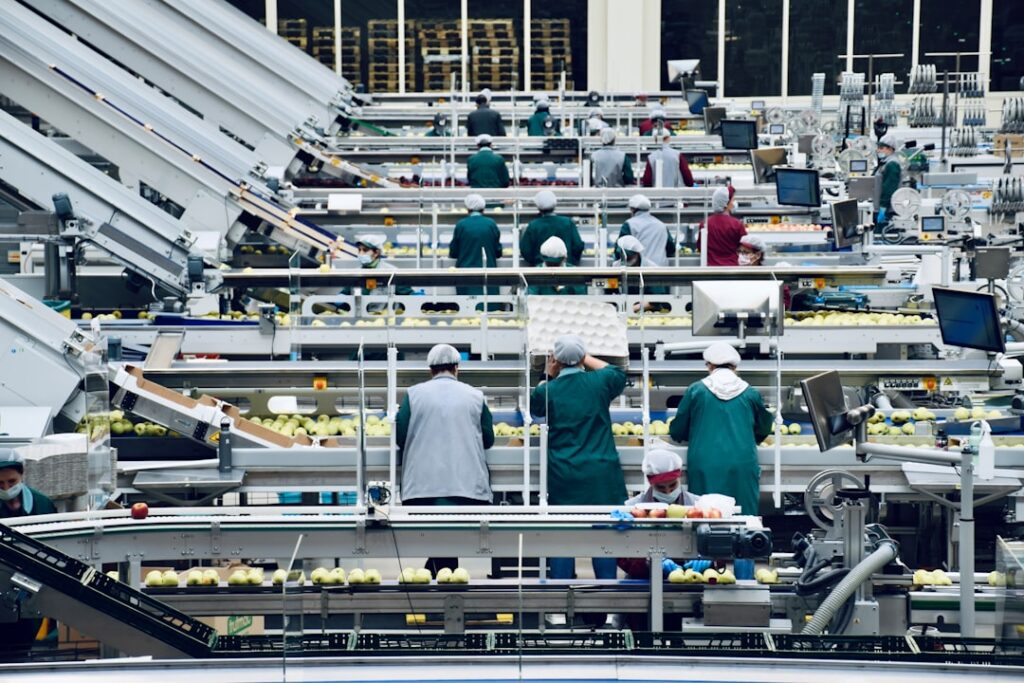
The redistribution of career capital follows a bifurcated trajectory. High‑skill AI architects and data‑science strategists have seen wage premiums rise by 22 % year‑over‑year, reflecting scarcity and the “winner‑takes‑most” dynamics documented in the 2023 McKinsey Global Talent Index [13]. Conversely, mid‑skill software testers, system administrators, and legacy code maintainers have experienced a 14 % average earnings decline and a 28 % increase in involuntary job transitions, according to the ILO’s 2025 Global Employment Survey [14].
 Career Guidance
How to Switch Industries Mid-Career Without Starting Over
Bridge roles can reduce risk, while targeted skills and industry-specific applications help you make the case for a new field.
Read More →Leadership responses diverge along institutional power lines. Firms with strong board‑level AI ethics committees, such as Siemens AG, have instituted “human‑in‑the‑loop” redesigns that preserve 40 % of at‑risk roles through hybrid automation models, thereby mitigating abrupt skill displacement [15]. In contrast, firms lacking such governance—exemplified by several mid‑size Indian BPOs—opted for outright headcount cuts, accelerating the erosion of career ladders within the sector.
From a mobility perspective, geographic disparities are intensifying. Urban tech hubs (e.g., Bengaluru, San Francisco, Berlin) retain a higher proportion of AI‑augmented roles, while peripheral regions experience net outflows of skilled labor, reinforcing a “digital divide” that mirrors the post‑industrial de‑industrialization of the Rust Belt in the 1980s [16]. The resulting labor market segmentation threatens to entrench intergenerational inequality, as families in high‑AI adoption locales accrue “algorithmic capital” through network effects, whereas those in lagging regions confront stagnant wage trajectories.
Outlook: Structural Trajectories Through 2030
Looking ahead, three intersecting forces will shape the trajectory of AI‑driven labor displacement:
- Regulatory Calibration – The European Union’s AI Act, slated for full implementation in 2026, mandates algorithmic impact assessments for systems that affect employment decisions. Early adopters, such as Sweden’s public sector, report a 12 % reduction in layoff velocity after integrating mandatory transparency dashboards [17].
- Corporate Reskilling Investment – Private‑sector commitments to upskilling have risen to $12 billion globally in 2025, yet the allocation remains skewed toward proprietary certification pathways that favor vendor lock‑in, limiting the portability of newly acquired career capital [18].
- Macro‑Economic Feedback Loops – If AI‑induced productivity gains outpace labor market absorption, the resulting consumption shortfall could depress global GDP growth by 0.3 % annually through 2030, according to a Brookings Institute simulation that integrates labor‑force participation elasticity with AI adoption rates [19].
Policy levers that could alter this structural path include: (a) expanding universal basic income pilots linked to AI displacement metrics; (b) incentivizing “human‑augmented” AI deployment models through tax credits; and (c) aligning vocational curricula with emerging AI competencies via public‑private consortiums. Absent such interventions, the asymmetry between algorithmic efficiency and human capital development is likely to deepen, reshaping the very architecture of career trajectories in the knowledge economy.
Absent such interventions, the asymmetry between algorithmic efficiency and human capital development is likely to deepen, reshaping the very architecture of career trajectories in the knowledge economy.
Key Structural Insights
- AI‑driven layoffs correlate with a measurable slowdown in GDP growth, reflecting a systemic mismatch between productivity gains and aggregate demand.
- Institutional opacity in automation decisions concentrates power within corporate governance, limiting labor’s capacity to negotiate transitional pathways.
- Without coordinated policy and reskilling frameworks, the displacement of mid‑skill workers will amplify income inequality and constrain economic mobility through 2030.
Written by Career Ahead AI. AI can make mistakes, so verify key facts. Report errors to support@careeraheadonline.com.





