No products in the cart.

Leaders Must Embrace AI Overautomation to Prevent Human Skill Decay

Leaders must deliberately balance AI automation with human skill development, using the Augmentation Balance Index to safeguard talent and drive sustainable innovation.

We argue that the paradox of AI augmentation demands a deliberate tilt toward human‑AI synergy, not unchecked automation, to preserve and amplify core professional capabilities.
Leaders who assume that maximal automation automatically yields maximal value overlook a structural asymmetry: every algorithmic gain extracts a proportional amount of tacit skill from the human operator. The augmentation paradox, observed across manufacturing, finance, and creative sectors, shows that when AI assumes routine tasks without a concurrent upskilling strategy, the residual workforce experiences measurable atrophy. This pattern is not a fleeting side‑effect; it is a trajectory that reshapes the very composition of career capital within organizations.
To navigate this terrain, we propose the Augmentation Balance Index (ABI), a diagnostic tool that quantifies the equilibrium between AI‑driven efficiency and human skill retention. The ABI scores each function on a scale of 0 to 100, where the upper quartile reflects a “synergy‑rich” state—AI handles data‑intensive processing while humans retain decision‑making, creative, and relational responsibilities. A low ABI signals overautomation, prompting leaders to reallocate training resources, redesign workflows, or introduce “human‑in‑the‑loop” checkpoints. By embedding the ABI into quarterly performance reviews, executives can monitor the health of their talent ecosystem with the same rigor applied to financial KPIs.
The augmentation paradox, observed across manufacturing, finance, and creative sectors, shows that when AI assumes routine tasks without a concurrent upskilling strategy, the residual workforce experiences measurable atrophy.
Empirical signals reinforce the urgency of this balance. Only approximately 10% of papers presented at the Academy of Management Annual Meeting Proceedings progress to full publication, underscoring a lag between research insights on human‑AI collaboration and their practical diffusion. Moreover, Daniel Burrus predicts that over the next five years AI will “certainly enhance” rather than replace human workers, a timeline that aligns with the ABI’s five‑year calibration horizon. The convergence of these data points suggests that the window for proactive skill stewardship is both narrow and predictable.
You may also like
 Future Skills & Work
NYC
The AI sector in the United States is facing a significant downturn, impacting young job seekers and recent graduates nationwide. Companies are changing their hiring…
Read More →Our view is that Daniel Burrus’s perspective on AI enhancement reframes augmentation from a threat narrative to a strategic lever. Leaders must therefore shift from a defensive posture—protecting jobs from automation—to an offensive one, engineering collaborative workflows that amplify human judgment. This requires institutionalizing continuous learning pathways that are not ancillary but integral to operational design. Training modules should prioritize empathy, systems thinking, and strategic foresight, competencies that resist mechanization and generate disproportionate value when coupled with AI‑derived insights.
The cultural dimension of the ABI is equally decisive. Organizations that celebrate technical expertise alone create a monoculture vulnerable to rapid displacement. In contrast, firms that reward cross‑functional curiosity and interdisciplinary problem‑solving cultivate a resilient talent pool. The ABI’s “human‑centric” metric captures this by weighting mentorship, knowledge‑sharing sessions, and interdisciplinary project participation. When leaders allocate budget toward these activities, the resulting skill diffusion mitigates the erosion risk inherent in any automation rollout.
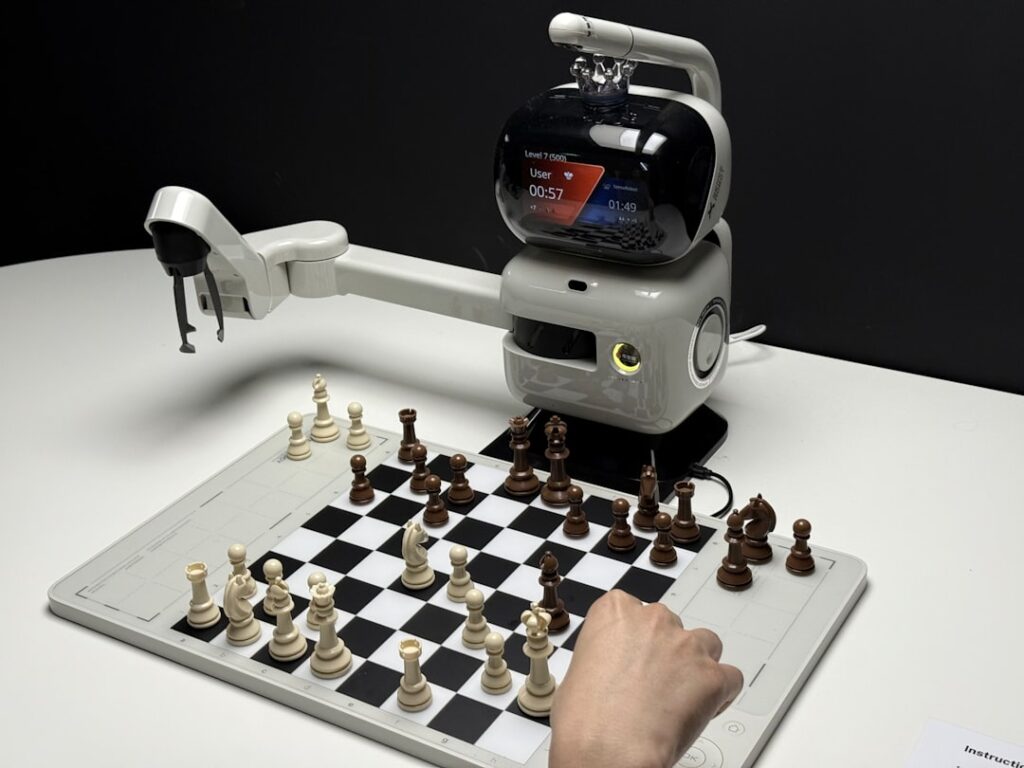
Skill decay is not merely a loss of capability; it is an asymmetry that erodes competitive advantage. When AI handles a significant portion of data extraction, the remaining analytical work becomes a bottleneck, and the organization’s decision velocity stalls. The ABI quantifies this bottleneck, exposing the hidden cost of overautomation that standard efficiency metrics obscure. Ignoring this asymmetry is tantamount to trading short‑term productivity gains for long‑term strategic vulnerability.
Our view is that the next generation of leadership will be defined by the ability to calibrate the ABI in real time, using it to steer investment toward human‑AI interfaces that preserve core competencies while exploiting algorithmic speed. Professionals should monitor their organization’s ABI score, advocate for “human‑in‑the‑loop” design principles, and embed continuous learning contracts into their career trajectories. The organizations that master this balance will convert the augmentation paradox from a liability into a durable source of innovation.