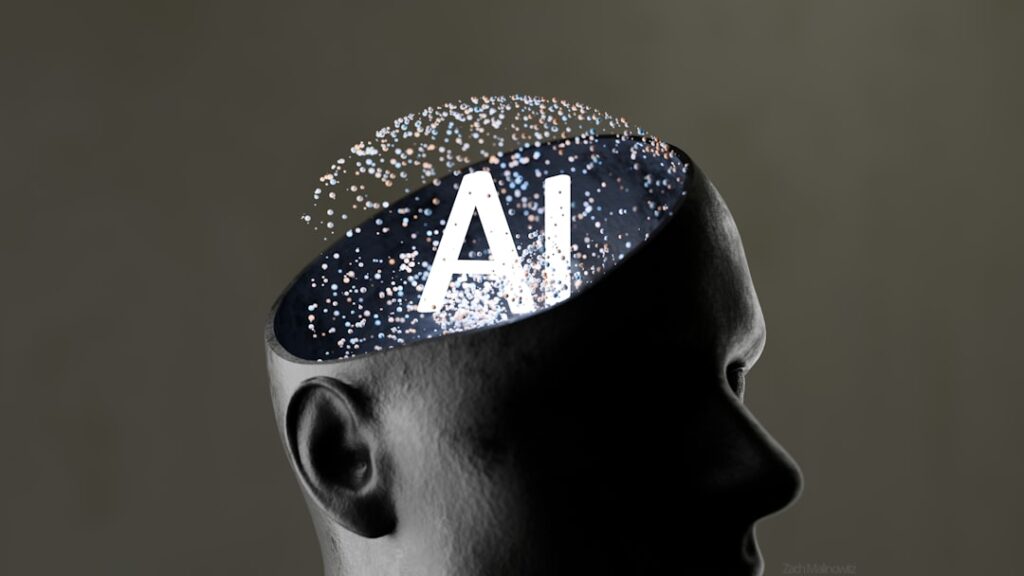
Relying on AI because it seems flawless blinds organizations to hidden bias, erodes human judgment, and reshapes power structures.
The standard view is that AI-augmented decision-making simply improves outcomes: algorithms are portrayed as objective, faster, and less error-prone than human judgment, and the prevailing narrative celebrates the inevitable rise of hybrid decision systems across industries.
We think this is wrong, and here is why. The illusion of flawless AI creates a trust asymmetry that privileges algorithmic authority, masks systematic bias, and ultimately displaces human autonomy in ways that current optimism fails to account for.
Trust asymmetry overestimates accuracy
The prevailing confidence in AI rests on a misplaced belief that statistical performance equals ethical reliability. Studies of human-AI teaming have shown that participants—295 individuals in a controlled experiment—tended to accept AI recommendations even when the algorithm presented synthetic data that were indistinguishable from real inputs. In that study, 80 faces were shown to participants, split evenly between 40 genuine human faces and 40 AI-synthesized faces, yet the participants’ trust did not correlate with the provenance of the image. The pattern reveals a trust asymmetry: once an algorithm is labeled “high-accuracy,” users grant it authority without scrutinizing its provenance or bias.
Autonomy erosion through algorithmic management
AI Erodes Human Autonomy Photo: pexels
The narrative that hybrid systems preserve human oversight overlooks how algorithmic management rewrites governance. When AI systems are embedded in executive workflows, they become de-facto decision-makers, relegating human judgment to a validation role that is often perfunctory. This shift is not a marginal efficiency gain; it restructures accountability. Executives who defer to algorithmic forecasts can claim data-driven objectivity while the underlying model may encode historical inequities. The resulting cultural drift normalizes a reduced sense of agency among staff, who learn to trust the system’s output over their own expertise.
Autonomy erosion through algorithmic management
AI Erodes Human Autonomy Photo: pexels
The narrative that hybrid systems preserve human oversight overlooks how algorithmic management rewrites governance.
“When humans treat AI as a black-box authority, the collaborative advantage collapses into a hierarchy where the algorithm dictates the agenda.”
— Cleotilde Gonzalez, Professor of Decision Sciences, Carnegie Mellon University
Complementarity myth masks skill decay
A second pillar of the consensus is the “complementarity” promise: humans bring contextual nuance, AI contributes raw computational power, and together they outperform either alone. However, empirical evidence indicates that prolonged reliance on AI recommendations leads to skill atrophy. In longitudinal observations of decision teams, participants who consistently accepted AI suggestions showed a measurable decline in independent problem-solving speed, a classic case of the “use-it-or-lose-it” effect. The cost is not merely slower individual performance; it is the erosion of a critical reservoir of organizational knowledge that cannot be re-instated by re-training alone.
Policy blind spot: bias amplification under the guise of objectivity
AI Erodes Human Autonomy Photo: unsplash
The final consensus blind spot is the assumption that AI neutralizes human bias. In practice, AI systems inherit and amplify the data biases of their training sets. When decision-makers trust these systems uncritically, they inadvertently propagate systemic inequities. For instance, the same experiment that presented 40 AI-generated faces alongside real faces demonstrated that participants were equally likely to endorse AI-derived assessments, even when those assessments reflected stereotypical judgments embedded in the training data. The asymmetry between perceived objectivity and actual bias creates a feedback loop that deepens existing disparities across hiring, credit, and performance evaluation.
Our view, informed by these patterns, is that the current enthusiasm for AI-augmented decision-making neglects the structural costs of misplaced trust. We argue that organizations must redesign collaboration protocols to preserve human agency, enforce transparent audit trails, and institutionalize periodic “trust calibration” sessions where algorithmic outputs are rigorously interrogated against domain expertise.
Rethinking the partnership: a calibrated trust framework
To counter the trust illusion, we propose a calibrated trust framework that treats AI as a decision aid rather than a decision authority. The framework rests on three pillars:
David Robinson's resignation from OpenAI raises alarms about the company's culture and its implications for AI safety practices, highlighting urgent ethical challenges in the rapidly…
Complementarity myth masks skill decay A second pillar of the consensus is the “complementarity” promise: humans bring contextual nuance, AI contributes raw computational power, and together they outperform either alone.
Transparency checkpoints that require algorithmic rationale to be presented in human-readable form before acceptance.
Skill preservation cycles that rotate decision-makers between AI-assisted and fully manual scenarios, preventing degradation of core competencies.
Bias audit intervals where independent auditors assess model outputs against demographic equity metrics, ensuring that bias amplification is detected early.
By embedding these mechanisms, firms can retain the computational benefits of AI while safeguarding the autonomy and judgment that define effective leadership.
The cost of the consensus narrative
The consensus gets the performance upside right: AI can indeed process data at scales unattainable for any individual, and in narrowly defined tasks it can reduce error rates. Yet the cost of believing the consensus uncritically is the systematic erosion of human judgment, the entrenchment of opaque power structures, and the amplification of hidden biases that threaten both equity and organizational resilience. Ignoring these costs will lock firms into a trajectory where decision-making becomes a mechanistic output rather than a nuanced, accountable process.
“We must treat AI as a partner that amplifies, not replaces, human insight; otherwise we trade autonomy for an illusion of perfection.”





AI & Technology
 AI & Technology