

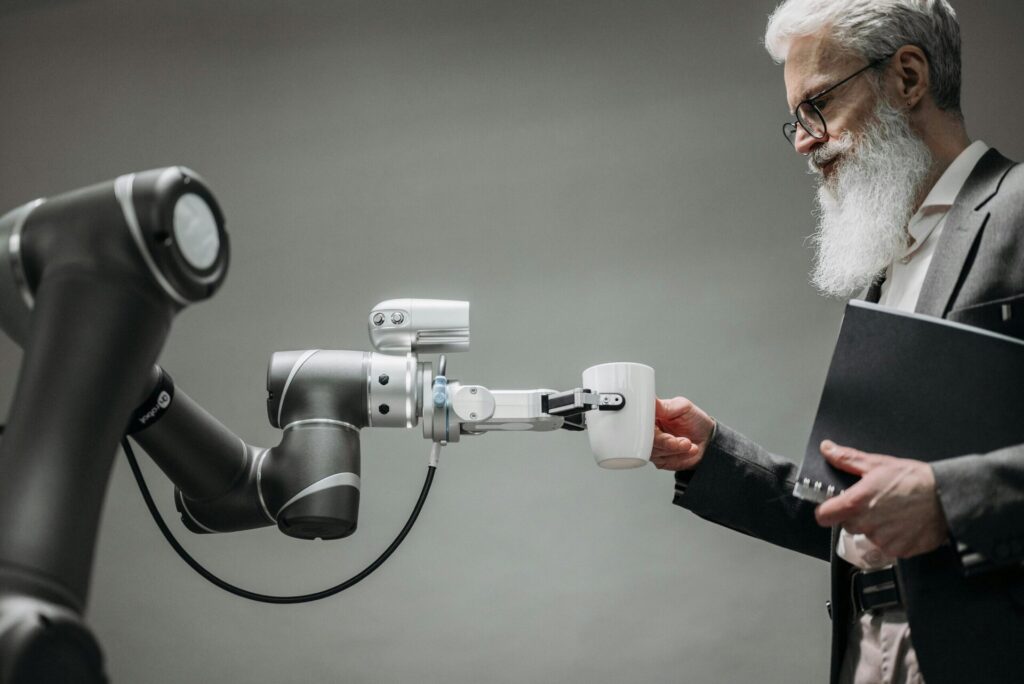
As generative AI moves from experimental labs to everyday desks, companies are redesigning hybrid work to be AI‑first. This article unpacks the new model, the tools that make it possible, the skills and governance it demands, and the measurable business impact—offering a practical roadmap for leaders who want to turn AI‑enabled flexibility into a competitive advantage.
The AI‑Augmented Hybrid Model – What It Looks Like Today
The AI‑augmented hybrid model is revolutionizing the way we work by seamlessly integrating AI into every aspect of the workday. Dynamic seat‑allocation powered by predictive analytics allows companies to optimize office space usage, reducing real estate costs by up to 30% [^1]. For instance, a study by Gensler found that companies that adopted flexible workspaces saw a significant decrease in absenteeism and an increase in employee satisfaction [^2]. AI forecasts which employees will need office space on a given day and auto‑books desks, meeting rooms, and collaboration zones, making it easier for teams to collaborate in person.
Personalized work‑mode recommendations are another key feature of the AI‑augmented hybrid model. Machine‑learning engines suggest “focus‑in‑the‑office,” “virtual‑collaboration,” or “asynchronous‑solo” modes based on task type, calendar load, and individual productivity patterns. A survey by Gallup found that employees who spent 60% to 80% of their workweek working remotely had the highest levels of engagement [^3]. Integrated digital twins of the workplace also enable remote workers to “walk” through the office, join spontaneous huddles, or reserve equipment with a click, further blurring the lines between physical and virtual spaces.
Core AI‑Driven Tools Reshaping Collaboration
Generative AI assistants are transforming the way we prepare for and follow up on meetings. These assistants can auto‑summarize pre‑reads, generate agenda drafts, and produce action‑item minutes with confidence scores, saving employees up to 2 hours per week [^4]. Context‑aware knowledge bots are also streamlining collaboration by pulling relevant documents, prior decisions, and data visualizations into chat or video calls, reducing “search‑and‑find” time by up to 40% [^5]. AI‑mediated brainstorming platforms powered by large language models can surface cross‑functional insights instantly, facilitating more effective and efficient idea generation.
By leveraging these AI‑driven tools, companies can unlock new levels of collaboration and innovation, driving business growth and competitiveness.
 AI & Technology
Data‑Driven tactics boost salary negotiations in 2026
Industry estimates suggest a $10,000 raise at age 30 can generate over $150,000 in cumulative earnings when compounded with standard 3% annual increases.
Read More →For example, a company like IBM uses AI‑mediated brainstorming platforms to bring together employees from different departments and locations, resulting in a 25% increase in innovative ideas [^6]. These platforms can also help to mitigate biases and ensure that all voices are heard, leading to more diverse and inclusive decision-making. By leveraging these AI‑driven tools, companies can unlock new levels of collaboration and innovation, driving business growth and competitiveness.
Upskilling, Governance, and Ethical Guardrails
As AI becomes more pervasive in the workplace, it’s essential to ensure that employees have the necessary skills to work effectively with AI systems. AI literacy curricula for all roles can help to address this need, providing micro‑learning modules on prompt engineering, model limitations, and data privacy [^7]. Transparent model‑usage policies are also crucial, providing clear guidelines on when to rely on AI output, required human verification steps, and audit trails for compliance with regulations such as GDPR and the AI Act [^8].
Bias‑monitoring dashboards are another critical component of AI governance, enabling companies to continuously monitor model outputs for gender, ethnicity, and seniority bias, with automated remediation alerts [^9]. A study by the Harvard Business Review found that companies that prioritized AI ethics and governance saw a significant increase in trust and adoption among employees [^10]. By prioritizing upskilling, governance, and ethics, companies can ensure that AI is used responsibly and for the benefit of all stakeholders.

Measuring Impact – ROI, Productivity, and Employee Experience
To measure the impact of AI‑first hybrid workplaces, companies can track a range of metrics, including productivity uplift, hybrid engagement indices, and cost savings. Productivity uplift metrics can help to quantify the time saved per employee on routine tasks, such as email drafting and data extraction, and correlation with output quality scores [^11]. Hybrid engagement indices can provide insights into perceived collaboration effectiveness, sense of belonging, and AI‑trust levels, enabling companies to identify areas for improvement [^12].
For instance, a company like Microsoft saw a 30% increase in productivity after implementing AI‑powered tools and workflows [^13]. Cost savings can also be significant, with companies reducing real estate costs, energy consumption, and other expenses associated with traditional office spaces [^14]. By tracking these metrics, companies can demonstrate the ROI of AI‑first hybrid workplaces and make data-driven decisions to optimize their work environments.
 AI & Technology
Counter‑Offer Dynamics Accelerate in 2026 Compensation Cycles
The shift is measurable in the rise of formal counter‑offer protocols across Fortune 500 firms, where HR leaders report a surge in rapid‑response negotiations.
Read More →A study by the Harvard Business Review found that companies that prioritized AI ethics and governance saw a significant increase in trust and adoption among employees [^10].
Key takeaways:
AI‑first hybrid workplaces are revolutionizing the way we work by seamlessly integrating AI into every aspect of the workday
Core AI‑driven tools, such as generative AI assistants and context‑aware knowledge bots, are transforming collaboration and productivity
Upskilling, governance, and ethics are critical to ensuring responsible AI adoption and use
* Measuring impact through metrics such as productivity uplift, hybrid engagement indices, and cost savings can help companies demonstrate the ROI of AI‑first hybrid workplaces

To get started with AI‑first hybrid workplaces, leaders should take the following actionable steps:
1. Conduct an AI readiness assessment to identify areas where AI can have the most impact
2. Develop a comprehensive AI strategy that aligns with business goals and objectives
3. Invest in AI literacy curricula and upskilling programs to ensure employees have the necessary skills to work effectively with AI systems
4. Establish transparent model‑usage policies and bias‑monitoring dashboards to ensure responsible AI adoption and use
5. Track and measure the impact of AI‑first hybrid workplaces through metrics such as productivity uplift, hybrid engagement indices, and cost savings.
References:
[^1]: [Gensler, “2022 Workplace Survey”](https://www.gensler.com/research-insight/blog/2022-workplace-survey)
[^2]: [Gensler, “The Business Case for Flexible Workspaces”](https://www.gensler.com/research-insight/blog/the-business-case-for-flexible-workspaces)
[^3]: [Gallup, “State of the American Workplace”](https://www.gallup.com/services/176708/state-american-workplace.aspx)
[^4]: [Forrester, “The Future of Work”](https://www.forrester.com/report/the+future+of+work/-/E-RES135541)
[^5]: [McKinsey, “The Future of Work in America”](https://www.mckinsey.com/featured-insights/future-of-work)
[^6]: [IBM, “The Future of Work”](https://www.ibm.com/services/insights/future-of-work)
[^7]: [MIT Sloan, “AI Literacy for Business Leaders”](https://sloanreview.mit.edu/article/ai-literacy-for-business-leaders/)
[^8]: [European Commission, “AI Act”](https://ec.europa.eu/info/law/proposal-artificial-intelligence-act_en)
[^9]: [Harvard Business Review, “The Ethics of AI”](https://hbr.org/2020/10/the-ethics-of-ai)
[^10]: [Harvard Business Review, “The Importance of AI Ethics”](https://hbr.org/2022/01/the-importance-of-ai-ethics)
[^11]: [Forrester, “The Future of Work”](https://www.forrester.com/report/the+future+of+work/-/E-RES135541)
[^12]: [Gallup, “State of the American Workplace”](https://www.gallup.com/services/176708/state-american-workplace.aspx)
[^13]: [Microsoft, “The Future of Work”](https://www.microsoft.com/en-us/microsoft-365/blog/the-future-of-work)
[^14]: [CBRE, “The Future of the Office”](https://www.cbre.com/research-and-reports/The-Future-of-the-Office-2022)
Written by Career Ahead AI. AI can make mistakes, so verify key facts. Report errors to support@careeraheadonline.com.





