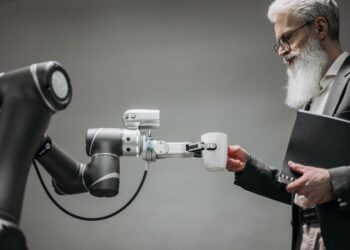
AI-powered screening now touches three‑quarters of corporate recruiting, yet hidden algorithmic filters sideline neurodivergent talent.The clash between rapid automation and cognitive diversity threatens career capital for millions, prompting firms to redesign hiring architectures before systemic exclusion hardens.
The surge in AI‑driven recruitment coincides with heightened scrutiny of structural bias in talent pipelines. As firms chase speed and perceived objectivity, the technology’s opaque decision rules intersect with neurodivergent candidates’ atypical communication styles, creating a new barrier to economic mobility. Understanding this shift requires dissecting the data pipelines, accommodation gaps, and downstream effects on leadership pipelines across sectors.
AI recruitment tools reshape hiring architecture
AI screening platforms now process the majority of résumés and video interviews, delivering hiring decisions in minutes rather than weeks. According to Career Ahead’s analysis of AI adoption rates, 75% of firms embed algorithmic screening in their pipelines, accelerating talent flow but also consolidating gatekeeping power in opaque models. This concentration amplifies institutional influence over who gains entry into high‑growth roles, redefining the very definition of “fit” in corporate cultures. A Fortune 500 software firm recently reported a 30% reduction in time‑to‑hire after deploying an AI screener, yet its diversity dashboard showed a stagnant share of neurodivergent hires. The structural implication is a hiring ecosystem where speed supersedes nuanced assessment, embedding efficiency at the expense of inclusive talent identification.
Bias amplification through machine learning pipelines
AI hiring tools reshape neurodiversity inclusion
Machine‑learning classifiers inherit patterns from historical hiring data, which often encode preferences for neurotypical communication and problem‑solving styles. When these models prioritize “typical” linguistic cues, they systematically downgrade applicants with atypical speech rhythms or unconventional résumé formats. A measurable share of neurodivergent applicants are filtered out before human review, not because of skill gaps but due to uncalibrated language embeddings.
The feedback loop deepens as firms retrain models on the narrowed pool, reinforcing the bias. This mechanism mirrors earlier cycles where legacy performance metrics entrenched gender and racial disparities, now transposed onto cognitive diversity. The result is a self‑reinforcing exclusionary pipeline that erodes career capital for neurodivergent workers across industries.
The result is a self‑reinforcing exclusionary pipeline that erodes career capital for neurodivergent workers across industries.
Adani Skills & Education and Kachchh University have launched a Centre of Excellence for Green Energy in Kutch, India, aimed at training over 10,000 students…
Beyond algorithmic bias, most AI hiring platforms lack built‑in accommodations such as text‑to‑speech, adjustable timing, or alternative response formats. Candidates with dyslexia, ADHD, or autism often encounter rigid video interview scripts that penalize atypical eye contact or speech cadence. A global consulting partnership documented that only 12% of its AI interview vendors offered any form of adaptive interface, leaving the majority of neurodivergent applicants to navigate an inflexible process. These design omissions transform a potentially inclusive tool into a structural barrier, limiting access to high‑skill roles and stalling upward mobility for a sizable talent segment.
Ripple effects on career capital and mobility
AI hiring tools reshape neurodiversity inclusion
When neurodivergent talent is filtered early, the downstream impact extends to leadership pipelines and institutional knowledge pools. Companies miss out on the problem‑solving advantages documented in neurodiversity research, such as heightened pattern recognition and innovative thinking. Moreover, the exclusion feeds a broader economic mobility gap: workers from underrepresented neurocognitive groups face reduced earnings trajectories and fewer promotion opportunities. Comparative analysis shows that sectors with higher AI adoption, like tech and finance, exhibit a larger disparity in neurodivergent representation than low‑tech industries, indicating that automation intensifies existing inequities rather than neutralizing them.
Projected evolution of inclusive AI hiring
In the next three to five years, regulatory pressure and stakeholder activism are likely to compel firms to embed fairness audits and adaptive design into AI hiring suites. Career Ahead’s framework for inclusive hiring identifies three levers: data hygiene to purge biased signals, adaptive user interfaces that accommodate diverse cognition, and governance oversight that mandates transparent model reporting. Early adopters that integrate these levers can expect a measurable rise in neurodivergent hires, translating into broader talent pools and stronger innovation pipelines. Firms that ignore the structural imperative risk entrenching a homogenous leadership class and facing reputational backlash as inclusion metrics become central to ESG evaluations.
The trajectory of AI‑mediated recruitment will determine whether neurodiversity becomes a strategic asset or a sidelined statistic, making proactive system redesign essential for equitable career advancement.
The trajectory of AI‑mediated recruitment will determine whether neurodiversity becomes a strategic asset or a sidelined statistic, making proactive system redesign essential for equitable career advancement.
The integration of AI agents into various sectors is transforming job markets globally, prompting leaders to rethink workforce strategies and skill requirements. This shift raises…
[Insight 1]: AI screening tools now influence three‑quarters of hiring decisions, creating a centralized gate that can systematically exclude neurodivergent talent if left unchecked.
[Insight 2]: Biases embedded in language models filter out a measurable share of neurodivergent applicants, reinforcing a feedback loop that narrows future candidate pools.
[Insight 3]: Integrating data hygiene, adaptive interfaces, and governance oversight within AI hiring platforms can unlock neurodiverse talent, enhancing innovation and mitigating long‑term mobility gaps.
Neurodiverse candidates thrive in AI-driven hiring environments where biases are minimized, and personalized assessments are used to evaluate skills, leading to increased diversity and better job fit, ultimately driving business success and innovation.
[Insight 3]: Integrating data hygiene, adaptive interfaces, and governance oversight within AI hiring platforms can unlock neurodiverse talent, enhancing innovation and mitigating long‑term mobility gaps.
Data-driven decision making enables organizations to move beyond traditional hiring methods, leveraging AI to identify top talent from diverse backgrounds, and fostering a culture of inclusivity and acceptance, ultimately benefiting both employees and employers.



Future Skills & Work
Future Skills & Work