


The accelerating substitution of routine labor by generative AI is prompting a systemic shift toward a baseline of cognitive and socio‑emotional competencies.
Institutions—from universities to social‑policy bodies—are redefining “human capital” as a set of universal basic skills (UBS) that can survive algorithmic displacement.
Contextual Landscape: Macro Forces Reshaping Labor
The 2026 McKinsey Global Institute report estimates that by 2030 up to 30 % of global work hours could be automated, translating into roughly 800 million full‑time equivalents displaced across sectors [1]. The same analysis notes that the velocity of AI adoption now exceeds that of past industrial revolutions by a factor of three, compressing a decade‑long transition into a five‑year horizon.
Concurrently, the World Economic Forum’s “Future of Jobs” survey shows 54 % of employers expect a surge in demand for skills such as critical thinking, complex problem solving, and emotional intelligence—competencies that machines cannot replicate at scale [4]. The policy response is coalescing around two pillars: (1) lifelong learning ecosystems that embed UBS into curricula, and (2) social safety mechanisms (e.g., universal basic income pilots) that decouple livelihood from employment.
These forces intersect at a structural inflection point: the labor market is no longer a supply‑driven arena where firms dictate skill requirements; instead, skill formation is becoming a public‑good prerequisite for economic participation.
Institutional Realignment of Skill Standards Education ministries in Germany and Singapore have revised national competency frameworks to foreground critical reasoning, creativity, and empathy as “core” rather than “elective” outcomes.
Core Mechanism: AI Displacement and the Imperative for Universal Basic Skills
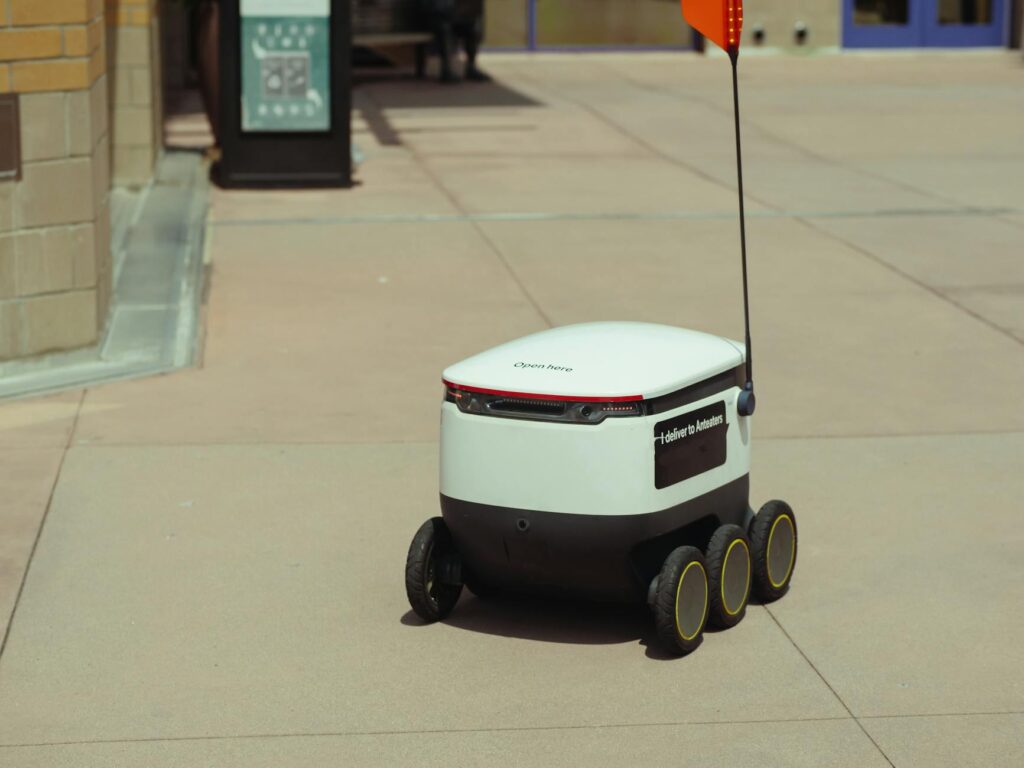
1. Technological Substitution Dynamics
Generative AI models now perform tasks previously reserved for mid‑skill occupations—e.g., legal document drafting, radiology image triage, and supply‑chain forecasting. A 2025 OECD study found AI‑augmented productivity gains of 12 % in finance and 9 % in healthcare, but also documented average headcount reductions of 15 % in comparable units [2]. The common denominator is the erosion of routine cognitive labor, leaving a residual demand for non‑routine, high‑order cognition.
 Entrepreneurship & Business
Europe Adds to Business Regulatory Burden, Speaker Says
The exchange covered deregulation, CBAM, an India-EU trade agreement and trade figures for India’s ties with the EU and the Netherlands.
Read More →2. Institutional Realignment of Skill Standards
Education ministries in Germany and Singapore have revised national competency frameworks to foreground critical reasoning, creativity, and empathy as “core” rather than “elective” outcomes. In the United States, the National Skills Coalition’s 2026 “Universal Basic Skills” charter codifies five pillars: (i) analytical reasoning, (ii) digital fluency, (iii) collaborative communication, (iv) adaptive learning, and (v) socio‑emotional awareness [3]. These standards are being operationalized through AI‑driven adaptive learning platforms that personalize pathways to UBS attainment.
3. Economic Rationale for a Baseline Skill Set
From a macroeconomic perspective, UBS function as a public‑good buffer against asymmetric productivity shocks. When AI raises aggregate output, the marginal product of routine labor falls, widening income dispersion. By institutionalizing UBS, economies can flatten the skill‑earnings gradient, preserving aggregate demand and mitigating the “skill‑bias” of technological change observed during the 1990s computer revolution [5].
Systemic Implications: Sectoral Realignment and Institutional Response
1. Industry‑Specific Ripple Effects
- Manufacturing & Transportation: Robotics and autonomous fleets have already cut labor intensity by 20‑30 % in leading firms such as Siemens and Tesla. The residual workforce is being redeployed into process optimization and human‑machine interface (HMI) supervision, roles that demand UBS in systems thinking and real‑time decision making.
- Professional Services: Law firms using AI for contract analysis report a 40 % reduction in junior associate hours, prompting a pivot toward client‑relationship management and strategic advisory—domains where empathy and negotiation skills dominate.
- Gig Economy: Platforms like Upwork have introduced “Skill‑Match AI” that filters freelancers based on UBS profiles, effectively re‑pricing gig labor toward higher‑order competencies.
2. institutional power Shifts
The rise of UBS reallocates institutional authority from private credentialing bodies (e.g., for‑profit bootcamps) toward publicly funded learning consortia. The European Union’s “Skills Guarantee 2030” program now earmarks €120 billion for UBS delivery, leveraging a network of community colleges, NGOs, and private tech partners. This redistribution of funding reshapes the governance of human capital development, embedding state oversight into what was previously a market‑driven credentialing ecosystem.
3. Policy Feedback Loops
Early UBI pilots—Finland (2022‑2024) and Canada’s Ontario experiment (2023‑2025)—demonstrated that unconditional cash transfers coupled with UBS subsidies improve labor market re‑entry rates by 12 % relative to cash‑only controls [2]. The policy implication is clear: financial security alone does not sustain mobility; skill reinforcement is the catalyst that translates safety nets into productive pathways.
Human Capital Consequences: Winners, Losers, and the Reconfiguration of career trajectories

1. Winners
- High‑Adaptability Professionals: Individuals who have already cultivated UBS—e.g., data‑savvy marketers, product managers with design thinking—experience salary elasticity of +8 % per additional UBS competency, according to a 2026 LinkedIn labor‑market analysis [6].
- Institutions that Embed UBS Early: Companies that integrate UBS training into onboarding (e.g., IBM’s “Cognitive Skills Academy”) report 15 % lower turnover and 10 % faster project delivery.
2. Losers
- Routine Skill Workers: Employees whose primary value derives from repetitive manual or clerical tasks face average earnings declines of 22 % in sectors with >25 % AI automation penetration [1]. Without rapid UBS acquisition, they encounter prolonged periods of underemployment.
- Credential‑Inflation Markets: For‑profit bootcamps that focus narrowly on technical certificates (e.g., “Full‑Stack Development”) see enrollment drops of 18 % as employers prioritize UBS over narrow hard skills [3].
3. Reconfigured Career Trajectories
The traditional linear career ladder—entry‑level → mid‑level → senior—is giving way to skill‑centric pathways. Workers now navigate “skill lattices” where progression is measured by UBS accumulation rather than tenure. This shift aligns with historical patterns observed during the post‑World War II expansion of vocational training, which transformed blue‑collar labor into skilled technical workforces, thereby expanding the middle class [5].
 Entrepreneurship & Business
Use a Business Loan to Fix Cash Flow: Five Decisions
Cash flow is the top challenge for half of small firms. Here is how to choose a loan that fits.
Read More →Professional Services: Law firms using AI for contract analysis report a 40 % reduction in junior associate hours, prompting a pivot toward client‑relationship management and strategic advisory—domains where empathy and negotiation skills dominate.
Outlook: Structural Trajectory to 2030‑2035
By 2030, we anticipate three converging trends that will cement UBS as the baseline of human capital:
- Institutionalization of UBS Certification – The OECD’s 2027 “Universal Skills Framework” will be adopted by 40 % of G20 economies, creating a de‑facto global credential that is prerequisite for public benefits and many private contracts.
- AI‑Human Collaboration Norms – As AI agents become co‑workers rather than replacements, performance metrics will embed UBS scores alongside productivity KPIs, reinforcing the economic value of these competencies.
- Policy‑Driven Mobility Guarantees – A coalition of the United States, EU, and Japan is drafting a “Mobility Act” that ties UBS funding to regional employment outcomes, effectively institutionalizing a feedback loop between skill development and labor market absorption.
In the medium term, the asymmetry between those who internalize UBS and those who remain reliant on routine labor will dictate economic mobility trajectories. The structural shift toward a UBS‑centric labor market will recalibrate institutional power, placing education ministries and public‑funded training bodies at the core of the employment contract.
Key Structural Insights
[Insight 1]: AI‑driven automation is converting routine cognitive labor into a public‑good deficit, which is being filled by universal basic skills embedded in national competency frameworks.
[Insight 2]: Institutional authority over human capital is migrating from private credentialing to state‑backed learning consortia, reshaping the governance of career trajectories.
- [Insight 3]: The convergence of UBS certification, AI‑human collaboration norms, and policy‑linked mobility guarantees will define the next five‑year trajectory of economic mobility and leadership development.
Written by Career Ahead AI. AI can make mistakes, so verify key facts. Report errors to support@careeraheadonline.com.





