No products in the cart.

AI Is Rewriting Work. Indian School Boards Have One Job Now: Teach Students to Think.

As AI reshapes the global workforce, 29 founders, CEOs, educators, and hiring leaders weigh in on what Indian school boards must prioritize now. From critical thinking and creativity to AI literacy and real‑world problem solving, the message is clear: memorisation won’t prepare students for an AI‑first future.

EdTech founders, CEOs, hiring managers, and educators agree: the future belongs to students who can question, create, and solve real problems — not just score well.
A school installs a reporting system for leaky faucets. Nothing unusual there. Except — the students build it.
At one center, learners created an app to flag campus issues, and “half the student body was using it within the first week.” That kind of adoption isn’t just a cute anecdote. It’s a preview of what future-ready education looks like: students solving real problems, shipping real solutions, and learning that the world doesn’t hand you multiple-choice options.
That’s the backdrop to one of the biggest questions Indian school boards face right now:
As AI reshapes the global workforce, what skills should Indian curricula prioritize — and are they evolving fast enough to build creativity, critical thinking, and real-world problem solving?
To find out, Career Ahead spoke to founders, CEOs, operators, and hiring leaders across industries. Their answers weren’t identical — but they converged hard on one point:
Rote learning is now the least future-proof strategy in education.
1) The AI Era’s Most Underrated Skill: Doubting Confident Answers
If there’s one shift AI forces on education, it’s this: answers are abundant; judgment is scarce.
That’s why Yukt Mitash, Founder, WriteBros.ai, argues Indian boards should teach students to question outputs — not just generate them.
“AI models generate results that sound very confident, but are often wildly incorrect… The edge is now with the student who… questions the output instead of trusting it blindly.”
He wants curricula to include practice that forces students to criticize answers, spot flawed reasoning, and defend why something might be wrong — because access to tools won’t be a competitive advantage anymore.
That same message comes through from Mike Khorev, SEO and AI Visibility Consultant.
“Indian school boards must develop… critical thinking, AI literacy, and applied problem solving… to question, verify… and communicate effectively.”
He adds that while curricula are “heading in the right direction,” classrooms still “give students more credit for memorizing than applying judgment in real-world situations.”
2) Digital + Human Skills: The Non-Negotiable Combo
AI doesn’t just demand technical literacy. It demands human capability — the kind machines can’t replicate easily.
Nick Mikhalenkov, SEO Manager, Nine Peaks Media, calls them “future-proof skills” that help students “make meaningful use of technology” beyond school.
That blended list shows up repeatedly: critical thinking, creativity, communication, collaboration, adaptability, plus AI/data literacy.
Nick Mikhalenkov, SEO Manager, Nine Peaks Media, calls them “future-proof skills” that help students “make meaningful use of technology” beyond school.
“Critical thinking and creativity… communication and collaboration… solving problems, adapting to change, and strong digital and AI literacy.”
You may also like
 Education & University Insights
Virtual mentorship drives retention gains in higher education
First‑year persistence for four‑year institutions hovers near 81%, leaving a measurable share of students at risk of dropping out.
Read More →Similarly, Lin Meyer, CEO, Crucial Exams, says memorizing facts is no longer enough — students must learn to question AI, solve real problems, and articulate reasoning.
“Schools should incorporate digital and AI literacy, critical thinking, communication, cooperative working and real-world problem solving… Memorising facts is not sufficient anymore.”
But she also points to the execution gap: frameworks are evolving, yet classroom reality depends on teacher training and project-based learning baked into lesson design.
3) “Stop Treating Coding Like a Checkbox”
A big theme: coding matters — but only as part of a deeper stack of thinking skills.
Amit Agrawal, Founder & COO, Developers.dev, says India needs to move beyond basic digital literacy and teach algorithmic fluency and AI proficiency — especially the ability to ask the right questions and evaluate AI responses.
“The key skills… will become understanding how to ask the right questions of an AI and evaluate the responses critically.”
He’s blunt about pace: “The pace of change in global technology is not being mirrored… Education must move away from rote memorization… toward higher-order reasoning and real-world application.”
That dovetails with Yogesh Pandey, Cofounder, QuadHQ, who says boards need layered thinking — AI literacy, systems thinking, adaptive problem-solving — and must teach learners to “evaluate, audit, and direct AI outputs critically.”
“Stop treating ‘coding’ as a checkbox… Boards should be looking at prompt engineering, data interpretation, and ethical AI reasoning as core competencies.”
And on whether curricula are changing fast enough? “Honestly, no… NEP 2020 talks about creativity and critical thinking, but few schools have figured out how to assess those things… Until boards move… to portfolio-based and project-based assessments, curriculum evolution will stay behind.”
4) Project-Based Learning Isn’t a Buzzword. It’s the Bridge.
If there’s a single instructional approach that nearly everyone recommended, it’s project-based and experiential learning — because it forces students to confront ambiguity.
Sandro Kratz, Founder, Tutorbase, says students learn most when solving actual problems — like the campus app story — because it trains them to handle situations without textbook answers.
Ahad Shams, Founder, Heyoz, frames it as preparing students for uncertainty: “Prioritizing skills machines can’t replicate: creativity, critical thinking, adaptability, and collaborative problem solving… The most impactful approach is project-based and experiential learning.”
“Creativity and critical thinking don’t come from adding a new ‘AI chapter’; they come from how students are assessed… more project-based work, open-ended tasks, and evidence of reasoning.”
He argues the issue isn’t adding more content — it’s redesigning how students engage with knowledge: open-ended questions, collaboration, reflection.
From a product engineering lens, Igor Golovko, Developer & Founder, TwinCore, adds a practical skill list: data literacy, computational thinking, AI literacy, communication, collaboration, and product thinking — and explains why updates lag: education changes in multi-year cycles while industry changes quarterly.
“Creativity and critical thinking don’t come from adding a new ‘AI chapter’; they come from how students are assessed… more project-based work, open-ended tasks, and evidence of reasoning.”
5) Assessment Is the Real Bottleneck (Not Intent)
Many contributors said policies sound great — but what gets graded is what gets learned.
Hans Graubard, COO & Cofounder, Happy V, says curricula are moving — but not “where it matters most” because memorization still dominates assessment.
You may also like
 Education & University Insights
The Vulnerability of Tenured Professors Amid Financial Cuts
Recent layoffs at The New School highlight a troubling trend affecting tenured professors across the United States, as financial pressures force institutions to reconsider job…
Read More →“Creativity and real-world problem solving improve when students repeatedly practice open-ended tasks… define the problem, propose hypotheses, test with data, reflect, iterate.”
He recommends making project work a required portion of grades, training teachers for inquiry methods, and grounding problems in local context and ethics.
6) The Data Warning: Skills Are Shifting Faster Than Syllabi
A few experts cited the World Economic Forum’s Future of Jobs findings to emphasize urgency.
Arvind Rongala, CEO, Edstellar, notes: “Nearly 44% of workers’ core skills are expected to change by 2027… boards should prioritize critical thinking, digital literacy, problem-solving, collaboration, and adaptability.”
He adds that while STEM and coding are entering curricula, embedding creativity and real-world application remains uneven — and needs experiential learning and exposure to emerging tech.
Anupa Rongala, CEO, Invensis Technologies, echoes the same urgency.
And Arvind Rongala (as CEO, Invensis Learning) reinforces the need for curiosity, innovation, and continuous learning over memorization-first education.
7) AI in the Classroom: Don’t Ban It. Teach It.
A big fear in schools is that AI will “ruin learning.” Several leaders argue the opposite: ignoring it is what ruins preparedness.
Darren Coleman, CEO, Coleman Technologies, says keeping AI out is the mistake: “AI is going to be part of nearly every profession… schools should focus less on memorization and more on skills AI can’t replace… critical thinking, problem solving, creativity, asking good questions.”
From a cybersecurity perspective, he adds that boards should prioritize digital literacy, cybersecurity awareness, and recognizing bias/misinformation.
8) Industry Reality Check: Hiring Exposes the Curriculum Gap
Shehar Yar, CEO, Software House, says the gap is still “massive”: “Graduates… can write sorting algorithms but can’t set up basic CI/CD or use Git properly… curricula are heavily theoretical.”
Kari Brooks, CEO, Team Treehouse, adds: “When a student builds a simple website… they’re learning to handle unexpected problems and gaining confidence… those skills stick.”
He wants schools to teach problem decomposition, prompt engineering, data literacy, and cross-disciplinary thinking — and insists students need the cycle of building, failing, iterating, and presenting.
9) Creativity Isn’t Optional — It’s the Skill That Survives Automation
Runbo Li, CEO, Magic Hour, says: “Creativity isn’t a nice-to-have anymore… schools need more hands-on design projects and group work.”
Andrew Yan, Co-Founder & CEO, AthenaHQ, draws on his experience building AI at Google: “Students need more hackathons and real-world projects.”
Kari Brooks, CEO, Team Treehouse, adds: “When a student builds a simple website… they’re learning to handle unexpected problems and gaining confidence… those skills stick.”
10) Don’t Forget No-Code, Automation, and Practical Digital Skills
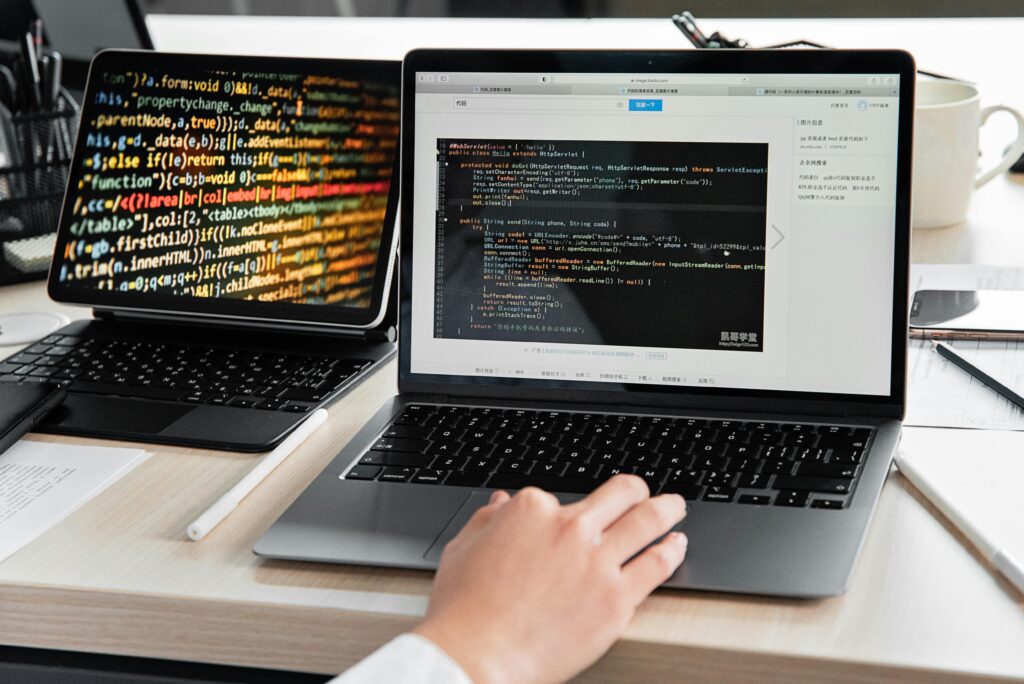
Hrishikesh Roy, CEO, Roy Digital, recommends letting students build small projects with AI and no-code tools to build real problem-solving confidence.
Michael Kazula, Director of Marketing, Olavivo, argues digital literacy should include modern skills like SEO, content marketing, analytics, and social media.
You may also like
 Education & University Insights
Learning loss reshapes university admissions and support
Mechanics of pandemic‑induced learning gaps Students have lost an estimated four to six months of reading and math proficiency.
Read More →Mohammed Kamal, Business Development Manager, Olavivo, emphasizes the trifecta of digital literacy, critical thinking, and creativity through project-based learning.
11) The “Deeply Human” Skills AI Can’t Fake (Yet)
Frederic S., Co-Founder, RemoteCorgi, highlights empathy, communication, curiosity, and judgment.
Cory Arsic, Founder, Canadian Parent, stresses skills no algorithm can replicate: empathy, adaptability, and asking the right questions.
Cristina Amyot, President, EnformHR, says the biggest gap is human judgment and recommends scenario-based problem solving.
Miriam Groom, CEO, Mindful Career Counselling in Ottawa (Canada), advocates for projects that connect academics to real community issues.
12) Even “Non-Tech” Jobs Prove the Same Point
Tom Gordon, Owner, Twin Metals Roofing, and Matt Pinck, Owner, Be Natural Music, both show that real-world problem solving and iteration matter across all fields — from construction to the arts.
13) So, Are Indian Curricula Evolving Fast Enough?
Most respondents said: not yet.
Abhishek Bhatia, CEO, ShadowGPS, and Aditya Nagpal, Founder & CEO, Wisemonk, both note that while change is happening, it’s not fast enough — updating textbooks alone won’t suffice.
The takeaway Indian school boards can’t ignore:
AI won’t just change jobs. It changes the logic of learning.
Abhishek Bhatia, CEO, ShadowGPS, and Aditya Nagpal, Founder & CEO, Wisemonk, both note that while change is happening, it’s not fast enough — updating textbooks alone won’t suffice.
When information is instantly generated, education’s real product becomes:
- Judgment over recall
- Curiosity over compliance
- Projects over pages
- Portfolios over rote tests
- Collaboration over solo scoring
The future won’t belong to the kids with the best memory. It’ll belong to the ones who can question, build, iterate, and lead — even when the “right answer” doesn’t exist.