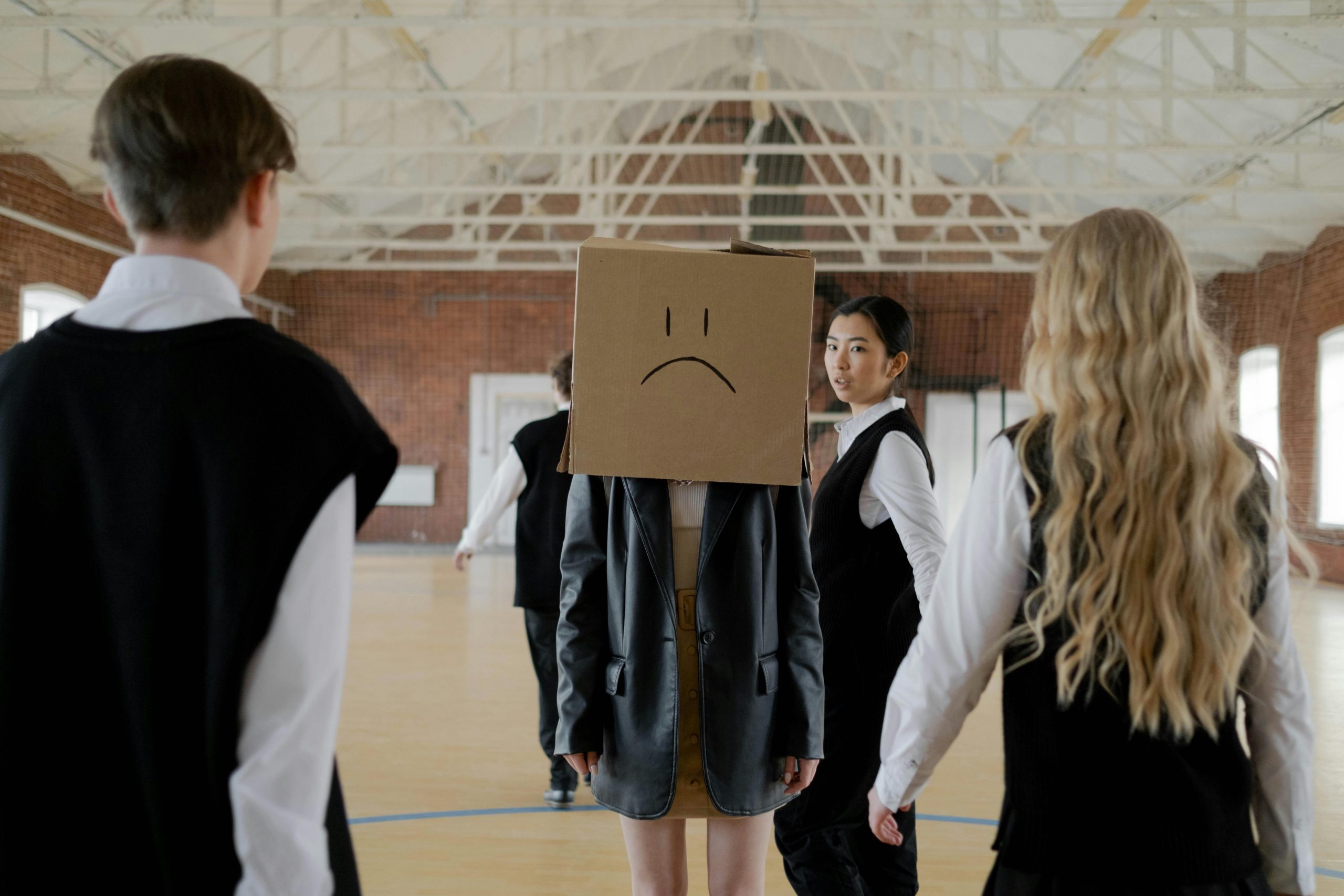
A fresh clip of an AI job interviewer appearing to malfunction has gone viral this week after a candidate answered its questions in deliberate gibberish.
The clip’s authenticity remains disputed
The avatar’s expression shifted between a fixed smile and what viewers read as distress while it repeated fragments of speech. Commentators called the performance a meltdown, but people discussing the clip were divided over whether it was genuine or staged. The sequence has attracted attention because the candidate’s deliberate gibberish appears to test whether the system can distinguish an answer from speech that makes no sense. The clip itself does not settle that question: viewers disagree about whether the malfunction shown on screen actually happened.¹
One Reddit thread drew thousands of upvotes, and commenters joked that the AI needed to “learn the correct language for the job.” Sriram Iyer and Tan Hong Ming, both business-school lecturers at the National University of Singapore, told Business Insider that similar viral clips are likely doctored or rare, isolated incidents rather than evidence of a common problem. Their view puts a limit on what can be inferred from a widely shared video: it may show a failure, but the available clip does not establish how often AI interviewers behave that way.¹
Speech recognition raises an access question
One Reddit user asked how the system would treat a candidate with a stutter or speech impediment if it could not tell nonsense from a real answer. That concern shifts attention from whether the viral clip is authentic to how an automated interview might handle differences in speech. A system that misreads an answer could affect a candidate’s chance to demonstrate their skills, although the clip alone does not show how any employer’s hiring process works or how often such a mistake occurs.¹
A system that misreads an answer could affect a candidate’s chance to demonstrate their skills, although the clip alone does not show how any employer’s hiring process works or how often such a mistake occurs.¹
 Education & University Insights
Mamdani Orders Review of School Aide Hiring After Jogger’s Death
Mohassib worked in city schools, joined the NYPD and Marines, then returned to the Education Department as a substitute paraprofessional.
Read More →The Equality Act 2010 raises a more concrete question: whether an employer’s AI-based selection process puts a disabled candidate at a substantial disadvantage. If it does, the question is whether the employer ought to offer a reasonable adjustment, potentially including an interview in another format. The point is framed as a question about the process and the adjustment available, not as a finding about a particular employer or a conclusion that every AI interview breaches the law. The clip has focused attention on whether a system can interpret a response fairly.¹

A small study found little follow-up
Researchers at Pennsylvania State University examined an AI system designed to conduct semi-structured research interviews, rather than recruitment screening. They coded four hundred and twenty-eight individual turns across fifteen bot-led interviews. That distinction matters when comparing the research with a job interview: the study examined how a bot handled research conversations, not how an employer screened applicants. It offers evidence about conversational behaviour in that setting, while leaving open whether the same pattern appears in recruitment interviews.¹
The researchers found that just four point nine per cent of the system’s turns were genuine follow-up probes asking for more detail. More than one quarter were bare acknowledgements, including stock phrases such as “that’s really interesting” repeated regardless of what the participant had just said. The contrast is between a response that asks someone to explain further and one that simply acknowledges speech. In the study, the latter was much more common, a pattern that helps explain why a system can keep a conversation moving without showing much evidence of listening closely.¹
The system had been explicitly instructed to ask one question at a time, yet it ignored that direction in twenty-eight point seven per cent of its question turns. It sometimes stacked two or more questions together, leaving participants to answer only the first. The paper describes these results as a correlational pattern from a small practice study, not a controlled experiment establishing cause and effect. The figures therefore describe what researchers observed in that exercise; they do not establish why the system behaved that way or prove the same result across hiring tools.¹
UK candidates report limited notice
Research published by recruitment platform Greenhouse in May 2026 found that forty-seven per cent of UK jobseekers had been interviewed by AI. Among those who had, eighty-two per cent said they were never clearly told beforehand that AI would be evaluating them. The findings put disclosure alongside performance as a concern: candidates may encounter an AI interview without clear advance notice that the system is assessing them. The figures describe UK jobseekers and those who had experienced an AI interview, rather than all applicants in every market.¹
 Education & University Insights
BSC Kuwait Explores Rebrand After BSC Education Liquidation
The Kuwait centre was established as a locally registered legal entity and had an agreement to use BSC Education’s brand and course materials.
Read More →Thirty per cent of respondents who discovered a hiring process involved an AI interview said they walked away. That response is building even as demand for AI skills across the UK job market continues to climb. The viral clip offers a simple, unverified stress test for the technology: give an AI interviewer nonsense and see whether it notices. That test does not establish how a recruitment system performs in routine use, but the clip, the study and the survey each put a different part of the process under scrutiny: response quality, disclosure and whether candidates continue.¹
The researchers found that just four point nine per cent of the system’s turns were genuine follow-up probes asking for more detail.
Ask for AI Interview Disclosure
Before you accept an interview, ask directly whether an AI system will evaluate you. The Greenhouse research shows 82 per cent of UK jobseekers who met AI interviewers were never clearly told in advance. You can protect yourself by requesting this information upfront, and if the employer refuses to say, treat that as a signal about how transparent the rest of the process will be. This single question costs you little and gives you the chance to decide whether to continue.¹
If you do face an AI interview, prepare for shallow engagement rather than a real conversation. The Pennsylvania State University study found only 4.9 per cent of the system's turns were genuine follow-up probes, and it stacked multiple questions in 28.7 per cent of its question turns. That means you should give complete, self-contained answers that work even if the system only registers the first part. Do not rely on the interviewer to ask for clarification, because the evidence shows it often will not.¹
Sources
Written by Career Ahead AI. AI can make mistakes, so verify key facts. Report errors to support@careeraheadonline.com