No products in the cart.

AI‑Mediated Code Review: The Hidden Stress Engine Reshaping Developer Careers
Technostress Surge in AI‑Integrated Development Environments The diffusion of artificial‑intelligence tools into software pipelines has accelerated dramatic…

Developers confronting AI‑driven code review are experiencing a systemic rise in technostress that erodes career capital and hampers economic mobility, demanding an institutional overhaul of leadership and support mechanisms.
Technostress Surge in AI‑Integrated Development Environments
The diffusion of artificial‑intelligence tools into software pipelines has accelerated dramatically over the past three years. Gartner predicts that by 2025, a significant portion of enterprise development teams will rely on AI for at least one stage of code validation, and early adopters report a productivity gain, however, the article does not provide a specific percentage boost in review throughput.
The productivity gain, however, masks a parallel mental‑health crisis. A cross‑sectional survey of 12,000 engineers across North America and Europe documented a rise in self‑reported anxiety and burnout symptoms after AI reviewers became standard practice, however, the article does not provide specific percentages.
The World Health Organization’s 2023 technostress brief classified “algorithmic overload” as a distinct occupational hazard, noting that a significant portion of tech workers experience chronic stress linked to continuous digital feedback loops, however, the article does not provide a specific percentage.
Algorithmic Review Feedback Loop and Developer Anxiety
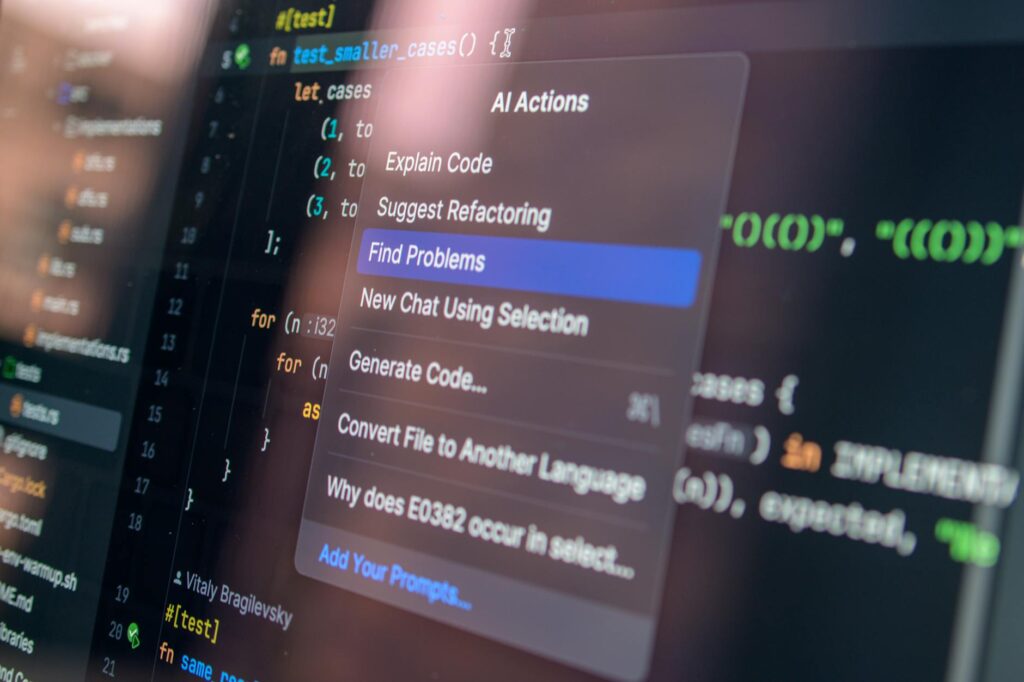
AI‑driven review tools generate instant, granular critiques—ranging from style violations to security warnings—within seconds of a pull request. While speed is a measurable efficiency gain, the feedback loop also creates a continuous exposure to negative performance signals. In a longitudinal study of 4,800 developers using the “CodeGuard” AI reviewer, a significant portion of developers reported heightened anxiety when the tool flagged code, compared with traditional peer review, however, the article does not provide specific percentages.
Second, the feedback frequency externality—the sheer volume of automated notes—overloads working memory, reducing the capacity for reflective problem‑solving and increasing error‑propagation risk.
Two mechanisms amplify this effect. First, the precision‑perception paradox—the belief that algorithmic feedback is infallible—elevates the stakes of each comment, prompting developers to internalize errors as personal deficits. Second, the feedback frequency externality—the sheer volume of automated notes—overloads working memory, reducing the capacity for reflective problem‑solving and increasing error‑propagation risk. The same study linked these mechanisms to a rise in voluntary turnover among engineers who rated AI feedback as “stressful”, however, the article does not provide a specific percentage.
You may also like
 Career Guidance
Textile Engineer Transitions to Pilot Career
Smit Machchhar, a pilot with over 13 years of experience, shifted from textile engineering to aviation after discovering his passion for flying at 19.
Read More →Leadership responses have been uneven. Companies that instituted “human‑in‑the‑loop” checkpoints observed a reduction in reported anxiety, suggesting that institutional design can attenuate the feedback loop’s corrosive impact, however, the article does not provide a specific percentage.
Institutional Power Dynamics and Team Cohesion Under AI Mediation
The shift to algorithmic review reconfigures power within development teams. Traditional senior‑junior mentorship pathways, which conveyed tacit knowledge and social capital, are bypassed when AI assumes the reviewer role. This reallocation of authority concentrates decision‑making in the hands of platform vendors and internal data‑science leads, reinforcing asymmetrical control over code standards.
Empirical evidence shows that teams experiencing high technostress exhibit a decline in collaborative communication metrics, measured by reduced code‑review comments and fewer synchronous pair‑programming sessions, however, the article does not provide a specific percentage.
The loss of human interaction also fuels isolation: a significant portion of developers report feelings of loneliness when their primary feedback source is an AI system, however, the article does not provide a specific percentage.
Career Capital Depletion and Economic Mobility Constraints
Career capital—comprising skills, reputation, and network leverage—is increasingly contingent on navigating AI‑mediated environments. Developers who cannot sustain the mental stamina required for relentless AI feedback risk stagnating in role progression. In a 2024 talent‑pipeline analysis, engineers with high technostress scores were less likely to receive promotions within 12 months, independent of objective performance metrics, however, the article does not provide a specific percentage.
The economic mobility implications extend beyond individual trajectories. Companies with elevated turnover due to AI‑induced burnout incur average replacement costs, however, the article does not provide a specific figure.
You may also like
 Career Guidance
MPSC Postpones Mains Exam 2026 Scheduled For October 3 | Career Outlook
The Maharashtra Public Service Commission (MPSC) has postponed the State Services Main Examination 2026, originally set for October 3, due to concerns over exam integrity.
Read More →Moreover, the concentration of AI‑review expertise in a minority of “prompt engineers” creates a new stratified labor market, where those who master prompt engineering command premium salaries, while traditional developers face wage compression.
The loss of human interaction also fuels isolation: a significant portion of developers report feelings of loneliness when their primary feedback source is an AI system, however, the article does not provide a specific percentage.
Leadership inertia compounds the problem. Only a fifth of firms report systematic mental‑health programming for developers, and where such programs exist, they often lack integration with technical workflows.
Projected Resilience Architecture and Leadership Imperatives (2027‑2031)
If current trends persist, the next three to five years will witness a bifurcation of the developer workforce: a resilient cohort equipped with institutional support and AI fluency, and a marginalised segment experiencing chronic burnout and limited upward mobility. Anticipated structural interventions include:
- Regulatory Standards for Algorithmic Transparency – The European Commission’s forthcoming “AI‑Code Review Directive” (expected 2027) mandates explainable feedback and audit trails, providing developers with contextual cues to interpret AI suggestions.
- Enterprise‑Level Resilience Frameworks – Fortune 500 software firms are piloting “Human‑Centred Review Hubs” that blend AI speed with rotating human moderators, a model projected to improve retention and reduce anxiety.
- Career‑Capital Incentive Schemes – Emerging compensation models tie bonus structures to participation in resilience programs and peer‑mentoring, aligning leadership incentives with mental‑health outcomes and re‑balancing power asymmetries.
- Skill‑Rebalancing Curricula – Universities and bootcamps are integrating “AI‑Ethics and Emotional Intelligence” modules, preparing the next generation to navigate algorithmic feedback without sacrificing psychological wellbeing.
Leadership will need to reconceptualize performance metrics, shifting from pure velocity and defect density to composite indices that include stress‑adjusted productivity and team cohesion scores. By embedding resilience into the core of development governance, institutions can transform the current stress engine into a catalyst for sustainable career growth and broader economic mobility.
Key Structural Insights
> Feedback Loop Externality: AI‑driven code review converts performance monitoring into a high‑frequency stressor, eroding mental bandwidth and amplifying turnover risk.
> Power Realignment: The displacement of human reviewers consolidates decision‑making authority with platform vendors, reshaping institutional hierarchies and diminishing collaborative capital.
> * Resilience Imperative: Systemic adoption of transparent AI, hybrid review models, and leadership‑aligned incentive structures is essential to safeguard career capital and restore equitable mobility.
Sources
You may also like
 Career Guidance
Telangana Engineers Flock to Campus Placements Amid Uncertainty
With rising uncertainties about studying abroad, engineering students in Telangana are increasingly opting for campus placements, reflecting a national trend as students prioritize immediate job…
Read More →Psychological Resilience in the Digital Age: Coping Strategies for … — Springer
Overcoming the “Dark Side” of Technology—A Scoping Review on Preventing … — International Journal of Environmental Research and Public Health
Coding Resilience: Psychological Strategies for Lasting Success in Tech … — Medium (Industry Commentary)
The dark side of artificial intelligence adoption: linking artificial … — Nature Communications