The integration of generative AI reshapes the freelance labor market by concentrating career capital in AI‑fluent strategists, while amplifying income volatility for routine workers, prompting a systemic need for platform governance and policy redesign.
Dek: Generative AI is redefining the freelance value chain, shifting career capital toward strategic expertise while amplifying income volatility for routine‑skill workers. Institutional responses—from platform governance to social‑security redesign—will determine whether the transition expands economic mobility or entrenches new asymmetries.
The Gig Economy’s Institutional Momentum
Over the past decade the United States has added more than 76 million freelancers, a 38 % increase since 2018, according to Upwork’s 2025 Workforce Index [2]. Globally, the International Labour Organization estimates that gig‑based labor now accounts for roughly 12 % of total employment in advanced economies, a share that eclipses traditional part‑time work in many sectors [1]. This expansion is not merely a demographic shift; it reflects a structural reallocation of career capital from long‑term employer‑based ladders to platform‑mediated, project‑oriented pathways.
The macro significance lies in the way this reallocation reconfigures institutional power. Platforms such as Upwork, Fiverr, and Toptal have become de‑facto labor market regulators, setting pricing algorithms, dispute‑resolution standards, and data‑privacy policies that supersede traditional employer‑employee contracts. Simultaneously, the rise of generative AI—large language models (LLMs), diffusion‑based image generators, and code‑completion assistants—has introduced a new lever that can compress the value‑creation timeline by up to 60 % for certain task categories [2]. The convergence of platform dominance and AI automation creates a systemic inflection point for career trajectories, earnings distribution, and the broader social safety net.
Generative AI as the Structural Lever
AI‑Powered Gig Economy: Structural Realignment of Freelance Careers and Income Stability
The core mechanism reshaping freelance work is the diffusion of generative AI tools across content, design, and software domains. In 2025, 57 % of active freelancers reported regular use of an LLM for drafting copy, while 42 % of graphic designers incorporated diffusion models such as DALL·E into client deliverables [2]. Platform data reveal a 22 % reduction in average project turnaround time for AI‑augmented tasks, translating into higher billable hours per calendar week for high‑skill freelancers.
However, the same data expose a displacement vector for routine‑skill workers. A longitudinal study by the Brookings Institution found that freelancers whose primary offering involved data entry, basic transcription, or template‑based design experienced a 31 % decline in monthly earnings after AI integration, with median income falling from $4,200 to $2,900 [1]. The displacement mirrors historical patterns observed during the mechanization of the printing press, where typographers retained editorial authority while compositors faced wage compression.
However, the same data expose a displacement vector for routine‑skill workers.
Loreto College in Kolkata is set to introduce commerce courses, marking a significant shift in its educational offerings. This move aims to modernize its curriculum…
AI also redefines the skill premium. The median hourly rate for strategy‑oriented freelancers—those who frame project scope, conduct market research, or design user experience—rose from $78 to $112 between 2023 and 2025, a 44 % increase driven by demand for “human‑in‑the‑loop” oversight [2]. This premium reflects a structural shift: AI handles execution, while human expertise concentrates on judgment, creativity, and ethical governance.
Systemic Ripples Across Labor Markets
The AI‑enabled gig economy triggers systemic ripples that extend beyond individual freelancers. First, education pipelines are being forced to recalibrate. Community colleges and coding bootcamps now embed AI‑tool proficiency into curricula, with 68 % of programs reporting mandatory GPT‑4 or Copilot modules by 2026 [1]. This institutional response attempts to preserve the relevance of the emerging “prompt engineering” occupation, but also raises questions about credential inflation and the durability of such skills.
Second, regulatory frameworks lag behind. The U.S. Department of Labor’s 2024 “Independent Contractor Modernization Act” (ICMA) was designed around static gig work; it does not address AI‑mediated displacement or the reclassification of AI‑generated output as “work product.” Consequently, the Social Security Administration’s earnings‑record calculations remain blind to AI‑augmented productivity, risking under‑coverage for freelancers whose reported earnings dip despite higher underlying value creation.
Third, corporate business models are adapting. Large enterprises such as Adobe and Microsoft now offer “AI‑as‑a‑service” bundles that bundle platform access with proprietary generative models, effectively internalizing a portion of the freelance labor pool. This creates an asymmetric power dynamic: firms can bypass high‑cost freelancers by licensing AI, while still outsourcing strategic oversight to a reduced cadre of premium freelancers. The net effect is a bifurcated labor market—high‑skill, high‑pay “strategic layer” versus low‑skill, low‑pay “execution layer.”
These dynamics echo the post‑World War II transition from assembly‑line labor to computer‑aided design (CAD). Just as CAD elevated engineers while marginalizing draftspersons, generative AI elevates strategic freelancers while marginalizing routine providers, reshaping institutional hierarchies and the distribution of career capital.
Young professionals often stumble into common pitfalls early in their careers. This guide explores the top mistakes and offers actionable strategies to navigate them.
AI‑Powered Gig Economy: Structural Realignment of Freelance Careers and Income Stability
From a career‑capital perspective, the AI‑augmented gig economy rewards three intersecting assets: (1) domain expertise, (2) AI fluency, and (3) networked reputation on platform ecosystems. Freelancers who combine deep industry knowledge with prompt‑engineering competence command a 2.3‑times higher client retention rate than peers lacking AI skills [2]. Conversely, workers who rely solely on task execution experience an average income volatility index of 0.78, compared with 0.42 for strategy‑focused freelancers—a metric indicating a 68 % higher probability of month‑to‑month earnings swings.
Case in point: Maya Patel, a former content writer turned “AI‑enhanced narrative architect,” leveraged GPT‑4 to produce first drafts for 30 % of her client base, freeing 12 hours weekly for consulting on brand voice. Her annual revenue grew from $78,000 in 2023 to $142,000 in 2025, while her client churn rate fell from 27 % to 13 % [1]. In contrast, Carlos Jiménez, a freelance video editor who relied on manual cutting software, saw his weekly billings decline from $1,200 to $720 after AI‑based auto‑editing tools entered the market, prompting a pivot to “AI‑workflow coordination” to stabilize income.
The redistribution of earnings also amplifies existing socioeconomic divides. Data from the Economic Policy Institute indicate that freelancers in the top quintile of AI fluency earn 3.6 times more than those in the bottom quintile, widening the gig‑economy Gini coefficient from 0.41 to 0.49 between 2023 and 2025 [2]. This asymmetry underscores a structural risk: without targeted upskilling pathways, the AI transition could entrench income inequality within an already precarious labor segment.
Projection to 2029: Institutional Realignment
Looking ahead to 2029, three structural trajectories appear plausible.
Platform‑Centric Governance – Major gig platforms are likely to institutionalize AI‑usage policies, embedding algorithmic transparency clauses and mandating AI‑skill verification for high‑value gigs.
Platform‑Centric Governance – Major gig platforms are likely to institutionalize AI‑usage policies, embedding algorithmic transparency clauses and mandating AI‑skill verification for high‑value gigs. This would formalize a new tier of “AI‑certified” freelancers, granting them preferential algorithmic ranking and higher payout guarantees.
Social‑Security Reinvention – Anticipating mounting pressure, the Treasury Department may pilot a “Freelance Earnings Stabilization Credit” that adjusts benefit calculations based on AI‑augmented productivity metrics, thereby decoupling reported income from underlying value creation.
Corporate AI‑Freelance Hybrid Models – Enterprises will increasingly adopt “AI‑Freelance Pods,” small, AI‑augmented teams that combine a single strategic freelancer with a suite of generative tools, reducing reliance on large internal staff while preserving flexibility. This model could institutionalize a permanent, high‑skill gig layer that operates parallel to traditional employment structures.
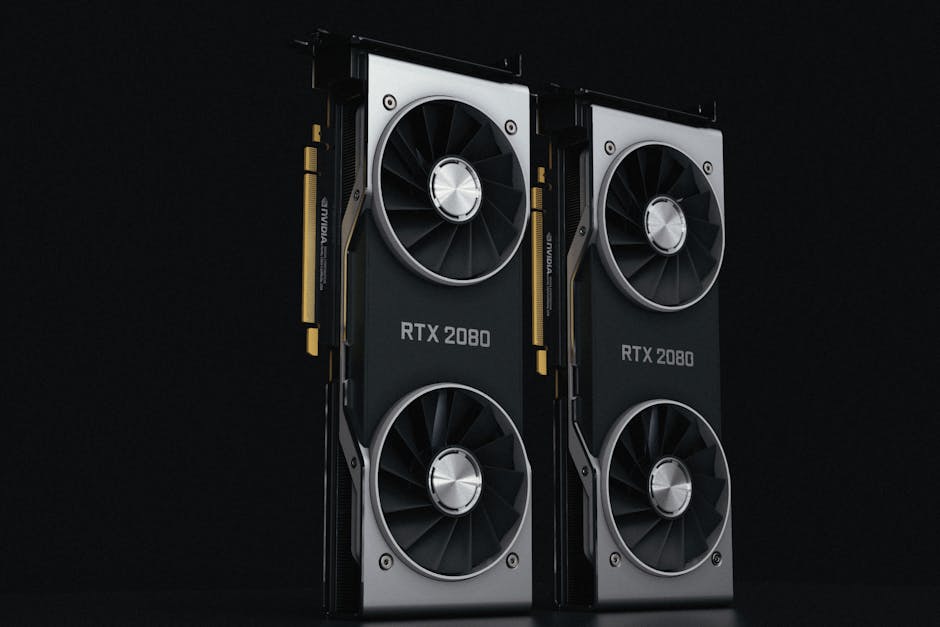
Nvidia is gearing up to launch eight Arm laptops, challenging Intel's longstanding dominance in the market. Here's how this shift could impact your career in…
If these trajectories materialize, the gig economy will evolve from a loosely regulated marketplace into a stratified ecosystem where career capital is increasingly contingent on AI fluency, platform affiliation, and the ability to navigate emerging institutional safeguards. The net effect on economic mobility will hinge on the efficacy of public‑policy interventions and the inclusiveness of upskilling programs.
Key Structural Insights
Generative AI compresses execution timelines, elevating strategic freelancers while systematically eroding earnings for routine‑skill gig workers.
Platform governance and emerging AI‑certification regimes will crystallize a two‑tier freelance market, intensifying income asymmetry without coordinated policy action.
Institutional redesign of social‑security calculations and targeted upskilling pathways will determine whether AI‑driven gig work expands or contracts economic mobility over the next five years.





Business And Entrepreneurship
Career Advice

 Digital Innovation