


The convergence of generative AI and modular open‑source practices is compressing development cycles, reshaping institutional power, and creating a new hierarchy of career capital across the software ecosystem.
Opening: Macro Context
The software sector is entering a structural inflection point. Forecasts from the World Economic Forum project that 75 % of enterprise technology firms will embed AI‑driven development tools in production pipelines by 2027, a trajectory that compresses time‑to‑market and reallocates budgetary levers toward data‑centric operations [1]. Simultaneously, GitHub and GitLab have logged a 30 % year‑over‑year surge in repositories tagged with “AI‑enabled” or “modular”, signaling a rapid migration toward collaborative, component‑based codebases [2].
This convergence is not merely a productivity tweak; it reflects a systemic reallocation of institutional authority. In the early 2000s, the open‑source movement redistributed control from proprietary vendors to distributed communities, catalyzing new business models around support and integration. Today, AI‑augmented modularity replicates that redistribution, but with a second‑order effect: the algorithmic mediation of code creation embeds platform owners—Microsoft, Google, Amazon—more deeply into the governance of open‑source ecosystems. The macro implication is a recalibration of who commands the standards, funding streams, and talent pipelines that undergird the software economy.
Core Mechanism: AI‑Enabled Modularity
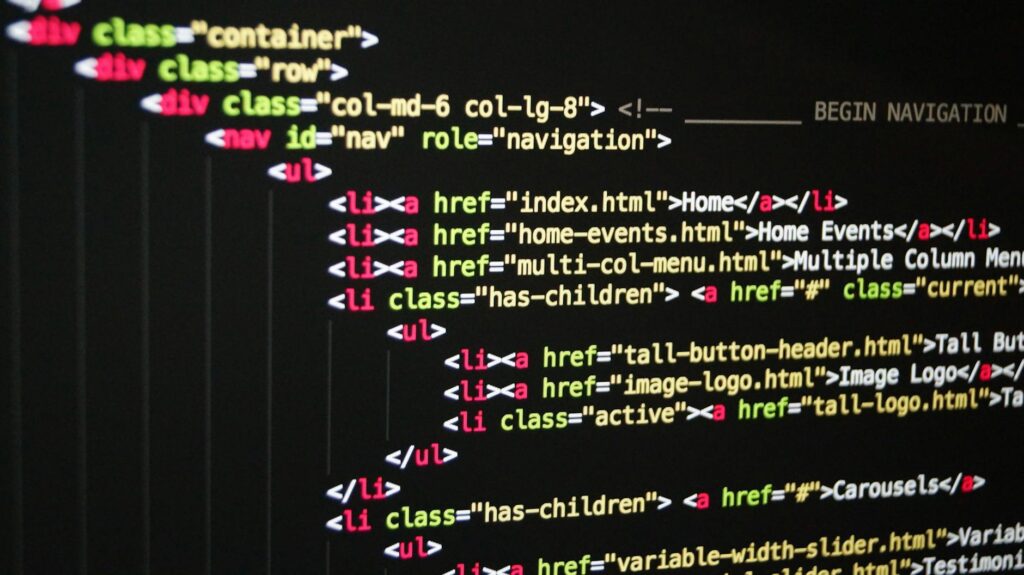
At the heart of this shift lies a suite of AI‑powered instruments that automate traditionally manual development tasks. Automated testing frameworks such as DeepTest and AI‑driven refactoring tools like Codex‑Refactor have demonstrated up to a 40 % reduction in development cycle length while lifting code quality metrics by roughly 30 % [2]. These gains derive from large‑language models (LLMs) that ingest modular component specifications and generate syntactically correct, test‑ready code fragments on demand.
Beyond code generation, conversational agents (e.g., GitHub Copilot Chat, Google Cloud AI Assistant) have been integrated into pull‑request workflows, truncating meeting time by an estimated 25 % and surfacing contextual documentation in real time [2]. The financial dimension is equally salient: FinOps platforms leveraging predictive AI to allocate cloud spend across modular services report operational cost reductions of 20 % on average [2].
Microsoft’s acquisition of OpenAI and the subsequent integration of Azure OpenAI Service into Visual Studio Code has created a vertically aligned stack where the AI model, the development environment, and the deployment pipeline are co‑owned.
The mechanism is reinforced by institutional investment. Microsoft’s acquisition of OpenAI and the subsequent integration of Azure OpenAI Service into Visual Studio Code has created a vertically aligned stack where the AI model, the development environment, and the deployment pipeline are co‑owned. Google’s TensorFlow ecosystem similarly bundles AI tooling with open‑source libraries, incentivizing developers to remain within its cloud‑native modular architecture. These corporate‑level strategies embed AI deeper into the open‑source supply chain, shifting the locus of power from decentralized maintainers to platform‑centric stewards.
Systemic Ripple Effects
 Career Guidance
How to Switch Industries Mid-Career Without Starting Over
Bridge roles can reduce risk, while targeted skills and industry-specific applications help you make the case for a new field.
Read More →The diffusion of AI‑enabled modularity reverberates across the broader software ecosystem. First, developer engagement metrics have surged; Microsoft reports a 50 % increase in active contributors to its open‑source projects after embedding Copilot into the contribution workflow [1]. This uplift reflects an asymmetric incentive: contributors gain immediate productivity gains, while platform owners capture the resulting network effects.
Second, testing and validation pipelines have been reengineered. AI‑driven quality assurance tools now execute predictive test generation, slashing testing time by up to 60 % and expanding coverage by 40 % relative to legacy suites [2]. The downstream effect is a compression of release cadences, which pressures legacy vendors to either adopt comparable AI stacks or risk marginalization.
Third, cybersecurity dynamics have mutated. Automated code synthesis introduces novel attack vectors—synthetic code may inherit biases or hidden vulnerabilities from training data. A 2025 report from the Institute for Security and Technology documented a 12 % rise in AI‑generated supply‑chain exploits, prompting the IEEE to draft new standards for AI‑augmented code provenance [1]. The regulatory response—mandating provenance metadata for all open‑source contributions—creates a new compliance layer that further entrenches platform providers capable of delivering integrated verification services.
These systemic ripples underscore a reconfiguration of institutional power. Academic bodies such as ACM now host dedicated tracks on “AI‑augmented open source governance,” while venture capital flows have pivoted toward startups that supply AI‑layered modular tooling. The structural shift mirrors the 1990s IDE revolution, where integrated development environments centralized control over build processes, spawning a new class of tool vendors and altering the developer value chain.
Human Capital Reconfiguration

The career implications of AI‑driven modularity are stratified along the axes of skill specialization, economic mobility, and leadership pathways. On the skill front, the demand for “prompt engineering” and “AI‑assisted refactoring” has surged; the US Department of Labor now lists AI‑augmented development as a distinct occupational code, with median wages 18 % higher than traditional software engineering roles [1]. This premium reflects the asymmetric scarcity of professionals who can translate high‑level architectural intent into modular AI prompts—a form of career capital that is increasingly portable across firms and geographies.
This premium reflects the asymmetric scarcity of professionals who can translate high‑level architectural intent into modular AI prompts—a form of career capital that is increasingly portable across firms and geographies.
 AI & Technology
AI tools, productivity pressure and the strain of software work
AI coding tools promise faster software development, but the reality is more complicated. Developers report growing pressure to deliver sooner, while research has found that…
Read More →Economic mobility is reshaped by the open‑source paradigm itself. Remote contributors can now earn reputation tokens through AI‑mediated pull requests, converting community standing into freelance contracts or full‑time offers. Platforms such as Gitcoin have introduced “AI‑Boost” bounties that reward contributors whose code passes automated quality thresholds, creating a meritocratic conduit for talent from underrepresented regions into high‑value pipelines.
Leadership structures are also evolving. Executive titles like “Head of AI‑Enabled Modularity” have appeared in the org charts of firms ranging from Red Hat to Shopify, indicating a formalization of the governance role that balances community stewardship with corporate objectives. These leaders act as institutional bridges, negotiating licensing terms, shaping contribution guidelines, and directing FinOps allocations toward AI‑enhanced modular components.
Conversely, the shift marginalizes workers whose expertise resides in monolithic legacy stacks. A 2025 survey by the International Software Workers Union found that 60 % of developers in large, monolithic codebases anticipate displacement within five years unless they upskill in AI‑augmented modular practices [1]. The structural implication is a bifurcation of the talent market: a high‑growth, high‑compensation corridor for AI‑savvy modular engineers, and a stagnant segment for traditional code custodians.
Outlook: 2027‑2031 Trajectory
Projecting forward, the AI‑modular ecosystem is poised to consolidate around a handful of platform ecosystems that can supply end‑to‑end AI tooling, provenance assurance, and compliance services. By 2030, we can expect:
Standardization of AI provenance metadata across all major open‑source registries, enforced by a coalition of IEEE, ISO, and leading cloud providers.
Institutionalization of AI‑augmented contribution credits, where career capital is quantified through blockchain‑backed tokens linked to code quality and reuse metrics.
Concentration of funding in “AI‑modular infrastructure” startups, with cumulative venture investment exceeding $45 billion by 2029, mirroring the VC surge that accompanied the containerization wave in the early 2010s.
Policy interventions targeting skill gaps, including federal apprenticeship programs that embed AI prompt engineering into community college curricula, aimed at expanding the pipeline of economically mobile talent.
The trajectory suggests that developers who embed AI prompt engineering, modular architecture design, and compliance stewardship into their core skill set will command the most durable career capital.
The trajectory suggests that developers who embed AI prompt engineering, modular architecture design, and compliance stewardship into their core skill set will command the most durable career capital. institutional power will increasingly reside with platform owners capable of orchestrating the AI‑modular stack, while open‑source communities will evolve into semi‑autonomous governance bodies operating under the umbrella of standardized AI provenance frameworks.
 Career Guidance
Posts Spread After Call to Identify Jane Doe
More than eleven thousand accounts made almost twenty-five thousand posts purporting to name Jane Doe, according to Gudea’s analysis.
Read More →Key Structural Insights
- The AI‑enabled modular model reallocates development authority from dispersed maintainers to platform‑centric ecosystems, reshaping institutional power dynamics across the software supply chain.
- Career capital is becoming contingent on proficiency in AI prompt engineering and modular architecture, creating a bifurcated talent market that amplifies economic mobility for AI‑savvy engineers while marginalizing legacy skill sets.
- Over the next five years, standardized AI provenance and tokenized contribution credits will institutionalize the value of modular open‑source work, embedding it into the fabric of corporate governance and regulatory compliance.
Written by Career Ahead AI. AI can make mistakes, so verify key facts. Report errors to support@careeraheadonline.com.





