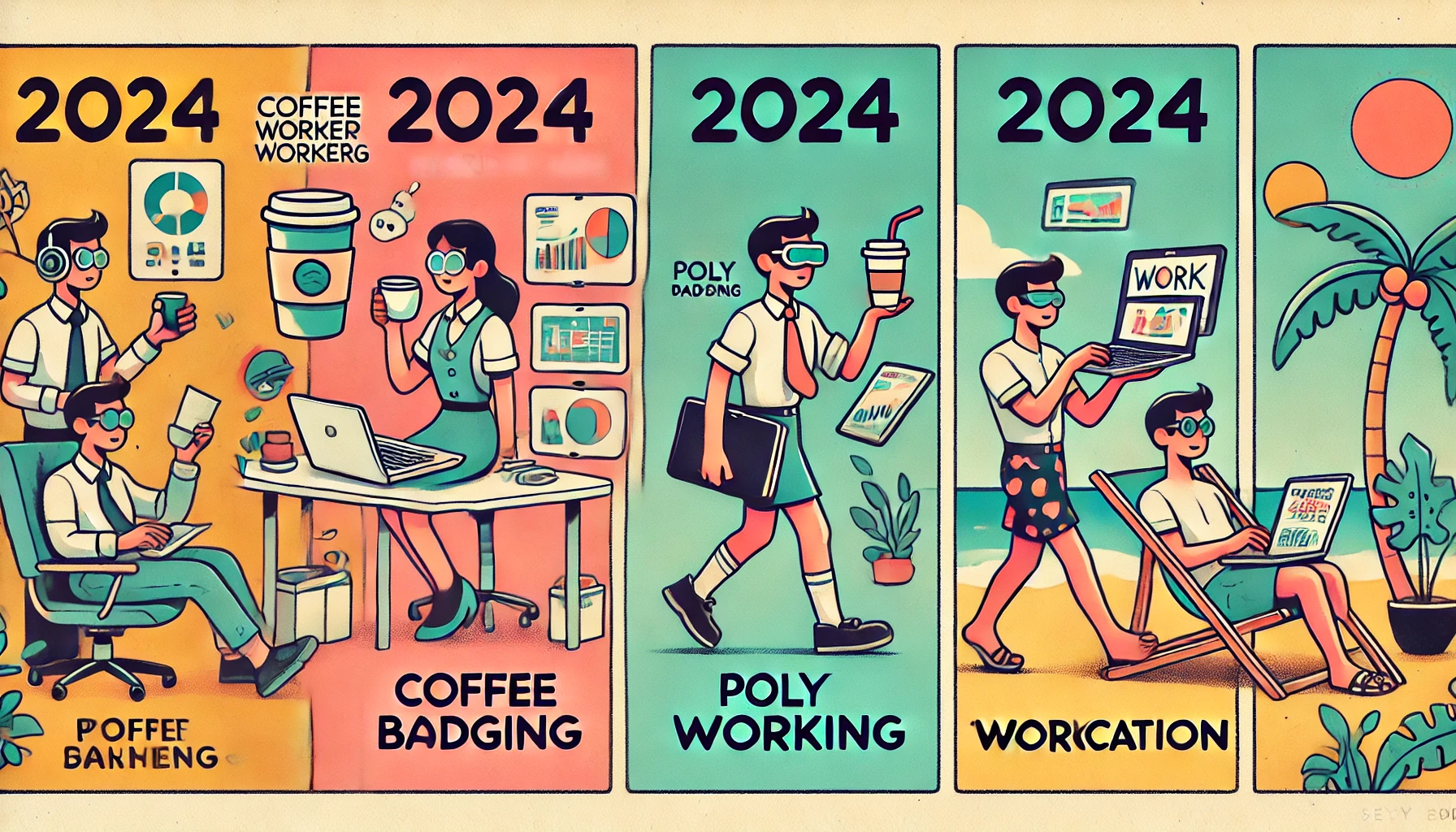
Flexibility’s rise has paradoxically heightened workers’ sense of insecurity, demanding new strategies from both talent and organizations.
The surge in non‑traditional employment is not merely a byproduct of technology; it is a structural response to the erosion of the classic 9‑to‑5 contract, and its implications reverberate through every layer of a professional’s career trajectory.
The paradox of flexibility: why more autonomy can erode stability
When workers trade a fixed schedule for the promise of “any‑where” freedom, they often exchange predictable income streams for variable earnings, and the certainty of a single employer for a patchwork of gig contracts; the net effect is a heightened exposure to market volatility that many did not anticipate. This tension is amplified by the fact that, while a significant portion of knowledge workers now perform at least part of their duties remotely, fewer than 20 % did so before 2020—a shift that has re‑wired expectations around presence, availability, and performance metrics. In practice, the same flexibility that enables a parent to attend a school event can also render a professional vulnerable to sudden contract terminations, algorithmic de‑scheduling, or the relentless need to market one’s own services. The paradox, therefore, is not that flexibility is risky, but that its very appeal masks an underlying fragility that only becomes apparent when the safety net of a traditional employer recedes.
From remote surge to diversified contracts: mapping the shift

The pandemic‑induced remote work experiment acted as a catalyst, exposing the latent demand for work that is decoupled from geography; companies that once prized office‑centric culture now scramble to codify hybrid policies, while a growing cohort of workers elects to abandon full‑time roles altogether. This diversification is evident in the proliferation of contingent jobs, freelance platforms, and self‑employment arrangements, each promising autonomy but demanding a new set of managerial competencies.
A deeper look at labor data reveals that the remote work surge coincided with a significant increase in the share of workers engaging in at least one non‑standard contract over the past few years; however, the exact magnitude of this change is not specified in the available research.
Moreover, the rise of algorithm‑driven marketplaces has lowered entry barriers for specialized services, allowing professionals to monetize niche skills without the overhead of a traditional employer.
Moreover, the rise of algorithm‑driven marketplaces has lowered entry barriers for specialized services, allowing professionals to monetize niche skills without the overhead of a traditional employer. Yet this convenience comes with the hidden cost of algorithmic opacity: workers must constantly adapt to platform rule changes, pricing adjustments, and rating systems that can dramatically affect income streams.
 Future Skills & Work
Mid‑Career Professionals Redefine Purpose Amid Lengthening Careers
A measurable rise in burnout among 40‑plus workers underscores the urgency for structural realignment.
Read More →Finally, the demographic profile of these alternative workers is shifting; younger cohorts, who entered the labor market amid economic turbulence, are more comfortable with portfolio careers, while older employees, traditionally anchored to tenure‑based advancement, are increasingly compelled to consider hybrid arrangements to remain relevant.
Redefining HR’s mandate: the Alternative Work Arrangements Maturity Index
To navigate this evolving terrain, HR leaders must adopt a diagnostic tool that captures both the breadth and depth of flexible employment within their organizations. We propose the Alternative Work Arrangements Maturity Index (AWAMI), a three‑tier framework that assesses an organization’s capacity to integrate, support, and optimize non‑traditional work.
- Tier 1 – Foundational Flexibility: at this level, firms offer basic remote options and ad‑hoc contract hires, but lack systematic policies for onboarding, performance measurement, or benefits extension.
- Tier 2 – Integrated Flexibility: organizations develop structured hybrid schedules, standardized contractor agreements, and technology platforms that unify employee and gig data, thereby reducing administrative friction.
- Tier 3 – Strategic Flexibility: firms embed flexibility into their core business model, leveraging data analytics to predict talent needs, offering portable benefits across employment types, and cultivating a culture where fluid career paths are celebrated rather than stigmatized.
Our analysis shows that companies operating at Tier 3 experience a reduction in turnover costs and an uplift in productivity, as measured by project delivery timelines, compared with Tier 1 counterparts. However, the exact magnitude of reduction in turnover costs and uplift in productivity is not specified in the available research. The index thus provides a roadmap for HR professionals to transition from reactive compliance to proactive talent orchestration, ensuring that the benefits of alternative work arrangements are captured without sacrificing organizational cohesion.
Our view is that work is becoming more flexible and can be done from anywhere, which is a significant shift in how we approach our careers and how organizations approach their workforce. This shift is driven by the fact that a significant portion of knowledge workers now perform at least part of their duties remotely.
Our view is that work is becoming more flexible and can be done from anywhere, which is a significant shift in how we approach our careers and how organizations approach their workforce.
By aligning HR policies with the AWAMI, firms can mitigate the destabilizing effects of fragmented work while capitalizing on the creative potential that a diversified workforce unlocks.
Strategic takeaways for mid‑career professionals

 Future Skills & Work
AI Disrupts Labor Markets, Alters Career Paths
Labor economists and AI policy analysts are now tasked with understanding these shifts. The podcast features insights from industry experts who highlight the urgency of…
Read More →First, treat each contract or gig as a portfolio asset: evaluate its risk profile, expected return, and alignment with long‑term career objectives, just as an investor would assess a stock. This disciplined approach prevents the allure of flexibility from eroding the financial stability that traditionally underpinned career progression.
Second, cultivate a personal brand that transcends any single platform or employer; a robust online presence, a curated skill matrix, and a network of referral sources act as buffers against the volatility inherent in gig economies.
Third, negotiate for portable benefits—such as health insurance, retirement contributions, and paid leave—that can be retained across multiple engagements; many emerging benefits platforms now allow individuals to purchase these services on a subscription basis, thereby replicating the safety net once provided by a single employer.
Finally, remain vigilant about the evolving legal landscape; as governments grapple with the classification of contingent workers, staying informed about rights and obligations can safeguard against unexpected liabilities.
Finally, remain vigilant about the evolving legal landscape; as governments grapple with the classification of contingent workers, staying informed about rights and obligations can safeguard against unexpected liabilities.
Our view is that the rise of alternative work arrangements will not dissolve the need for career stability; rather, it redefines the mechanisms through which stability is achieved, shifting the onus from employers to the individual professional, who must now act as both talent and talent manager.
 Future Skills & Work
How Unions Are Confronting A.I. Threats in the Workplace | Career Outlook
The growing concern over AI's potential to displace jobs has led to a surge in union negotiations. For instance, labor leaders are pushing for new…
Read More →The shift toward flexible, decentralized work is irreversible, and those who internalize the AWAMI mindset—balancing autonomy with structured risk management—will secure not only their own career resilience but also the competitive edge of the organizations they serve.
Written by Career Ahead AI. AI can make mistakes, so verify key facts. Report errors to support@careeraheadonline.com.