No products in the cart.

AI-Powered Robotics Skills Shortage Threatens Career Prospects

The rapid rise of AI‑driven robots is exposing a critical talent shortfall that blends technical, cognitive, and collaborative skills. Learn how this hidden gap shapes career paths and what you can do to stay ahead.

The surge of AI‑driven robots on factory floors, hospital corridors, and warehouse aisles is no longer a futuristic scenario—it is the present reality for thousands of firms. As these systems take on decision‑making roles, the demand for workers who can both program and collaborate with autonomous machines has outpaced the supply of talent. The resulting skills gap is not just a HR headache; it reshapes promotion pathways, salary negotiations, and even the strategic direction of entire industries. Understanding the nuances of this gap is essential for anyone who wants to keep their career trajectory on an upward slope.
Why does the AI‑powered robotics skills gap matter more now than a year ago?
Two forces have converged to amplify the gap in a matter of months. First, the inclusion of artificial intelligence in the daily activities of businesses is becoming a necessity, but most companies are finding that the implementation of AI does not necessarily equate to the actual ability of the organization to operate the workforce. Second, the rapid rollout of generative AI tools has lowered the barrier for building sophisticated control algorithms, prompting firms to replace legacy hardware with smarter, more autonomous units. The speed of adoption leaves little time for traditional training pipelines to catch up, turning a technical shortfall into a strategic liability.
At the same time, senior leadership feels the pressure. In a recent survey of 113 senior leaders, a clear consensus emerged: the inability to staff AI‑robotics projects is now a top risk factor for meeting growth targets. When executives cannot rely on internal expertise, they either delay critical automation initiatives or turn to costly external consultants, both of which erode profit margins. The gap is therefore a direct line to the bottom line, not a peripheral HR issue.
Which specific capabilities are most missing in today’s robotics teams?
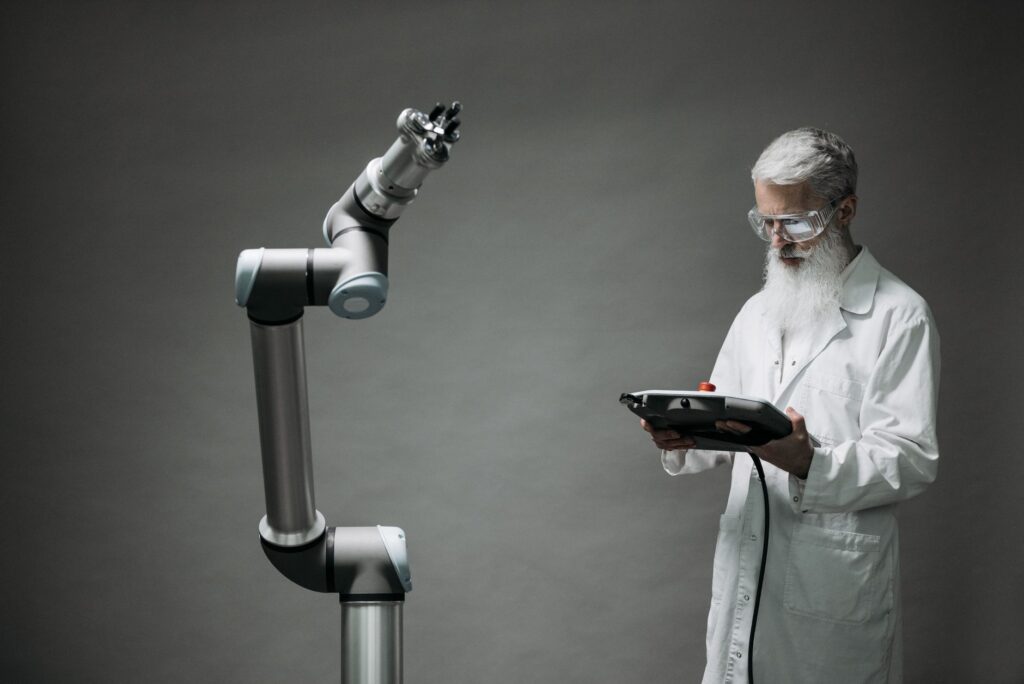
The deficit is most acute in three intersecting domains. Technical proficiency in machine‑learning model integration remains scarce; many engineers can code but lack experience tying models to sensor streams and actuator controls. Human‑machine interaction (HMI) expertise—understanding how operators trust, override, or collaborate with robots—is even rarer, with only a significant portion of organizations reporting that employees are empowered to use AI in their daily tasks. Finally, data‑centric problem solving, such as curating high‑quality training datasets and performing continuous model validation, is often left to a handful of data scientists.
At the same time, senior leadership feels the pressure.
You may also like
 AI & Technology
Amazon Commits Over $1 Billion to Local Data Center Funding
Amazon's recent commitment of over $1 billion to local communities hosting data centers marks a significant shift in corporate responsibility. This initiative promises to boost…
Read More →These gaps manifest in everyday bottlenecks. A production line may stall because the robot’s vision model misclassifies a component, yet the on‑site technician cannot diagnose the root cause without a blend of AI and mechanical knowledge. Similarly, in healthcare, robotic assistants that suggest treatment options can be sidelined if clinicians lack confidence in interpreting algorithmic outputs. The missing skill set is therefore not a single technology but a hybrid of AI fluency, systems thinking, and interpersonal acumen.
How are companies currently trying to bridge the gap, and why are those efforts falling short?
Many firms have poured budget into short‑term training workshops, certification courses, and vendor‑led bootcamps. While these programs raise awareness, they rarely produce the depth of expertise needed for complex robot deployments. For instance, a typical course may cover the basics of a programming framework but does not simulate the latency constraints of real‑time robotic control. Moreover, only a fraction of participants continue to apply the material on the job, leading to high attrition of newly acquired skills.

Our view is that the prevailing approach treats the gap as a purely technical problem, neglecting the organizational culture needed to sustain learning. When companies do not embed AI practice into everyday workflows, knowledge quickly evaporates. As we noted in [our earlier analysis](https://careeraheadonline.com/), successful upskilling requires a “learning‑by‑doing” loop where operators experiment, receive immediate feedback, and iterate on models in situ. Without that loop, training remains an isolated event rather than a continuous capability‑building process.
What blend of technical and soft skills will future robot operators need?
The emerging profile resembles a “Robotics Integrator” rather than a traditional programmer. On the technical side, proficiency in edge‑computing frameworks, sensor fusion, and safety‑critical software design is non‑negotiable. On the soft side, critical thinking, problem‑solving, and the ability to translate ambiguous operational cues into algorithmic adjustments are equally vital. Communication skills also rise in importance: operators must articulate system limitations to management and collaborate with cross‑functional teams that include ethicists, compliance officers, and end‑users.
This hybrid skill set aligns with what industry leaders call the Human‑Machine Interaction Skills Gap Framework (HMGF). The HMGF posits that effective robot stewardship hinges on three pillars—Technical Mastery, Cognitive Agility, and Collaborative Fluency. Companies that assess talent against these pillars can more accurately forecast training needs and design career ladders that reward both code and context. By internalizing the framework, professionals can map their current abilities to the competencies that matter most in AI‑powered environments.
How can individual professionals position themselves to stay relevant as robots become smarter?
You may also like
 AI & Technology
Dots get up in Muse’s business
OpenAI's Dots, a new AI assistant, is set to challenge Meta's Muse, promising significant changes in music production and data analytics integration.
Read More →Proactivity is the cornerstone of career resilience in this space. First, target certifications that blend AI fundamentals with robotics applications—look for programs that include hands‑on labs with real hardware. Second, cultivate a portfolio of micro‑projects that showcase end‑to‑end solutions, such as deploying a reinforcement‑learning controller on a collaborative arm and documenting the iteration cycle. Third, seek cross‑disciplinary exposure: shadow a process engineer, join a safety review board, or contribute to a data‑governance task force. These experiences demonstrate the collaborative fluency prized by the HMGF.
As we noted in [our earlier analysis](https://careeraheadonline.com/), successful upskilling requires a “learning‑by‑doing” loop where operators experiment, receive immediate feedback, and iterate on models in situ.
From a macro perspective, the economic stakes underscore the urgency. A significant proportion of enterprises will face critical AI skill shortages in the near future. If enterprises cannot staff AI‑robotics roles internally, they risk falling behind competitors who can accelerate time‑to‑market for autonomous solutions. By positioning themselves at the intersection of AI and robotics, professionals not only safeguard their employability but also become catalysts for organizational agility.
The unseen AI‑powered robotics skills gap is reshaping the talent landscape in real time. It demands a broader definition of expertise—one that fuses algorithmic knowledge with human‑centric design and continuous learning. As you chart your next career move, ask yourself whether your skill set reflects this integrated view, and what steps you will take to bridge any gaps before the market does.