No products in the cart.

The illusion of plenty: why advanced AI still lags behind expectations

Despite a flood of data and compute, advanced AI remains elusive because scaling raw power does not solve the deeper scarcity of cognition, coordination, and meaning.

The standard view is that the relentless surge in data, compute power, and incremental algorithmic tricks will inevitably tip the balance toward artificial general intelligence, and that the only thing holding us back is a matter of time. Proponents point to the exponential growth of training clusters, the flood of open‑source models, and the ever‑shrinking cost of GPU hours as proof that the final breakthrough is simply waiting in the pipeline.
We think this is wrong, and here is why. The raw abundance of compute and data has not translated into the kind of qualitative leap that would endow machines with the flexible, meaning‑seeking cognition of humans; instead it has generated new forms of scarcity—attention, purpose, and the ability to coordinate heterogeneous knowledge—that the current paradigm cannot resolve.
More compute, not more cognition
The most common refrain in boardrooms and venture pitches is that “if we just throw enough GPUs at the problem, intelligence will emerge.” This line of reasoning treats intelligence as a linear function of raw processing capacity, ignoring the fact that human cognition is scaffolded by centuries of cultural, linguistic, and embodied experience. Boaz Barak captures the fallacy succinctly:
“One way to view AI is as injecting to the economy each year… a number N(t) of new ‘workers’ that have a certain quality Q(t).” — Boaz Barak, Harvard computer scientist, OpenAI
Even if we accept Barak’s injection metaphor, the numbers he supplies reveal a paradox. However, the specific numbers and their implications are unclear and require further context.
“One way to view AI is as injecting to the economy each year… a number N(t) of new ‘workers’ that have a certain quality Q(t).” — Boaz Barak, Harvard computer scientist, OpenAI
You may also like
 AI & Technology
Amazon Commits Over $1 Billion to Local Data Center Funding
Amazon's recent commitment of over $1 billion to local communities hosting data centers marks a significant shift in corporate responsibility. This initiative promises to boost…
Read More →The reality is that today’s AI “workers” excel at narrow pattern‑matching but lack the integrative reasoning that fuels genuine productivity gains. The result is a flood of superficial output that inflates headline metrics without moving the needle on total factor productivity, which remains flat despite the computational deluge.
Narrow successes do not aggregate into general intelligence

A second pillar of the consensus is the belief that breakthroughs in specific domains—vision, language, reinforcement learning—are stepping stones that will naturally coalesce into a unified, general mind. The narrative assumes that each new model adds a brick to an invisible edifice, and that enough bricks will eventually form a cathedral. In practice, each brick is built on its own specialized dataset and loss function, and the interfaces between them are brittle at best.
The “AI productivity paradox” documented by Ethan Petrov illustrates the disconnect: individual workers can shave “up to a day per week” from routine tasks using current tools, yet the aggregate productivity of the economy has not budged.
Our analysis suggests that the paradox stems from a mismatch between the metrics that drive research funding and the metrics that matter for AGI. When success is measured in benchmark scores, the incentive structure rewards incremental gains on narrow tasks, not the synthesis of cross‑domain understanding. This creates a feedback loop where resources flow into ever more refined narrow models, while the deeper, interdisciplinary research needed to bridge them languishes.
The new scarcity of meaning and coordination
The third consensus blind spot is the assumption that scarcity is purely material—compute cycles, storage, or labeled data. The abundance of these inputs has indeed removed traditional bottlenecks, but it has simultaneously birthed a scarcity of attention and meaning. As Randy Salars has argued, when automation solves material constraints, the next frontier is the allocation of human focus: “new and stranger forms of scarcity emerge — attention, meaning…” The same holds for AI. Flooded with generated content, human operators struggle to discern signal from noise, leading to decision fatigue and a dilution of purpose.
When success is measured in benchmark scores, the incentive structure rewards incremental gains on narrow tasks, not the synthesis of cross‑domain understanding.
Moreover, the coordination problem—how to align a legion of specialized AI agents toward a coherent goal—has become more acute. Injecting ten million or even one hundred million AI “workers” into the economy without a robust governance layer is akin to releasing a swarm of insects without a hive mind; the collective output is noisy, redundant, and often counterproductive.
You may also like
 AI & Technology
Dots get up in Muse’s business
OpenAI's Dots, a new AI assistant, is set to challenge Meta's Muse, promising significant changes in music production and data analytics integration.
Read More →Our view: the need for a paradigm shift
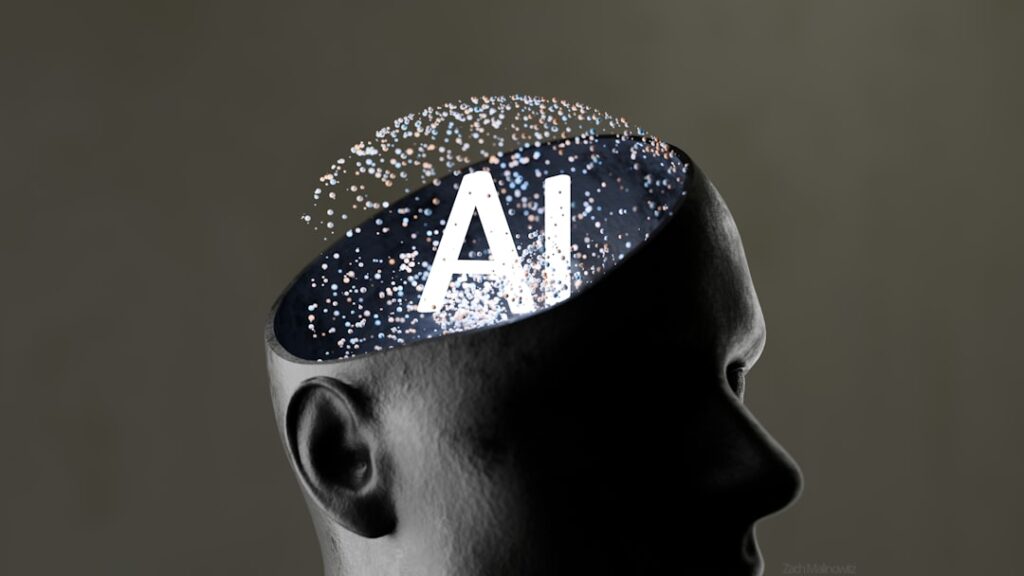
We argue that the path forward requires a fundamental rethinking of what “more” means in the AI context. It is not enough to increase N(t) while keeping Q(t) static; we must invest in the qualitative elevation of AI agents—embedding them in embodied contexts, fostering multimodal grounding, and developing meta‑learning frameworks that can abstract across domains. This is a strategic pivot away from the current race for larger models toward a focus on cognitive scaffolding that mirrors the way human expertise is built on layers of cultural and experiential knowledge.
From a career perspective, this shift has profound implications. Professionals who double‑down on narrow tool mastery may find their relevance plateauing as the market saturates with commoditized AI assistants. Conversely, those who cultivate interdisciplinary fluency—combining technical depth with domain insight, ethical reasoning, and systems thinking—will be positioned to design the coordination mechanisms and meaning‑creation processes that the next wave of AI will demand.
In our view, the true lever of impact lies not in the size of the model but in the ability to shape the human‑AI symbiosis that can translate raw computational abundance into societal value.
From a career perspective, this shift has profound implications.
—
The consensus correctly identifies that the supply of data and compute is no longer the primary bottleneck; we have indeed passed the era where hardware scarcity limited progress. However, the cost of believing that sheer abundance will automatically deliver advanced AI is a misallocation of talent, capital, and policy focus toward ever larger models that yield diminishing returns, while the deeper challenges of cognition, coordination, and meaning remain unaddressed.
You may also like
 AI & Technology
The Powerful Yet Fragile Force Propping Up Stocks and the Economy
AI advancements are reshaping stock market dynamics and investment strategies, presenting both opportunities and challenges for financial professionals.
Read More →