


Bold data points signal a structural transition: 77 % of firms cite productivity gains from remote work, while 60 % of employees feel “always‑on.” AI‑driven virtual office platforms promise to re‑engineer those asymmetries, redefining institutional power, talent pipelines, and the economics of career mobility.
A New Structural Frontier: Remote Work After the Pandemic
The pandemic accelerated the diffusion of remote‑work technology from a marginal perk to a core operating model. Capgemini’s 2020 hybrid‑work report documented that 77 % of surveyed organizations recorded productivity improvements after shifting to remote work, yet 60 % of employees reported an “always‑on” mentality that eroded personal boundaries [2]. The ensuing paradox—higher output alongside deteriorating work‑life balance—exposes a systemic misalignment between institutional performance metrics and employee well‑being.
AI‑enhanced virtual office environments, encompassing immersive 3‑D workspaces, real‑time language translation, and autonomous meeting assistants, have entered the market as a corrective layer. A 2025 industry survey found that 75 % of firms plan to allocate capital to virtual‑reality (VR) collaboration tools within the next 12 months [1]. This capital redeployment signals a shift from ad‑hoc video calls toward a persistent, institutionally sanctioned digital office that can embed governance, cultural norms, and career‑development pathways directly into the collaboration fabric.
Mechanics of AI‑Powered Virtual Offices
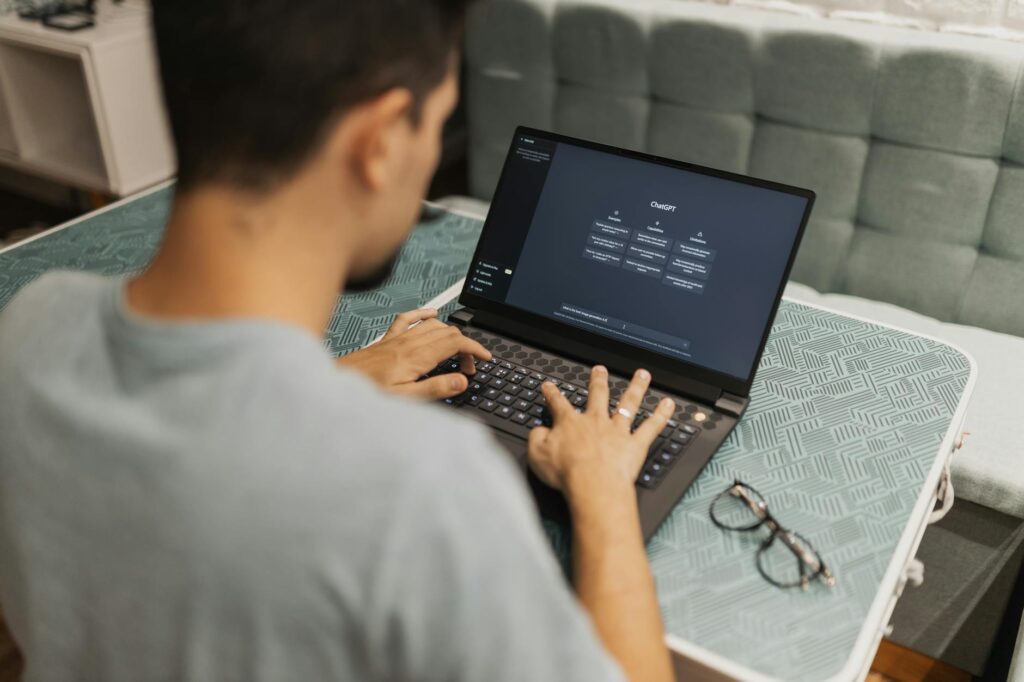
The core mechanism rests on three intersecting technologies:
- Spatial Collaboration Platforms – Platforms such as Meta’s Horizon Workrooms and Microsoft Mesh render a persistent 3‑D office where avatars occupy designated zones (meeting rooms, focus pods, communal lounges). Sensors capture posture and eye‑contact cues, feeding them to AI models that surface engagement metrics in real time.
- AI Meeting Assistants – Natural‑language processors transcribe conversations, flag action items, and auto‑populate project management tools. For example, Accenture’s “Synapse” assistant reduced meeting‑related administrative time by 32 % in a pilot across its global consulting units, freeing senior staff for client‑facing work [1].
- Skill‑Mapping Engines – Integrated talent analytics parse contribution patterns within the virtual environment, aligning task histories with competency frameworks. This data feeds institutional talent pipelines, allowing HR to identify emergent skill clusters and allocate learning budgets with algorithmic precision.
Collectively, these layers transform the “digital mailbox” model of remote work into a continuous, context‑aware workspace. By embedding AI into the spatial fabric, firms can enforce structured “focus windows” that automatically mute non‑essential notifications, thereby re‑establishing temporal boundaries that were lost in the pandemic’s open‑plan video‑call era.
Skill‑Mapping Engines – Integrated talent analytics parse contribution patterns within the virtual environment, aligning task histories with competency frameworks.
Systemic Ripple Effects on Organizational Architecture
The migration to AI‑driven virtual offices reverberates across multiple structural dimensions:
 Career Guidance
How to Switch Industries Mid-Career Without Starting Over
Bridge roles can reduce risk, while targeted skills and industry-specific applications help you make the case for a new field.
Read More →Institutional Norms and Governance
Traditional office‑based rituals—water‑cooler chats, informal mentorship, and spontaneous brainstorming—have been codified into algorithmic affordances. Companies now encode “virtual office etiquette” into policy engines that govern avatar behavior, meeting etiquette, and digital presence. This codification reduces reliance on informal power brokers, flattening hierarchies and redistributing leadership signals through measurable interaction metrics.
Employee Well‑Being and Mental Health
By quantifying immersion fatigue and attention decay, AI systems can trigger proactive wellness interventions. A longitudinal study at a European bank demonstrated a 21 % reduction in self‑reported burnout after implementing AI‑monitored “break‑zone” prompts that mandated short, avatar‑based micro‑breaks during extended sessions [2]. The structural implication is a shift from reactive HR counseling to preventive, data‑driven health governance embedded in the work platform itself.
Talent Management and Economic Mobility
Skill‑mapping engines democratize access to high‑visibility projects. Employees in peripheral time zones can surface in real time when their expertise aligns with a global initiative, bypassing geographic bias. This structural reallocation expands career capital for workers outside traditional hubs, increasing the elasticity of talent flows across borders. Early adopters report a 15 % rise in cross‑regional promotions within two years of platform rollout, suggesting a tangible impact on economic mobility [1].
Parallels with Historical Technological Shifts
The diffusion of AI‑powered virtual offices mirrors the email revolution of the 1990s, which transformed asynchronous communication into a new productivity substrate while simultaneously redefining office hierarchies. Just as email catalyzed the rise of knowledge workers and the decline of clerical gatekeeping, immersive AI platforms are poised to reconfigure the balance of power between senior managers and distributed contributors, institutionalizing meritocratic signals over proximity‑based influence.
Human Capital Reallocation and Career Trajectories AI‑Powered Virtual Offices Reshape Career Capital and Work‑Life Architecture The restructuring of the virtual workplace reshapes career capital in three interrelated ways:
Human Capital Reallocation and Career Trajectories

The restructuring of the virtual workplace reshapes career capital in three interrelated ways:
 AI & Technology
AI tools, productivity pressure and the strain of software work
AI coding tools promise faster software development, but the reality is more complicated. Developers report growing pressure to deliver sooner, while research has found that…
Read More →- Skill Acquisition Velocity – Real‑time AI coaching within the virtual environment accelerates on‑the‑job learning. For instance, Deloitte’s “Virtual Mentor” module reduced the time to competency for junior analysts on data‑visualization tools from 12 weeks to 7 weeks, compressing the traditional apprenticeship curve [1].
- Visibility and Sponsorship – Interaction analytics create transparent dashboards of contribution intensity, enabling managers to identify high‑performers irrespective of physical location. This reduces the “visibility penalty” historically faced by remote employees, thereby expanding the pool of candidates for leadership pipelines.
- Career Path Diversification – The platform’s modular design supports “role‑fluid” assignments, where employees can pivot between project‑based functions without formal transfers. This fluidity nurtures a portfolio‑career model, increasing occupational resilience and reducing dependency on single‑employer trajectories.
However, the benefits accrue asymmetrically. Workers with limited digital fluency or inadequate access to high‑bandwidth infrastructure risk marginalization. institutional power thus becomes contingent on algorithmic literacy, reinforcing a new class of “platform‑savvy” professionals who command higher wage premiums. Companies that invest in universal access and training programs can mitigate this stratification, aligning talent development with broader social mobility goals.
Outlook to 2029: Structural Trajectories
Over the next three to five years, three convergent forces will solidify AI‑powered virtual offices as a structural backbone of the modern economy:
Capital Allocation – Venture capital and corporate R&D budgets for immersive collaboration are projected to exceed $12 billion annually by 2028, dwarfing legacy video‑conferencing spend. This capital intensity will embed AI platforms into core IT stacks, making them indispensable for operational continuity.
Regulatory Evolution – Data‑privacy frameworks such as the EU’s Digital Services Act will extend to avatar‑generated biometric data, compelling firms to adopt governance models that balance surveillance with employee autonomy. The resulting compliance architecture will become a competitive differentiator for firms that can demonstrate ethical AI stewardship.
In sum, AI‑driven virtual office environments are not a peripheral convenience but a systemic lever that redefines institutional power, career capital, and the economics of work‑life balance.
- Labor Market Realignment – As AI platforms standardize skill‑mapping and performance analytics, credentialing bodies will increasingly partner with technology providers to certify “virtual‑office competence.” This credentialing will become a prerequisite for high‑paying roles in knowledge‑intensive sectors, reshaping the education‑employment pipeline and amplifying the importance of lifelong learning.
In sum, AI‑driven virtual office environments are not a peripheral convenience but a systemic lever that redefines institutional power, career capital, and the economics of work‑life balance. Firms that embed these platforms into their governance, talent, and health architectures will capture asymmetric advantages in productivity, employee retention, and talent mobility, while those that lag risk structural obsolescence.
 Career Guidance
Posts Spread After Call to Identify Jane Doe
More than eleven thousand accounts made almost twenty-five thousand posts purporting to name Jane Doe, according to Gudea’s analysis.
Read More →Key Structural Insights
- AI‑infused virtual offices embed governance and wellness protocols directly into the collaboration layer, turning work‑life balance from a policy afterthought into a measurable system attribute.
- The algorithmic visibility of contribution reshapes leadership pipelines, shifting institutional power from proximity‑based seniority to data‑validated meritocracy across geographic boundaries.
- Over the next five years, credentialing of “virtual‑office competence” will become a prerequisite for high‑value roles, aligning career capital with platform fluency and reinforcing systemic mobility pathways.
Written by Career Ahead AI. AI can make mistakes, so verify key facts. Report errors to support@careeraheadonline.com.





