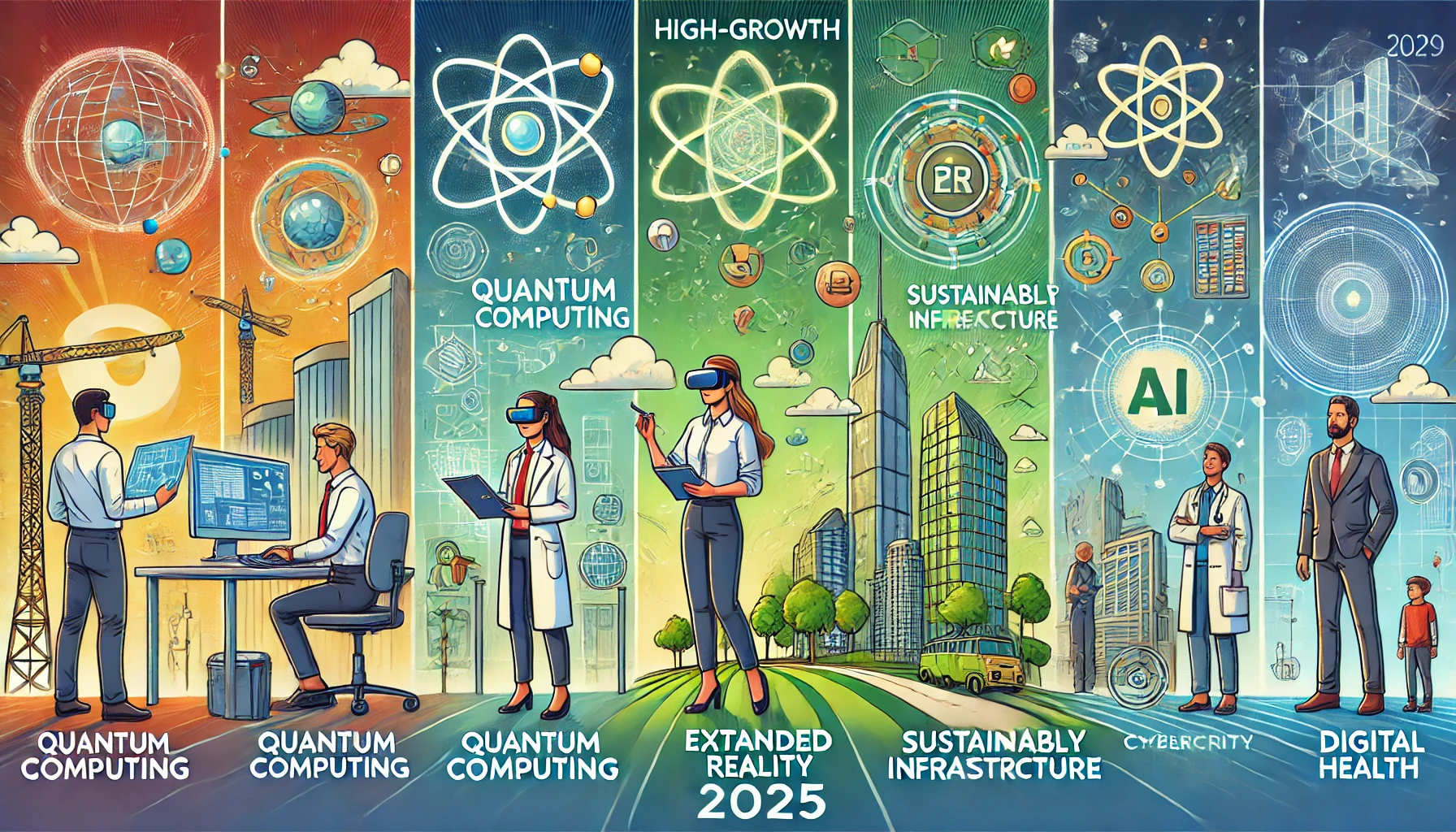
AI adoption concentrates in technology, finance and health care, while automation risk clusters in customer‑service, office‑support and media roles. The shift forces workers to convert routine expertise into digital fluency, redefining institutional pathways to advancement.
The structural shift matters now because headline employment remains steady, yet job quality has stalled and inequality widens, according to the International Labour Organization. Simultaneously, the OECD flags demographic headwinds that pressure productivity and demand new skill architectures. Together, these forces compel firms and policymakers to redesign the institutions that allocate career capital, making the dynamics of future work a decisive factor for economic mobility and leadership pipelines.
Framing the macro transition
AI deployment is highest in technology, finance and health‑care firms, where investment exceeds a measurable share of annual IT budgets, while automation exposure peaks in customer‑service, office‑support and media occupations. This sectoral asymmetry reconfigures the institutional hierarchy of skill value, elevating data‑centric roles and marginalizing routine‑task clusters. The International Labour Organization’s 2026 employment outlook confirms that, despite stable overall job counts, the quality of work has plateaued, amplifying the premium on high‑skill, high‑autonomy positions. According to Career Ahead’s analysis of AI adoption patterns across sectors, the concentration of automation risk reshapes career capital for mid‑level workers, compelling a reallocation of training resources toward digital fluency and problem‑solving. The shift also pressures traditional gatekeepers—unions, professional associations, and corporate hierarchies—to renegotiate the criteria for promotion and compensation.
How AI integration rewires skill demand
AI integration reshapes career capital and mobility
The core mechanism is the substitution of routine cognition with algorithmic processes, paired with the creation of new roles that manage, interpret and improve those algorithms. In high‑adoption sectors, demand for data engineering, model governance and AI ethics has risen at a rate that outpaces supply, forcing firms to launch internal upskilling pipelines. Conversely, occupations with limited digital interfaces experience a net reduction in headcount, prompting workers to seek cross‑functional mobility. The ILO notes that skill mismatches now affect a measurable share of the labor force, a trend amplified by the speed of AI rollout. Continuous learning becomes a structural prerequisite, not an optional perk, as firms embed micro‑credentialing into performance reviews. Leadership teams that embed AI literacy into succession planning gain a decisive edge, because the ability to translate algorithmic outputs into strategic decisions constitutes a new form of institutional power.
Systemic implications for productivity and inequality
AI‑driven efficiency gains are unevenly distributed, deepening existing wage gaps. OECD data shows that productivity growth in AI‑intensive industries outpaces the economy‑wide average, while sectors with low automation lag behind, creating a bifurcated growth trajectory.
Leadership teams that embed AI literacy into succession planning gain a decisive edge, because the ability to translate algorithmic outputs into strategic decisions constitutes a new form of institutional power.
“Productivity differentials between AI‑intense and AI‑light sectors are widening, reinforcing income polarization.”
The divergence forces policymakers to confront a dual challenge: harnessing aggregate gains without entrenching structural inequality. Wage compression in automated roles erodes economic mobility, while the premium on AI‑related expertise inflates the value of career capital for a narrow cohort. Institutional responses—such as public‑private reskilling consortia and universal credit‑linked training subsidies—aim to democratize access to high‑skill pathways, yet their effectiveness hinges on coordination across education ministries, industry bodies and labor unions. Leadership within corporations must also recalibrate incentive structures to reward collaborative upskilling, lest talent pipelines become siloed and exacerbate the talent‑mobility chasm.
Human capital stakes and leadership adaptation
AI integration reshapes career capital and mobility
Workers at the intersection of routine and digital tasks face the steepest re‑skilling imperative. A measurable share of mid‑career professionals are compelled to acquire coding, data‑analysis or AI‑ethics competencies to preserve their leadership trajectories. Companies that embed structured mentorship—pairing senior AI strategists with frontline staff—generate a measurable increase in internal mobility, according to case studies from Fortune 500 firms. Moreover, institutional power is shifting from tenure‑based hierarchies to skill‑based networks, where credentialing platforms confer legitimacy independent of traditional titles. Leaders who champion transparent skill‑mapping dashboards enable employees to visualize career pathways, thereby enhancing economic mobility and reducing attrition. Labor organizations are lobbying for portable skill certificates, seeking to decouple career capital from single‑employer tenure and to embed lifelong learning into collective bargaining agreements.
Outlook: a 3‑ to 5‑year trajectory
Over the next three to five years, AI diffusion will saturate secondary industries such as logistics and retail, extending the automation frontier beyond the current high‑adoption clusters. Career Ahead’s read of the trajectory suggests that upskilling ecosystems will become a competitive moat for firms, with talent acquisition increasingly tied to demonstrable digital credentials rather than conventional degrees. Public policy is likely to evolve toward outcome‑based funding models that reward measurable improvements in job quality and mobility, echoing OECD calls for “skill‑aligned” growth strategies. Companies that institutionalize continuous learning—embedding AI literacy into onboarding, performance metrics and executive development—will command superior productivity and mitigate the inequality spiral. Conversely, firms that rely on legacy training programs risk talent attrition and diminished market relevance as the structural premium on AI‑enabled career capital accelerates.
The evolving landscape underscores that the future of work will be defined less by the number of jobs created than by the institutional mechanisms that allocate skill value, reshape leadership pipelines and sustain economic mobility.
The evolving landscape underscores that the future of work will be defined less by the number of jobs created than by the institutional mechanisms that allocate skill value, reshape leadership pipelines and sustain economic mobility.
According to the Bureau of Labor Statistics, occupations that require such credentials are projected to grow 8% from 2022‑2032, adding roughly 2.2 million jobs.
Insight 1: AI concentration in technology, finance and health‑care elevates digital fluency as the primary form of career capital, while routine‑task clusters face systematic devaluation.
Insight 2: Productivity gains in AI‑intensive sectors outpace the broader economy, intensifying wage polarization and demanding coordinated reskilling policies to preserve mobility.
Insight 3: Over the next three to five years, portable digital credentials will replace tenure‑based hierarchies, making continuous upskilling the decisive factor for leadership and institutional power.
Rise of Hybrid Professions: As AI assumes routine and repetitive tasks, professionals will need to develop hybrid skills that combine technical expertise with creative problem-solving and emotional intelligence to remain relevant in the future workforce.
Insight 3: Over the next three to five years, portable digital credentials will replace tenure‑based hierarchies, making continuous upskilling the decisive factor for leadership and institutional power.
Global Talent Market Redefined: The increasing use of AI and automation will lead to a global talent market where skills, experience, and adaptability become the primary currencies, rather than traditional qualifications and geographical location.
Written by Career Ahead AI. AI can make mistakes, so verify key facts. Report errors to support@careeraheadonline.com.
Career Ahead AI is Career Ahead Magazine's in-house AI newsroom, reporting on careers, education, jobs and business. It produces original summaries and analysis drawn from publicly available sources, with those sources credited, and operates under the editorial oversight of the Career Ahead team. AI can make mistakes, so please tell us when something looks wrong. Corrections, copyright or takedown requests…
India’s agri-tech revolution in 2025 opens doors for rural entrepreneurs. Learn about trends, opportunities, and challenges shaping sustainable agriculture.
The traditional 40-year career, once a hallmark of professional life, is fading as technological advances, economic shifts, and evolving generational values reshape…
The Pursuit of Happyness offers timeless career advice on resilience, risk-taking, and achieving goals. Learn actionable tips from Chris Gardner’s inspiring story…




Future Skills & Work

Future Skills & Work