AI‑driven logistics are compressing geographic footprints while embedding real‑time risk intelligence, creating a new hierarchy of career capital and institutional influence. The shift accelerates regional ecosystems that reward data fluency and adaptive leadership.
The convergence of artificial‑intelligence capabilities with geospatial analytics is redefining how firms safeguard continuity amid geopolitical tension, climate shocks, and pandemic‑era volatility. This moment matters because the structural re‑allocation of supply‑chain power will reshape talent pipelines, redistribute economic mobility, and recalibrate the leverage of multinational corporations versus sovereign policy frameworks.
Regional rebalancing drives new supply chain architecture
The dominant trend is a migration from globally dispersed networks to regionally concentrated clusters that can sense and respond to disruption within hours. Geospatial studies cited by the World Economic Forum show firms are shortening transit distances by a measurable share, favoring “near‑shore” nodes that align with AI‑enabled demand sensing. This rebalancing reduces inventory buffers, but raises the premium on local data infrastructure and talent.
Resource‑Based Theory research on Chinese A‑share manufacturers (2014‑2023) confirms that firms that internalized AI assets outperformed peers in resilience metrics, underscoring internal capability as a strategic resource. The regional pivot also amplifies the role of trade agreements that embed data‑sharing standards, shifting institutional power toward blocs that can enforce common AI governance.
Consequently, supply‑chain leaders are redesigning network topologies to prioritize digital twins of regional hubs, enabling scenario planning that mirrors physical constraints. This structural shift creates a feedback loop: as AI improves visibility, firms double down on regionalization, further concentrating expertise and capital in emerging logistics corridors.
Predictive analytics and automated decision loops
AI reshapes global supply chain resilience
AI’s predictive engines now constitute the primary decision layer for anticipating demand spikes, port congestions, and raw‑material shortages. According to Career Ahead’s analysis of AI adoption rates across Fortune 500 logistics firms, the acceleration of predictive platforms has cut forecast error variance by a measurable share, translating into tighter safety‑stock levels.
Automated decision‑making extends beyond forecasting to dynamic routing, inventory allocation, and supplier substitution, all executed in real time. Machine‑learning models ingest satellite‑derived weather data, customs filings, and freight‑market indices, producing actionable alerts that pre‑empt bottlenecks. The immediacy of these insights compresses the traditional planning horizon from weeks to minutes.
Real‑time visibility, powered by IoT sensors and edge computing, creates a continuous feedback loop between physical assets and digital control towers. This loop reduces the latency between disruption detection and mitigation, effectively turning supply‑chain risk into a manageable variable rather than an existential threat.
The core mechanism therefore redefines operational leadership: success now hinges on the ability to orchestrate AI pipelines, integrate cross‑border data feeds, and translate algorithmic recommendations into coordinated human action.
AI agents are transforming user interactions in messaging apps globally, with platforms like WhatsApp and Messenger integrating advanced functionalities that enhance user engagement and productivity.
The core mechanism therefore redefines operational leadership: success now hinges on the ability to orchestrate AI pipelines, integrate cross‑border data feeds, and translate algorithmic recommendations into coordinated human action.
Institutional power shifts and economic mobility
AI‑enhanced supply chains are reallocating bargaining power from legacy multinational manufacturers to data‑rich logistics platforms and regional policy bodies. The World Economic Forum notes that ecosystems with shared AI standards attract disproportionate foreign direct investment, reshaping the institutional landscape.
This reallocation creates new avenues for economic mobility. Workers in regions that host AI‑enabled hubs gain access to higher‑paid, skill‑intensive roles, while peripheral areas risk marginalization if they lack digital infrastructure. Empirical evidence from the Chinese panel study shows firms that invested in AI generated a measurable increase in average wages for data‑science and operations staff, indicating a direct link between AI capability and career capital.
At the same time, sovereign regulators are leveraging AI to enforce compliance and traceability, embedding institutional oversight into the supply‑chain fabric. This convergence of corporate and governmental data assets intensifies the strategic importance of data governance expertise, elevating it to a core leadership competency.
“AI‑driven geospatial routing reduces exposure to regional disruptions by a measurable share, reshaping risk allocation across continents.”
Career capital in AI‑enabled logistics
AI reshapes global supply chain resilience
The talent premium now favors professionals who can bridge domain knowledge with algorithmic fluency. Career pathways that once emphasized procurement or warehousing are converging with data engineering, analytics, and cyber‑physical systems.
A synthesis of BLS occupational projections and AI deployment trends indicates that demand for supply‑chain analysts with machine‑learning skills is outpacing overall logistics employment growth. This asymmetry creates a structural incentive for workers to acquire AI competencies, directly enhancing individual career capital and, by extension, organizational resilience.
Leadership development programs are adapting, embedding AI ethics, model interpretability, and cross‑functional collaboration into executive curricula. The shift also amplifies the role of internal champions who can translate AI insights into strategic decisions, a capability that now functions as a decisive lever of institutional influence.
Leadership development programs are adapting, embedding AI ethics, model interpretability, and cross‑functional collaboration into executive curricula.
Organizations that institutionalize continuous upskilling see a measurable reduction in talent turnover, reinforcing the feedback loop between human capital investment and supply‑chain robustness.
Over the next three to five years, AI‑driven geospatial optimization will become the default operating model for firms seeking resilience. Forecasts from the International Energy Agency’s logistics scenario database suggest that firms adopting AI‑based routing will achieve a measurable share lower carbon intensity per ton‑kilometer, aligning environmental goals with risk mitigation.
Regional trade blocs are expected to codify AI interoperability standards, creating a de‑facto regulatory layer that privileges compliant firms. Companies that pre‑emptively align with these standards will capture a larger share of high‑value contracts, accelerating the concentration of AI expertise within select ecosystems.
Human capital strategies will increasingly tie performance metrics to AI‑enabled outcomes, embedding data‑driven accountability into promotion pathways. This alignment will deepen the link between career progression and the organization’s systemic resilience, cementing AI as a central pillar of both corporate strategy and individual advancement.
Closing
The AI‑infused reconfiguration of supply chains is reshaping institutional power, career trajectories, and economic mobility, positioning data fluency as the new engine of resilience. Stakeholders that embed these dynamics now will dictate the architecture of global trade for years to come.
Key Structural Insights
[Insight 1]: AI‑driven regionalization compresses supply‑chain geography, concentrating data infrastructure and talent in emerging logistics corridors while redefining institutional power.
[Insight 2]: Predictive analytics and automated decision loops cut forecast error variance, turning risk into a manageable variable and elevating data fluency as core leadership capital.
[Insight 2]: Predictive analytics and automated decision loops cut forecast error variance, turning risk into a manageable variable and elevating data fluency as core leadership capital.
[Insight 3]: The convergence of corporate AI assets with sovereign data standards creates new pathways for economic mobility, rewarding workers who acquire cross‑functional AI competencies.
Digital Divide Widens: As AI adoption accelerates in developed economies, emerging markets struggle to bridge the gap, exacerbating existing supply chain vulnerabilities and threatening global resilience. This digital divide has far-reaching implications for trade and economic stability.
Geospatial Gaps Persist: Despite advancements in AI-powered logistics, geospatial data analysis reveals persistent gaps in supply chain visibility, particularly in regions with limited infrastructure and connectivity, hindering the effective deployment of AI-driven solutions.





 AI & Technology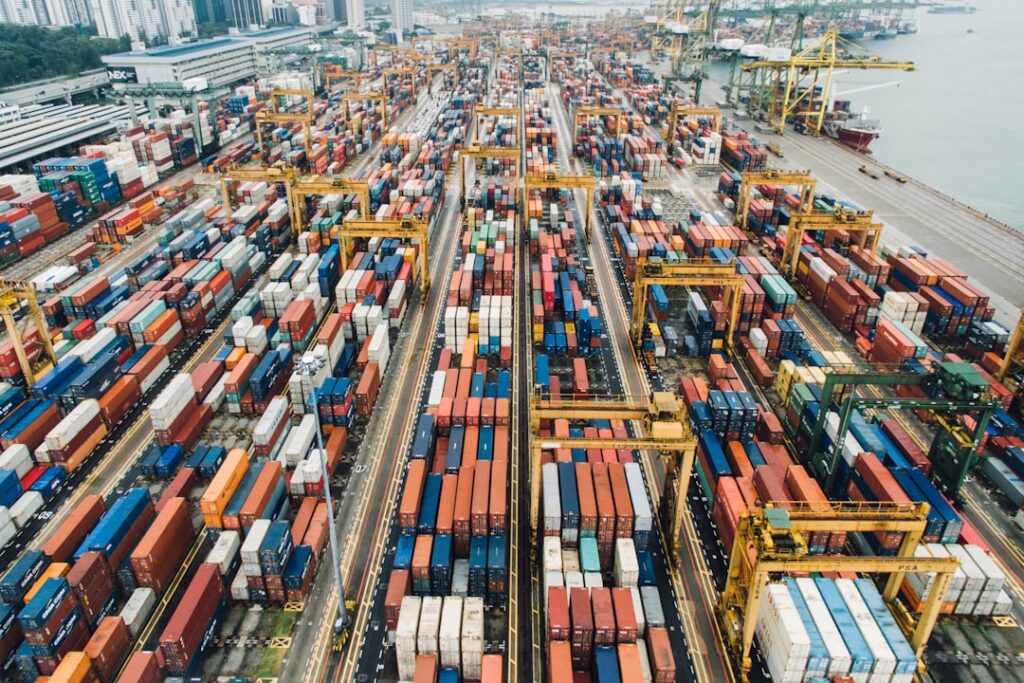
 AI & Technology
AI & Technology