Quantum breakthroughs are accelerating toward a point where today’s encryption could be undone, exposing the data arteries of multinational supply networks. Leaders must now embed quantum‑resistant safeguards before the ‘harvest‑now, decrypt‑later’ model materializes.
The convergence of rapid quantum‑hardware advances and the digital backbone of modern logistics creates an unprecedented systemic risk. As supply chains rely on encrypted communications for trade finance, IoT tracking, and cross‑border data exchange, any erosion of cryptographic guarantees threatens the very trust that underpins global commerce. This article dissects the structural shift, the mechanisms at play, and the strategic response required by institutions and talent pools.
Quantum computers are moving from laboratory prototypes to commercially viable machines, redefining cyber risk for global supply chains. The World Economic Forum warns that “harvest‑now, decrypt‑later” attacks could already be in motion, while IMD projects exponential growth in qubit counts over the next decade. Combining these signals yields a structural vulnerability: encrypted data flowing through logistics platforms today becomes a latent threat as quantum decryption power matures. According to Career Ahead’s analysis of the World Economic Forum and IMD projections, the convergence of quantum readiness and supply‑chain digitization creates a systemic exposure that outpaces traditional threat models. Institutional leaders must therefore treat quantum risk as a core element of supply‑chain governance rather than a peripheral IT concern.
How quantum algorithms undermine current cryptography
Quantum Computing Threatens Global Supply Chain Security
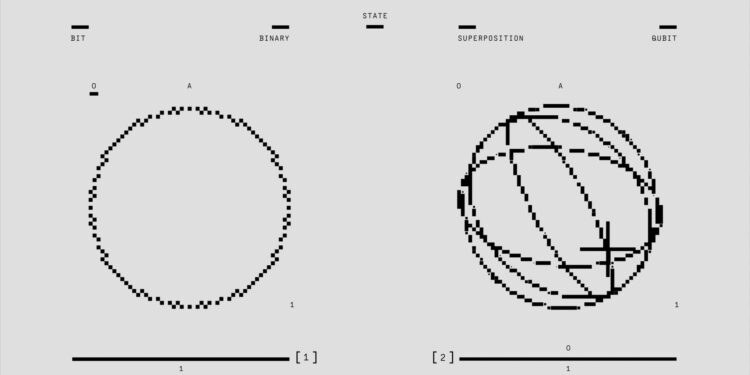
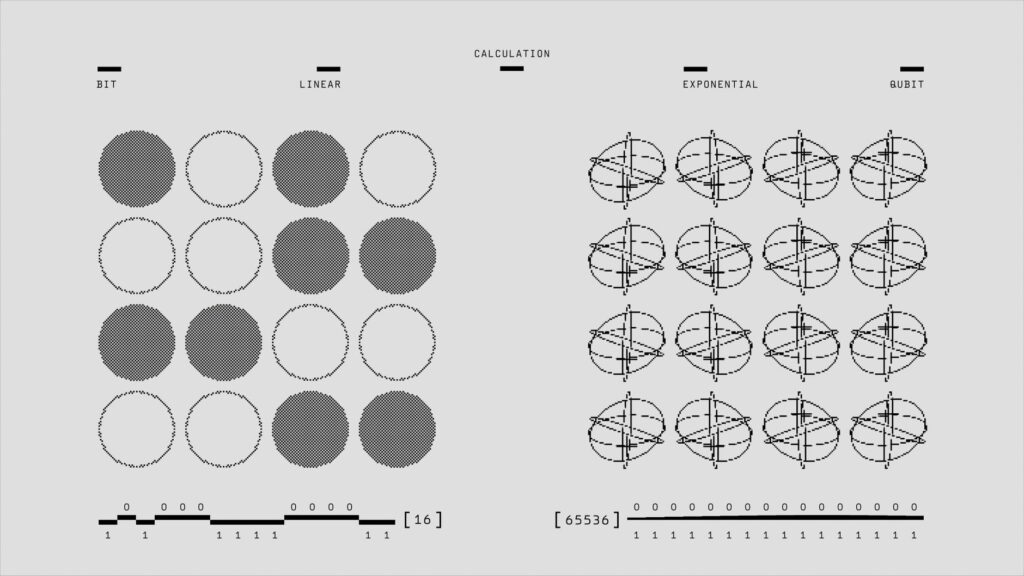
Shor’s algorithm can factor large integers and compute discrete logarithms in polynomial time, directly breaking RSA and elliptic‑curve cryptography that secure most B2B transactions. Qubits enable simultaneous evaluation of massive solution spaces, turning what once required centuries of classical computation into minutes for a sufficiently scaled quantum processor. The “harvest‑now, decrypt‑later” model turns today’s encrypted traffic into a time‑bomb for supply‑chain integrity. Current standards such as TLS 1.3, widely adopted in freight‑management platforms, rely on these vulnerable primitives. Without migration to post‑quantum schemes, the confidentiality of shipping manifests, customs filings, and payment instructions remains at risk once quantum decryption becomes practical.
Cascade effects on trade, finance, and governance
A breach of encryption propagates through multiple layers of global commerce. Trade‑finance letters of credit, authenticated via digital signatures, could be forged, exposing banks to fraud losses. IoT sensors embedded in containers, which transmit location and temperature data under encrypted channels, become spoofable, jeopardizing product safety and compliance. Moreover, customs authorities that depend on secure data exchanges may face audit failures, prompting regulatory crackdowns. The systemic impact extends to market confidence: investors assess supply‑chain resilience as a credit metric, and any quantum‑induced breach could trigger rating downgrades. Consequently, multilateral bodies such as the WTO and the International Organization for Standardization are accelerating the development of unified post‑quantum guidelines to mitigate cross‑jurisdictional fallout.
Skill shift and institutional response
Quantum Computing Threatens Global Supply Chain Security
Organizations must reallocate career capital toward quantum‑resilient expertise, prompting a re‑weighting of talent pipelines. Demand for cryptographers versed in lattice‑based schemes, quantum‑hardware engineers, and risk officers fluent in emerging standards is rising sharply. Career Ahead’s framework for talent adaptation identifies three levers: targeted upskilling programs, strategic hiring of niche experts, and ecosystem partnerships with research consortia. Companies that embed these levers into leadership development and succession planning will preserve institutional power in a landscape where cyber‑trust is a competitive moat.
Projected trajectory to 2030
By 2030, a measurable share of Fortune 500 firms are expected to have transitioned core transaction systems to post‑quantum algorithms, driven by regulatory mandates in the EU and Asia‑Pacific and by market pressure from security‑savvy customers. Early adopters will gain asymmetric advantage through uninterrupted data integrity, while laggards risk supply‑chain disruptions and reputational damage. The next three years will see accelerated standard‑setting activity, followed by a five‑year window of large‑scale migration, mirroring the rollout patterns observed during the adoption of TLS 1.2 a decade earlier.
The shift toward quantum‑ready supply chains will redefine how institutions protect economic mobility and preserve leadership credibility, making proactive investment in quantum‑resilient infrastructure a strategic imperative.
Reflection AI's Beam model, launched on October 5, 2026, is set to disrupt the AI market by offering a cost-efficient alternative to leading Chinese models.…
Career Ahead’s framework for talent adaptation identifies three levers: targeted upskilling programs, strategic hiring of niche experts, and ecosystem partnerships with research consortia.
[Insight 1]: Quantum computing’s ability to break RSA and ECC creates a latent, time‑delayed threat that could destabilize global trade finance once decryption capability matures.
[Insight 2]: The “harvest‑now, decrypt‑later” model forces a reallocation of career capital toward quantum‑resilient cryptography, reshaping talent pipelines and board‑level governance.
[Insight 3]: By 2030, regulatory pressure and market demand will drive widespread adoption of post‑quantum standards, turning quantum readiness into a competitive differentiator for supply‑chain leaders.
Breaking Down Silos: As quantum computing advances, traditional security measures will be insufficient, forcing organizations to integrate cybersecurity and quantum computing experts to develop effective countermeasures against emerging threats, a significant cultural shift for many companies.
In the last quarter, AI startups attracted over $10 billion in venture capital, a figure that highlights the ongoing investor interest despite economic headwinds.
Quantum-Secure Supply Chains: The integration of quantum computing and cybersecurity will require the development of new cryptographic protocols and secure communication channels, enabling the creation of quantum-secure supply chains that can withstand the growing threat of quantum-based attacks, a critical infrastructure upgrade.




AI & Technology
AI & Technology