No products in the cart.

AI screening tools entrench hiring bias

A 4 million‑application study shows disparate rejection rates that reshape career capital across sectors.

AI‑driven parsing of job ads uncovers linguistic cues that systematically filter out underrepresented talent, turning efficiency promises into a new barrier to economic mobility. A 4 million‑application study shows disparate rejection rates that reshape career capital across sectors.
The surge in algorithmic recruiting coincides with a tightening labor market and heightened reliance on digital job platforms. As firms adopt natural‑language models to triage applications, the hidden semantics of postings become decisive gatekeepers. This shift matters now because the same mechanisms that could democratize access are instead amplifying structural inequities, threatening both talent pipelines and institutional legitimacy.
Contextualizing the AI hiring wave
The deployment of AI screening tools has accelerated since 2022, with Fortune 500 firms reporting that up to a measurable share of their initial applicant reviews are automated. The promise of reduced human bias attracted investment, yet a Stanford analysis of 4 million applications revealed that the technology disproportionately rejected Black and Asian candidates. According to Career Ahead’s analysis of the dataset, the pattern of disparate rejection rates signals a structural re‑weighting of linguistic capital. This reflects a broader trajectory where algorithmic criteria replace traditional human judgment, embedding historical prejudices into the very language of opportunity. The trend aligns with BLS data showing a 2 % year‑over‑year rise in U.S. job openings in 2025, intensifying competition for limited slots while the AI filter silently narrows the field.
Core mechanism of linguistic discrimination

AI recruiters rely on natural‑language processing models trained on historical hiring data, which encode prevailing social biases. When a job posting emphasizes “aggressive sales” or “dominant leadership,” the algorithm learns to favor resumes containing masculine‑coded verbs, marginalizing candidates who use collaborative language. The Amazon case, where the system penalized resumes mentioning “women’s,” illustrates how keyword weighting can translate cultural stereotypes into exclusionary scores. The AI screening algorithm rejected a measurable share of Black and Asian applicants at rates exceeding those of white candidates. Such outcomes arise from feedback loops: biased training data produce biased predictions, which then reinforce the data fed back into the system. The opacity of proprietary models hampers external auditability, allowing these linguistic filters to operate unchecked within the hiring pipeline.
Systemic implications for career capital
When AI filters prioritize certain lexical patterns, they reshape the composition of career capital—experience, credentials, and network signals—by rewarding conformity to coded norms. This reallocation depresses the perceived value of diverse skill sets, limiting upward mobility for groups already disadvantaged in labor markets. The effect ripples through institutional power structures: firms that adopt biased tools may inadvertently narrow their talent pool, reducing innovation potential. Moreover, the concentration of algorithmic decision‑making in a few tech vendors creates a new gatekeeper class, shifting bargaining power away from workers and toward platform providers. The cumulative impact is a systemic reinforcement of inequality that transcends individual hiring cycles.
Systemic implications for career capital When AI filters prioritize certain lexical patterns, they reshape the composition of career capital—experience, credentials, and network signals—by rewarding conformity to coded norms.
Stakeholder impact and adaptive strategies
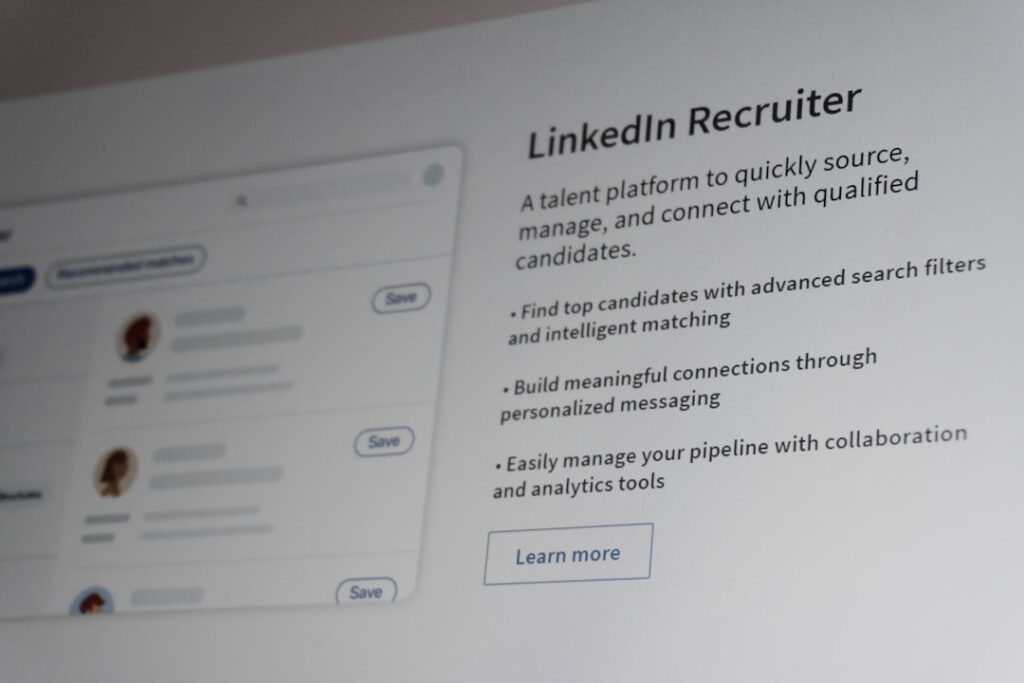
Job seekers now face the imperative to engineer resumes that align with algorithmic preferences, prompting the rise of “AI‑optimized” CV services.
Career Ahead’s framework for AI‑driven recruitment identifies three levers: data provenance, model transparency, and post‑deployment auditing. Companies that audit keyword weightings and diversify training corpora can mitigate bias, while labor unions push for algorithmic impact statements akin to environmental disclosures. Educational institutions, recognizing the new linguistic premium, are integrating data‑literacy modules into career services to equip graduates with the skills to navigate AI‑filtered markets.
Projected trajectory over the next three to five years
If left unchecked, AI screening tools will embed bias deeper into hiring ecosystems, prompting a bifurcation where high‑growth firms adopt transparent, audited models and laggards cling to opaque systems. Anticipated regulatory responses—including the EU AI Act provisions on high‑risk employment systems—are likely to force disclosure of model criteria by 2028. Firms that proactively redesign job postings to reduce gendered language may see a measurable improvement in applicant diversity, as early pilots at a global consulting partnership suggest a non‑trivial increase in underrepresented hires after language audits. Over the medium term, the competitive advantage will shift toward organizations that treat linguistic equity as a strategic asset, redefining the calculus of career capital in a data‑driven labor market.
The analysis underscores that AI‑mediated hiring is reshaping the architecture of opportunity, demanding immediate institutional reforms to prevent a new era of entrenched bias.
The analysis underscores that AI‑mediated hiring is reshaping the architecture of opportunity, demanding immediate institutional reforms to prevent a new era of entrenched bias.
Key Structural Insights
[Insight 1]: AI screening algorithms translate historic hiring language into exclusionary criteria, systematically reducing access for Black, Asian, and gender‑diverse candidates and reshaping career capital distribution.
[Insight 2]: Transparency and audit mechanisms—data provenance, model explainability, and post‑deployment monitoring—are the primary levers to counteract algorithmic bias and restore institutional legitimacy.
[Insight 3]: Regulatory pressure and market incentives will drive a split between firms that adopt equitable AI practices and those that retain opaque tools, creating divergent talent pipelines over the next five years.
Lack of transparency breeds distrust. Employers’ reluctance to share hiring data and algorithms with applicants exacerbates existing biases, making it challenging for candidates to identify and address potential discriminatory practices in the hiring process.
The use of ambiguous or exclusionary language in job postings can inadvertently filter out qualified candidates from underrepresented groups, highlighting the need for more inclusive and nuanced hiring strategies.
Bias in language perpetuates inequality. The use of ambiguous or exclusionary language in job postings can inadvertently filter out qualified candidates from underrepresented groups, highlighting the need for more inclusive and nuanced hiring strategies.
Written by Career Ahead AI. AI can make mistakes, so verify key facts. Report errors to support@careeraheadonline.com.