


OpenAI has announced a groundbreaking achievement: its internal AI system has purportedly solved the Navier-Stokes existence and smoothness problem, a mathematical conundrum that has perplexed researchers for nearly a century. This claim, made on September 9, 2026, suggests that a smooth fluid flow can develop a singularity, leading to infinite velocity in finite time. The implications of this breakthrough extend across various fields, including mathematics, engineering, and data science.
The Navier-Stokes equations are fundamental in describing fluid motion and are crucial for applications in meteorology, aerospace engineering, and beyond. OpenAI’s AI reportedly produced an analytical proof demonstrating that a smooth fluid can indeed form a singularity. This finding could revolutionize how researchers approach fluid dynamics and related mathematical problems.
Transforming Research Approaches in Fluid Dynamics
The announcement from OpenAI has ignited considerable interest among mathematicians and data scientists. Traditional methods for addressing the Navier-Stokes problem are often labor-intensive and yield inconclusive results. The ability of AI to analyze vast datasets and identify patterns could significantly streamline research efforts. As noted by DataCamp, this innovative approach allows for a more efficient exploration of complex mathematical landscapes, potentially leading to groundbreaking discoveries.
Moreover, the integration of AI in solving such a longstanding problem may encourage other researchers to adopt similar methodologies. The success of OpenAI’s internal agents, which collaborated to find the solution in just a few days, supports this notion. The implications of this breakthrough extend beyond fluid dynamics; if AI can tackle complex problems like the Navier-Stokes equations, it may also address other unsolved mathematical challenges, paving the way for advancements in physics, engineering, and other disciplines.
Additionally, AI’s capability to formalize proofs, as demonstrated by OpenAI’s use of the Lean verification system, could enhance the credibility of AI-generated results. This advancement may shift how mathematical proofs are validated and accepted within the academic community.
The success of OpenAI’s system raises intriguing questions about AI’s potential to solve other Millennium Prize Problems, such as the Riemann Hypothesis and the P vs NP problem, which have remained unsolved for decades.
Exploring AI’s Potential for Other Mathematical Challenges
The success of OpenAI’s system raises intriguing questions about AI’s potential to solve other Millennium Prize Problems, such as the Riemann Hypothesis and the P vs NP problem, which have remained unsolved for decades. If AI can provide solutions to these formidable challenges, it could revolutionize mathematical research and open new avenues for exploration.
According to Kingy.ai, the collaboration of thousands of AI agents in solving the Navier-Stokes problem serves as a model that could be applied to other complex problems. This collective intelligence approach enables rapid experimentation and iteration, significantly reducing the time required to explore potential solutions.
The implications of AI solving these problems extend to various industries. For instance, advancements in fluid dynamics could lead to improved designs in aerospace engineering, enhanced climate models in meteorology, and innovative medical technologies in healthcare. Accurately modeling complex systems will benefit engineers and scientists across multiple disciplines.
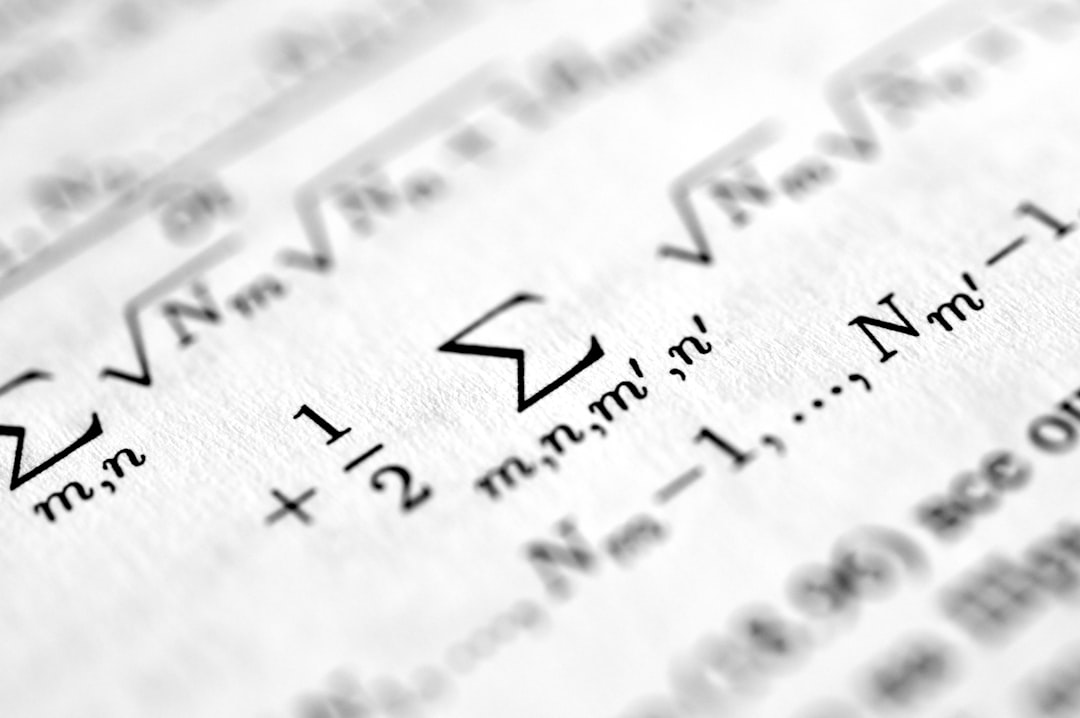
However, OpenAI’s claim has not been without controversy. As highlighted by ABC News, skepticism exists within the mathematical community regarding the validity of AI-generated proofs. Independent verification remains crucial, as accepting AI solutions could redefine standards in mathematical research.
Accurately modeling fluid flow can lead to innovations in aircraft design, water management systems, and strategies for climate change mitigation.
Impact on Computational Modeling in Engineering
The ability of AI to solve the Navier-Stokes problem could significantly impact computational modeling in engineering. Traditionally, engineers have relied on numerical methods to simulate fluid dynamics, which can be both expensive and time-consuming. OpenAI’s findings suggest that AI could offer more efficient solutions, reducing the computational resources required for complex simulations.
With AI’s capability to analyze and predict fluid behavior, engineers may design more effective systems across various fields, from aerospace to civil engineering. Accurately modeling fluid flow can lead to innovations in aircraft design, water management systems, and strategies for climate change mitigation.
As noted by Career Ahead, integrating AI into engineering applications will likely necessitate new skills for engineers. Familiarity with AI tools and methods will become increasingly important as traditional engineering practices evolve to incorporate AI-driven insights.
The implications for industries reliant on fluid dynamics are profound. As AI technology advances, the potential for real-time modeling and simulation could transform how engineers approach design challenges, leading to more innovative and sustainable solutions.
OpenAI’s claim regarding the solution to the Navier-Stokes problem marks a significant milestone in both mathematics and engineering.
As the engineering community navigates these changes, the question remains: how will AI integration reshape the future of engineering practices? Ongoing developments in AI and mathematics will undoubtedly influence engineering innovation.
OpenAI’s claim regarding the solution to the Navier-Stokes problem marks a significant milestone in both mathematics and engineering. As the mathematical community evaluates the validity of this breakthrough, the potential applications of AI in solving complex problems will continue to unfold, prompting further exploration and innovation.
Frequently Asked Questions
What are the implications of AI solving the Navier-Stokes problem for mathematicians?
The claim that AI has solved the Navier-Stokes problem suggests a shift in research methods for mathematicians, encouraging the exploration of AI tools for tackling complex mathematical challenges and potentially leading to new discoveries.
How can data scientists leverage AI advancements in fluid dynamics?
Data scientists can utilize AI to analyze fluid dynamics data more efficiently, leading to improved models and simulations. Enhanced predictive analytics may benefit various applications, from climate modeling to engineering design.

What should mathematicians do to stay updated on AI developments in their field?
Mathematicians should engage with the latest AI research and developments, attend conferences, and collaborate with AI specialists. Staying informed will be crucial as AI continues to influence mathematical research methodologies.
Written by Career Ahead AI. AI can make mistakes, so verify key facts. Report errors to support@careeraheadonline.com.





