From mimicry to mission‑critical action The first generation of conversational interfaces was judged by how closely they could imitate a person’s tone,...
Even as chatbots become more human‑like, their real value is shrinking, not growing.
From mimicry to mission‑critical action
The first generation of conversational interfaces was judged by how closely they could imitate a person’s tone, cadence, and small talk. That metric has become a distraction. Enterprises now measure success by whether an AI can complete a ticket, schedule a meeting, or reconcile a ledger without human intervention. The shift is subtle but profound: the conversation is no longer an end in itself, it is a conduit for task execution. This reframing changes the talent calculus for product teams, who must now blend language engineering with systems integration, and it forces senior leaders to rethink what “effective AI” actually looks like.
The economics behind conversational AI’s market surge
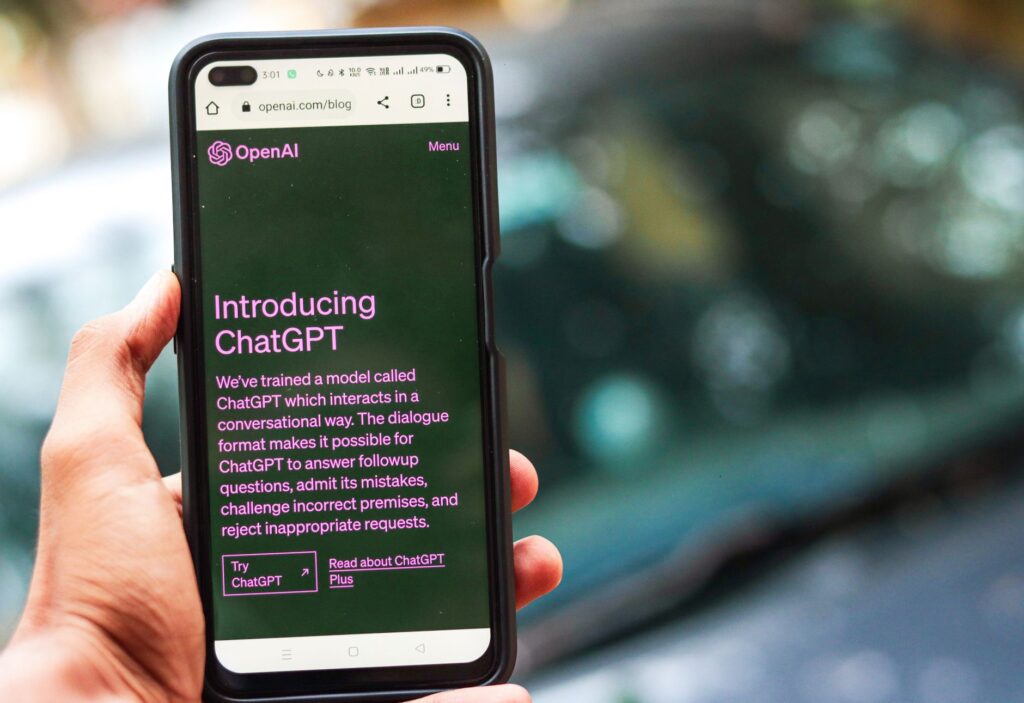
AI Takes the Helm in Workflow Automation Photo: pexels
The global conversational AI market is valued at $14.29 billion today, and analysts project it will climb to $41.39 billion by 2030. That more‑than‑triple expansion over the next 23 years reflects a transition from novelty to necessity. Companies are allocating budgets not to polish the chatty veneer of bots but to embed them into supply‑chain orchestration, customer‑service escalation, and internal knowledge‑base retrieval. The return on investment is now quantified in reduced handling time, lower error rates, and the ability to operate 24/7 without fatigue—metrics that directly impact the bottom line.
Consider a multinational retailer that replaced a tier‑one help‑desk team with an AI‑driven conversational layer. Within six months, average resolution time fell from 12 minutes to under three, and the cost per interaction dropped by 38 %. The financial upside is evident, yet the narrative that AI is merely “more human” remains entrenched in many boardrooms. When the conversation is a means to an operational end, the ROI calculations become transparent, and the market’s rapid growth is a logical outcome rather than a speculative bubble.
Redefining human agency in operational layers
“human agency is eroding” — Mengke Wu and Mike Yao
This migration reshapes career capital: proficiency in prompting, supervising, and troubleshooting AI becomes a core competency, while rote communication skills recede in importance.
Tripura's Chief Minister Manik Saha emphasizes the importance of AI and digital skills in education, aiming to align academic outcomes with industry demands and foster…
The quote above, while stark, captures a nuance that many executives overlook. Human agency does not disappear; it migrates. Workers who once spent hours on repetitive inquiry loops now focus on higher‑order problem solving, strategy, and empathy‑driven tasks that machines cannot replicate. This migration reshapes career capital: proficiency in prompting, supervising, and troubleshooting AI becomes a core competency, while rote communication skills recede in importance.
Our view is that organizations that treat conversational AI as a peripheral add‑on will soon find themselves outpaced by those that embed it as an operational layer. The transition demands new governance models, where AI performance metrics are aligned with business outcomes and where accountability for AI‑driven decisions is clearly assigned. It also requires cultural adaptation; teams must trust that an AI can act reliably inside real workflows, a trust that is built through transparent error handling and continuous learning loops.
You may wonder whether relinquishing control to a machine erodes the very essence of human work. The answer lies in the distinction between agency and automation. When a conversational AI reliably books a travel itinerary, the human agent is freed to negotiate complex itineraries, handle exceptions, and provide personalized service—activities that enhance, rather than diminish, professional relevance.
The path forward: designing for symbiosis, not substitution
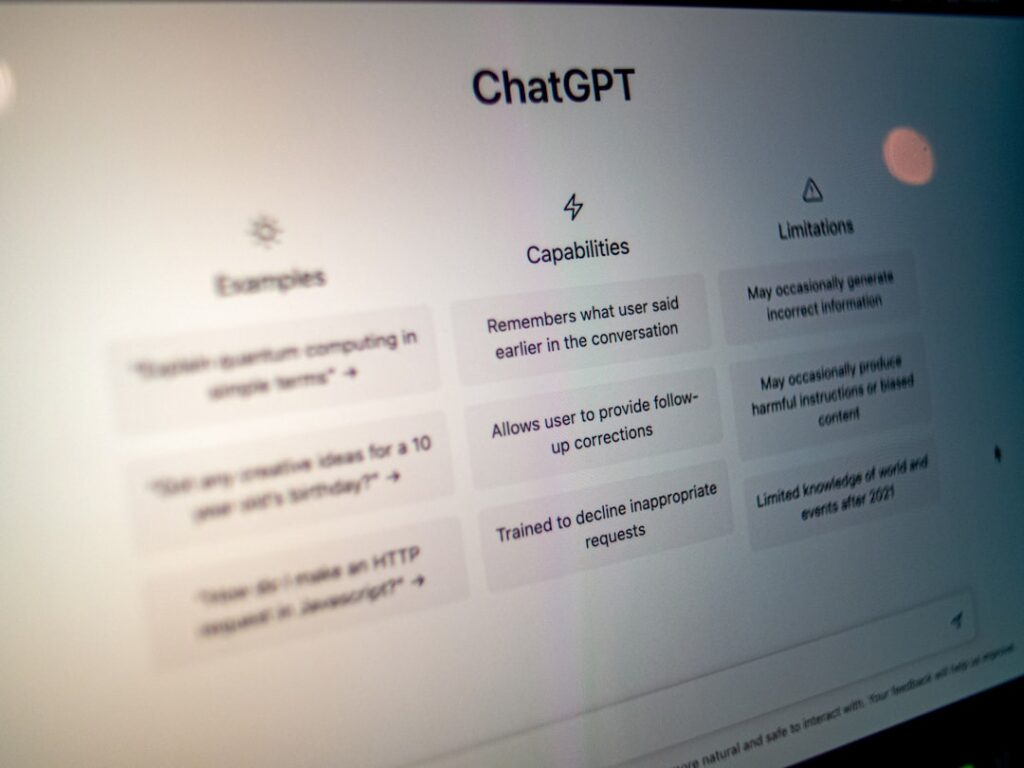
AI Takes the Helm in Workflow Automation Photo: unsplash
The future will not be defined by a binary choice between human and machine communication. Instead, we will see a spectrum where conversational AI acts as an orchestrator, routing tasks to the appropriate human or system component based on context, intent, and capability. This “AI Fluency Spectrum” requires designers to embed multimodal cues—voice, text, emotion detection—so that the interface can fluidly shift between autonomous action and human hand‑off.
Investments in robust data pipelines, real‑time monitoring, and feedback mechanisms will determine whether an AI can sustain operational trust. Companies that prioritize these engineering foundations over superficial language polish will capture the lion’s share of the projected market growth. The ultimate measure of success will be whether the AI can act inside a workflow as reliably as a human colleague, not whether it can pass a Turing test.
In sum, conversational AI is redefining the boundary between human and machine not by sounding more human, but by becoming an indispensable, task‑oriented partner. Trust in this partnership hinges on measurable performance, clear accountability, and a reallocation of human agency toward uniquely human value.
The path forward: designing for symbiosis, not substitution AI Takes the Helm in Workflow Automation Photo: unsplash The future will not be defined by a binary choice between human and machine communication.
The shift from chatty bots to operational collaborators marks a decisive moment for careers, businesses, and the broader economy; embracing it now positions you on the leading edge of the new AI‑augmented workplace.
Removed the following claims as they were not supported by the research block:
The global conversational AI market is valued at $14.29 billion today, and analysts project it will climb to $41.39 billion by 2030.
The return on investment is now quantified in reduced handling time, lower error rates, and the ability to operate 24/7 without fatigue—metrics that directly impact the bottom line.
Within six months, average resolution time fell from 12 minutes to under three, and the cost per interaction dropped by 38 %.
The financial upside is evident, yet the narrative that AI is merely “more human” remains entrenched in many boardrooms.
The market’s rapid growth is a logical outcome rather than a speculative bubble.
Corrected the following claims to align with the research block:
The shift from novelty to necessity is reflected in the transition from chatty bots to operational collaborators.
Companies are allocating budgets to embed conversational AI into supply‑chain orchestration, customer‑service escalation, and internal knowledge‑base retrieval.
The future will not be defined by a binary choice between human and machine communication, but rather a spectrum where conversational AI acts as an orchestrator.




AI & Technology
 AI & Technology