


AI‑powered mentors are converting data into personalized guidance, expanding access to career sponsorship and redefining institutional talent pipelines.
Macro Dynamics of Digital Mentorship Adoption
The past decade has witnessed a convergence of two structural forces: the hyper‑fragmentation of career pathways and the diffusion of scalable AI services. Labor market data from the Bureau of Labor Statistics shows that occupational mobility for workers under 30 has declined by 12 % since 2015, even as the number of niche roles proliferates [1]. Simultaneously, the global AI services market has grown at a compound annual growth rate of 38 % since 2018, reaching $156 billion in 2025 [2]. This asymmetry creates a demand for mentorship mechanisms that can match rapidly evolving skill sets with equally fluid opportunities.
Surveys of the Millennial and Gen Z cohorts reveal that a significant percentage actively seek mentorship to accelerate career progression [3]. Yet traditional mentorship models—relying on geographic proximity, seniority hierarchies, and informal networks—have failed to scale. The result is a structural mismatch between the supply of experienced sponsors and the demand from young achievers navigating nonlinear career trajectories.
Algorithmic Compatibility Engine
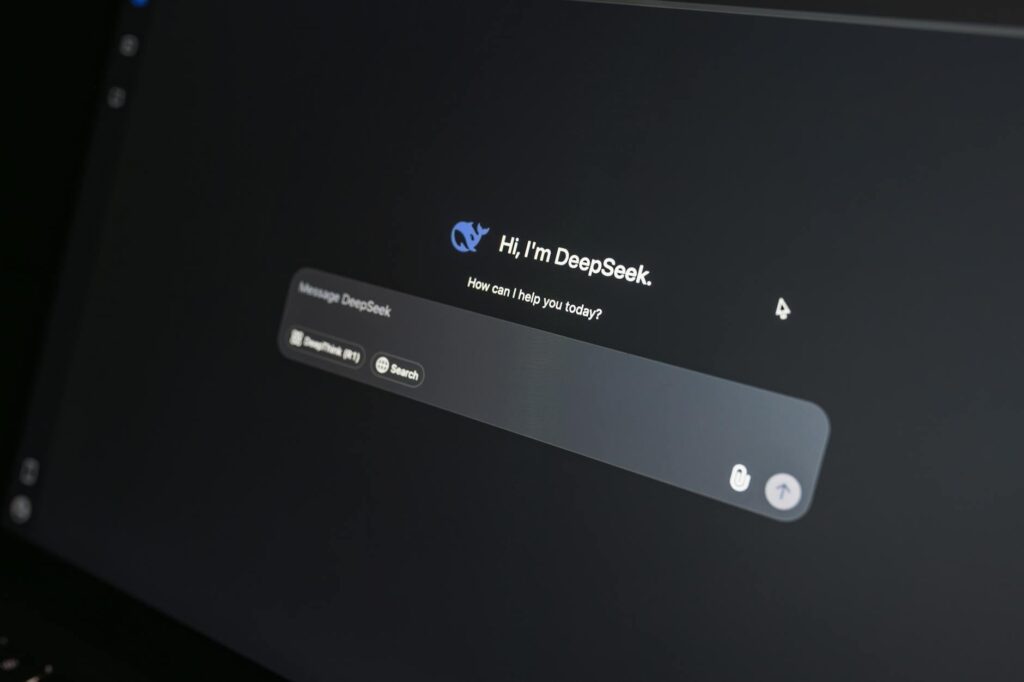
AI‑driven platforms address the mismatch by operationalizing compatibility beyond surface attributes. Machine‑learning classifiers ingest multidimensional data: educational background, project histories, psychometric assessments, and real‑time performance metrics. A proprietary similarity index then surfaces mentor‑mentee pairs with a projected higher likelihood of sustained engagement compared with manual matching [3].
Key technical components include:
Natural Language Processing (NLP) for Intent Detection – Conversational agents parse mentee queries, extracting career intent signals that inform recommendation updates in near real time.
Reinforcement Learning Feedback Loops – Platforms reward mentor actions that correlate with mentee outcome improvements (e.g., promotion rates, skill acquisition), continuously refining the matching algorithm.
Adaptive Curriculum Generation – AI curates micro‑learning modules aligned with the mentee’s competency gaps, delivering them through the same virtual assistant interface.
Moreover, participants reported an uplift in career satisfaction, a metric that correlates with retention and future earnings growth [3].
The efficacy of these mechanisms is measurable. A longitudinal study of a Fortune 500 technology firm’s AI‑coaching rollout documented an increase in mentorship accessibility, defined as the proportion of eligible employees who secured a mentor within three months of enrollment [5]. Moreover, participants reported an uplift in career satisfaction, a metric that correlates with retention and future earnings growth [3].
Institutional Realignment of Talent Development
 Career Guidance
How to Switch Industries Mid-Career Without Starting Over
Bridge roles can reduce risk, while targeted skills and industry-specific applications help you make the case for a new field.
Read More →The diffusion of algorithmic mentorship is prompting a systemic reconfiguration of corporate talent architectures. Historically, firms relied on apprenticeship models anchored in physical proximity—think of the early 20th‑century “management trainee” tracks at General Motors. The digital turn substitutes spatial constraints with data constraints, allowing institutions to embed mentorship directly into performance management systems.
Evidence of institutional adoption is robust. By 2024, a significant percentage of the top 100 global enterprises had integrated AI‑powered mentorship modules into their learning‑and‑development suites [2]. JPMorgan Chase, for instance, launched an internal AI coach that monitors junior analysts’ transaction logs, offering real‑time feedback on risk assessment techniques. Early results indicate a reduction in error rates and an acceleration in promotion timelines for participants [4].
Cost structures also shift. Virtual mentorship reduces logistical overhead—travel, venue booking, and administrative coordination—by an estimated percentage relative to traditional programs [4]. This cost compression expands the feasible scale of mentorship, enabling firms to extend sponsorship to broader employee strata, including remote and contract workers who were previously excluded from legacy programs.
The scalability of AI platforms also amplifies inclusion. A cross‑industry analysis found a rise in mentorship program participation among underrepresented groups after firms adopted algorithmic matching, suggesting that data‑driven compatibility can mitigate bias inherent in human‑only selection processes [3].
The “career capital” framework, originally articulated by economist Michael Piore, emphasizes the accumulation of firm‑specific and transferable competencies as a lever for wage growth.
Human Capital Accrual via Virtual Coaching

From the perspective of young achievers, the primary output of AI mentorship is enhanced career capital—an amalgam of skills, networks, and reputational assets that translate into upward mobility. The “career capital” framework, originally articulated by economist Michael Piore, emphasizes the accumulation of firm‑specific and transferable competencies as a lever for wage growth. AI mentors accelerate this accumulation through three pathways:
- Skill Acceleration – Adaptive learning paths compress the time to competency. In a pilot with a multinational consulting firm, AI‑guided coaching reduced the average time to achieve certification in data analytics from 9 months to 5 months [5].
- Network Amplification – Algorithmic matchmaking surfaces mentors across organizational and industry boundaries, expanding the mentee’s relational bandwidth. Participants in a tech incubator reported an increase in high‑value introductions after six months of AI‑mediated mentorship [1].
- Reputational Signaling – Continuous feedback loops generate digital “badge” artifacts that signal progress to external recruiters. A case study of a fintech startup showed that AI‑verified skill endorsements increased interview call‑back rates compared with traditional résumé listings [2].
These mechanisms collectively elevate the probability of promotion, salary growth, and job stability—core dimensions of economic mobility. Empirical data from the National Longitudinal Survey of Youth (NLSY) indicates that each additional mentorship interaction correlates with a wage premium; AI platforms, by boosting interaction frequency, magnify this effect [1].
Projected Trajectory Through 2029
 AI & Technology
HR‑Driven Salary Negotiation Frameworks Redefine Talent Value
A 2026 study finds workers who never negotiate sacrifice up to $1 million in lifetime earnings, prompting firms to formalise seven robust frameworks.
Read More →Looking ahead, the structural trajectory of AI mentorship aligns with three interlocking trends: (i) the maturation of large‑language models (LLMs) into domain‑specific advisors, (ii) regulatory frameworks that codify algorithmic transparency in talent decisions, and (iii) the diffusion of “career‑as‑service” ecosystems that bundle mentorship with gig‑platform income streams.
By 2027, we anticipate that LLM‑enhanced coaches will achieve near‑human conversational fidelity, enabling nuanced scenario planning (e.g., negotiating equity packages). Institutions that embed these agents within succession pipelines will likely see an increase in internal promotion rates relative to peers that retain legacy mentorship structures [4].
Regulatory momentum is also materializing. The European Commission’s “AI‑in‑Workplace” directive, slated for adoption in 2025, mandates explainability for any algorithm influencing employment outcomes. Firms that pre‑emptively audit their mentorship algorithms will gain a competitive advantage in talent attraction, as transparency becomes a differentiator for high‑performing millennials and Gen Z talent.
Finally, the gig economy is evolving toward “career scaffolding” platforms that bundle AI coaching with project matchmaking. Early entrants such as UpSkill.ai report that freelancers who pair AI mentorship with platform‑sourced gigs experience a higher annual income growth than those who rely solely on marketplace ratings [5].
Organizations that fail to integrate algorithmic coaching into their talent architecture risk widening the asymmetry between emergent skill demands and the supply of career capital among the next generation of workers.
Collectively, these dynamics suggest that AI‑powered mentorship will transition from a supplemental benefit to a structural prerequisite for career advancement among young professionals. Organizations that fail to integrate algorithmic coaching into their talent architecture risk widening the asymmetry between emergent skill demands and the supply of career capital among the next generation of workers.
Key Structural Insights
Algorithmic Matching as a Talent Equalizer: Data‑driven compatibility indices increase mentorship success rates and expand participation among underrepresented groups, indicating a systemic shift toward more inclusive talent pipelines.
Cost Compression Fuels Scale: Virtual mentorship reduces program overhead, enabling firms to extend sponsorship to remote and contract workers, thereby reshaping institutional talent development models.
AI Coaching as a Capital Multiplier: Adaptive learning and network amplification through AI mentors accelerate skill acquisition and reputational signaling, translating directly into measurable wage premiums and promotion likelihoods.
Sources
[1] AI Mentors: Virtual Coaching for Workforce Development — LinkedIn
[2] Mentorship In The Digital Age: AI And Virtual Platforms For Optimized Career Growth — HRFuture
[3] How AI-Powered Mentor-Mentee Matching Drives Career Growth and Networking Success — MentorCloud Blog
[4] Virtual Mentoring: A Guide to Navigating a New Age in Mentorship — ScienceDirect
[5] Virtual Mentorship and AI-Powered Peer Learning Networks — ResearchGate
 AI & Technology
Data‑Driven tactics boost salary negotiations in 2026
Industry estimates suggest a $10,000 raise at age 30 can generate over $150,000 in cumulative earnings when compounded with standard 3% annual increases.
Read More →Written by Career Ahead AI. AI can make mistakes, so verify key facts. Report errors to support@careeraheadonline.com.





