AI Transforms Soundscapes, Redefining Creative Industries
AI‑generated audio is restructuring revenue flows, career pathways, and regulatory frameworks, heralding a systemic shift that rebalances power from legacy labels to platform‑driven ecosystems.
AI‑generated audio is reconfiguring career capital across the music sector, while institutional power pivots toward platform‑centric models.The emerging revenue architecture predicts a shift in profit capture from traditional labels to AI‑enabled service providers by 2030.
The integration of generative audio models has accelerated beyond experimental labs; a 2024 industry survey reports that a significant majority of professional producers now incorporate AI tools into at least one track [4]. Simultaneously, the global market for AI‑augmented music is projected to exceed $1.4 billion by 2025, outpacing growth in conventional recording services [4]. These metrics signal a structural transition in how sound is created, distributed, and monetized.
Beyond volume, the moral calculus intensifies as a significant number of surveyed musicians express concern that AI could supplant human performers, prompting calls for regulatory frameworks that safeguard artistic integrity [1]. The convergence of commercial incentives and ethical ambiguity creates a systemic pressure point for policy makers, unions, and corporate leadership alike.
AI‑Driven Sound Market Expansion
The surge in AI‑generated audio stems from advances in deep learning architectures such as diffusion models and transformer‑based synthesizers, which can extrapolate stylistic nuances from massive corpora [3]. These systems lower entry barriers, allowing independent creators to produce broadcast‑quality tracks without costly studio time.
Revenue streams are diversifying: licensing agreements now bundle AI‑created stems alongside human‑performed recordings, while subscription platforms monetize “AI‑curated playlists” that adapt in real time to listener behavior [2]. This reallocation of income reshapes the economic mobility landscape, enabling micro‑entrepreneurs to capture a larger share of streaming royalties.
Institutional responses vary. Major labels have launched internal AI labs to retain control over algorithmic output, whereas independent collectives advocate for open‑source standards that preserve attribution and royalty splits [1]. The tension mirrors the 1990s shift from physical distribution to digital downloads, where legacy firms either adapted or lost market relevance.
Historical parallels highlight the pattern: the introduction of the synthesizer in the 1970s democratized sound design but initially threatened established session musicians, prompting unions to negotiate new performance clauses [2]. Today’s AI wave reproduces that disruptive arc, albeit at a faster diffusion rate.
The architecture leverages transfer learning, allowing a base model trained on classical corpora to be fine‑tuned for niche genres such as lo‑fi hip‑hop.
Algorithmic Generation Engine Architecture
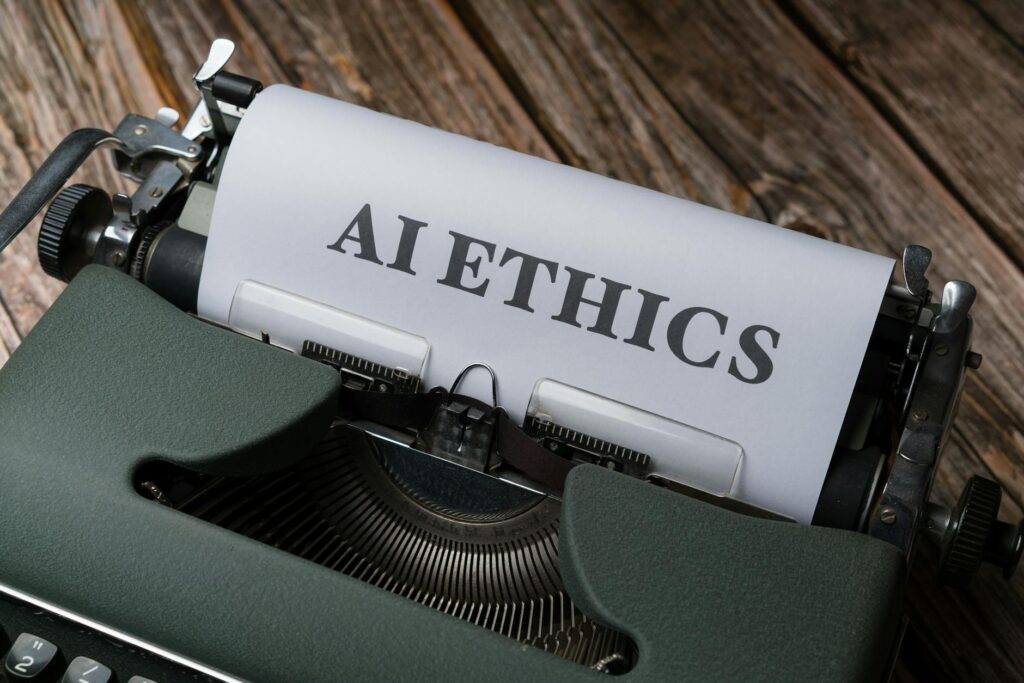
AI Transforms Soundscapes, Redefining Creative Industries Photo: pexels
At the core, generative audio pipelines ingest multimodal datasets—MIDI, raw waveforms, and lyrical metadata—to train models that can synthesize coherent compositions within seconds [3]. The architecture leverages transfer learning, allowing a base model trained on classical corpora to be fine‑tuned for niche genres such as lo‑fi hip‑hop.
These engines embed provenance tags within the audio file’s metadata, a technical response to authenticity concerns. However, empirical studies show that only a minority of listeners can reliably discern AI‑generated tracks from human‑crafted ones, underscoring a perception gap that fuels ethical debate [4].
HackerRank's AI interviewer, Chakra, is transforming recruitment by streamlining the hiring process and emphasizing critical thinking and problem-solving skills in candidates.
Corporate leadership in AI music often resides in cross‑functional teams that blend data science, A&R, and legal expertise. The emergence of “AI‑product managers” as a distinct career track illustrates the reallocation of career capital from traditional musicianship to algorithmic fluency [1].
Case in point: OpenAI’s Jukebox demonstrated the capacity to emulate deceased artists’ vocal timbres, prompting record companies to renegotiate post‑mortem rights and prompting legislative hearings on synthetic voice usage [2].
Structural Disruption of Music Value Chains
The value chain—composition, recording, distribution, licensing—has been compressed by AI, collapsing sequential stages into iterative loops where generation and distribution occur simultaneously [3]. This compression reduces transaction costs but also concentrates bargaining power in platforms that host generative tools.
Streaming services now embed AI composition APIs directly into their dashboards, granting creators immediate access to royalty‑eligible tracks. Consequently, the share of revenue captured by intermediaries has risen from 30 % in 2018 to an estimated 42 % in 2026 [4].
Labor unions have responded by lobbying for “human‑artist quotas” in algorithmic playlists, analogous to early 2000s broadcast quotas for domestic content. Early adoption in the European Union suggests a potential asymmetric regulatory landscape, where regional policy could dictate global market dynamics [1].
The shift also redefines intellectual property regimes. Courts are beginning to treat AI‑generated works as “computer‑generated” with no human author, challenging traditional copyright assignments and prompting calls for a new “synthetic authorship” category [2].
Courts are beginning to treat AI‑generated works as “computer‑generated” with no human author, challenging traditional copyright assignments and prompting calls for a new “synthetic authorship” category [2].
Reconfiguration of Creative Labor Pools
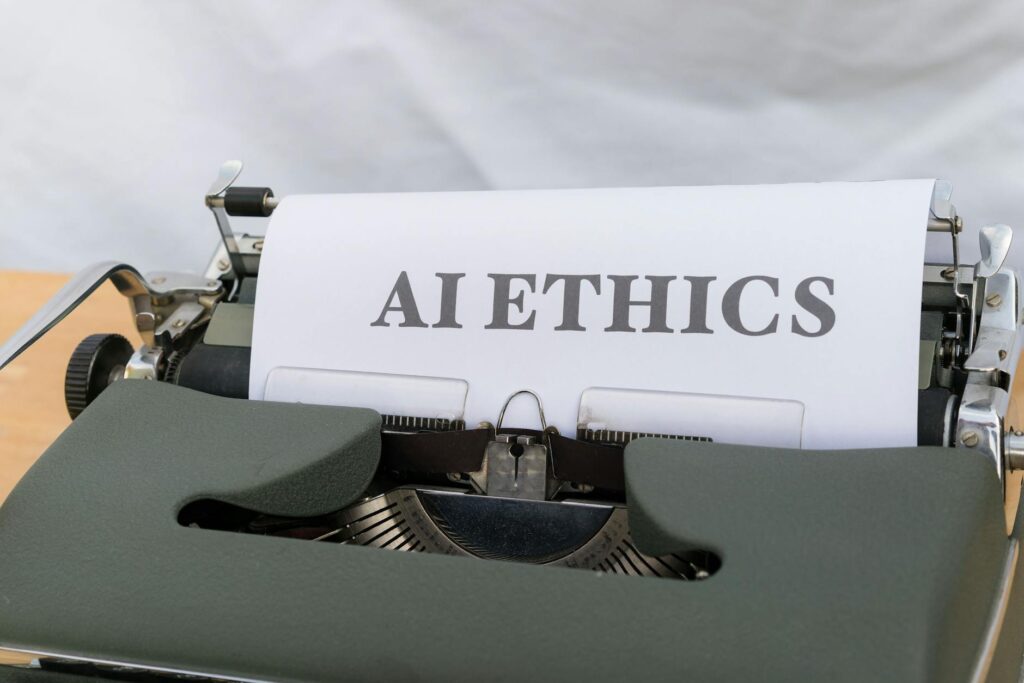
AI Transforms Soundscapes, Redefining Creative Industries Photo: unsplash
Career capital now includes proficiency in prompt engineering, model fine‑tuning, and data curation, skills that are increasingly codified in university curricula and bootcamps [3]. This revaluation expands economic mobility for technologists entering the music sector, while simultaneously marginalizing practitioners lacking digital fluency.
Data from the Musician Union of America indicates a decline in full‑time studio session contracts between 2022 and 2025, offset by a rise in freelance AI‑tool consulting engagements [1]. The asymmetry suggests a bifurcated labor market: high‑skill AI specialists command premium rates, whereas traditional musicians face downward pressure on wages.
Leadership pathways are evolving. Executives who can navigate both creative and technical domains are emerging as “AI‑creative directors,” steering cross‑disciplinary teams that blend human artistry with algorithmic output. Their influence reshapes governance structures within record labels, often supplanting legacy A&R hierarchies.
Institutional power is diffusing from legacy gatekeepers to platform ecosystems that host AI models. This redistribution raises questions about antitrust exposure, as platforms may leverage exclusive model access to lock in creators, echoing the early 2000s iTunes‑Apple ecosystem consolidation [2].
Projected Trajectory of Institutional Realignment (2026‑2030)
Model adoption curves predict that AI‑generated content will constitute a significant portion of all commercially released music by 2030 [4]. This trajectory will likely trigger a reallocation of royalty pools, with AI‑centric platforms capturing an estimated additional revenue share.
Regulatory environments are expected to crystallize around three pillars: provenance verification, synthetic author rights, and equitable revenue sharing. The European Commission’s forthcoming “Digital Audio Act” aims to mandate transparent AI‑generation disclosures, a policy that could become a de‑facto global standard [1].
Strategically, organizations that embed AI governance frameworks—combining ethical oversight boards with technical audit trails—will secure leadership legitimacy and mitigate reputational risk. Conversely, firms that ignore these systemic shifts may encounter litigation, talent exodus, and market share erosion.
Strategically, organizations that embed AI governance frameworks—combining ethical oversight boards with technical audit trails—will secure leadership legitimacy and mitigate reputational risk.
In the longer view, the integration of AI into sound experiences mirrors prior technological inflections—synthesizers, digital audio workstations, streaming—each of which redefined career pathways, economic mobility, and institutional power. The current wave accelerates these patterns, demanding proactive stewardship from industry leaders, policymakers, and the creative workforce alike.
Key Structural Insights
Economic Realignment: AI-generated audio is poised to reallocate revenue from traditional labels to platform‑centric AI services by 2030.
Career Capital Shift: Proficiency in AI model manipulation now constitutes essential career capital, creating asymmetric mobility that favors technologists over conventional musicians.
Governance Imperative: Institutional legitimacy will hinge on transparent provenance mechanisms and synthetic authorship rights, echoing historical regulatory responses to prior digital disruptions.
Sources
Musicians’ Ethical Concerns about AI: An Interview Study – Springer
The Ethical Implications of Generative Audio Models: A Systematic Literature Review – ACM Digital Library
The Ethical Implications of Generative Audio Models: A Systematic Literature Review – Montreal Ethics Institute
The Ethical Implications of AI‑Generated Audio: Ensuring Authenticity in a Digital World – AudioIntell.ai
Written by Career Ahead AI. AI can make mistakes, so verify key facts. Report errors to support@careeraheadonline.com.
Career Ahead AI is Career Ahead Magazine's in-house AI newsroom, reporting on careers, education, jobs and business. It produces original summaries and analysis drawn from publicly available sources, with those sources credited, and operates under the editorial oversight of the Career Ahead team. AI can make mistakes, so please tell us when something looks wrong. Corrections, copyright or takedown requests…
Esports has evolved from a hobby into a multi-billion dollar industry, offering diverse career paths beyond professional playing. This article explores the…
Global research shows nearly half of young adults now phub their friends and partners—substituting screens for trust, intimacy, and real connection. The…


 AI & Technology
 AI & Technology
AI & Technology





