No products in the cart.

Anthropic Empowers AI to Control Microscopes | Career Outlook
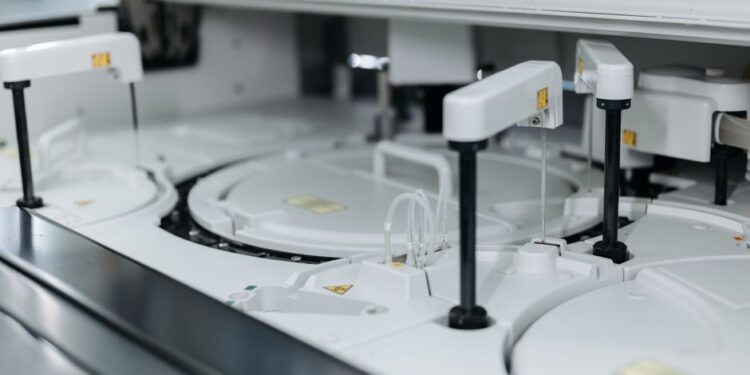
Anthropic's Model Hardware Standard (MHS) revolutionizes lab automation, enabling AI agents to operate multiple instruments simultaneously, enhancing research efficiency and opening new possibilities for scientific inquiry.

On August 27, 2026, Anthropic announced a groundbreaking advancement in laboratory automation with the introduction of the Model Hardware Standard (MHS). This innovative protocol allows AI agents to operate various lab instruments, including microscopes, liquid handlers, and robotic arms, simultaneously. This development is poised to transform the way research scientists and lab technicians conduct experiments, significantly increasing efficiency and speed in research processes.
The MHS aims to drastically reduce the time required for integrating hardware in research environments, a process that has traditionally taken weeks or even months. By standardizing communication between devices, the MHS facilitates quicker setups and real-time updates during experiments. This is particularly crucial in fields such as biotechnology, where the speed of research can greatly influence outcomes. According to a report by LiveMint, the MHS enhances coordination among various lab devices, creating a more cohesive workflow that boosts productivity across different research areas.
Revolutionizing Experimental Processes with AI
With the implementation of the MHS, research scientists can now automate complex tasks that previously consumed significant time and resources. AI agents can conduct autonomous experiments around the clock, adjusting parameters in real time and resolving hardware errors without human intervention. This shift allows scientists to concentrate more on data analysis and interpretation rather than managing the intricacies of experiments.
For instance, routine drug discovery experiments can now be executed more swiftly and accurately. The MHS enables different devices to collaborate seamlessly, which is a game-changer for laboratories that handle numerous samples or require precise measurements. As highlighted by Tekedia, this protocol not only accelerates research timelines but also enhances data quality, leading to more reliable results.
Career Ahead’s analysis indicates that this transition towards AI automation will necessitate lab technicians to adapt rapidly. They will need to acquire skills to operate these new AI systems and troubleshoot any issues that arise. As AI technology continues to evolve, the demand for technicians capable of managing these systems is expected to increase. Furthermore, as researchers increasingly rely on AI, their roles will shift towards innovative problem-solving, fostering an environment ripe for new ideas and discoveries.
They will need to acquire skills to operate these new AI systems and troubleshoot any issues that arise.
New Opportunities and Challenges in Research
You may also like
 AI & Technology
Packaging and Real Estate Drive Global Industry Shift
The analysis foregrounds how these trends intersect, redefining leadership levers and career capital pathways across the industry and global‑trends sector.
Read More →The ability to conduct experiments autonomously opens up new research possibilities. Scientists can explore hypotheses more freely, conducting experiments that were previously constrained by time limitations. This could lead to significant breakthroughs in areas such as drug development and material science. The integration of AI in laboratories is not merely about enhancing efficiency; it signifies a fundamental shift in how scientific inquiry is approached, allowing for a more exploratory research process.
As Anthropic continues to refine the MHS, it is anticipated that more laboratories will adopt these protocols, further embedding AI into daily research practices. This evolution underscores the necessity for professionals in the field to stay abreast of technological advancements. The MHS could serve as a foundation for future innovations in lab automation, establishing a new standard for research methodologies.
Impact on Research Professionals
The introduction of the MHS marks a pivotal moment for research scientists and lab technicians. By enabling AI agents to manage operational tasks, these professionals can devote more time to strategic aspects of their work. This transition could cultivate a more innovative research environment where creativity and critical thinking are prioritized.
However, this shift will require professionals to acquire new skills. Understanding how to interact with AI systems and interpret their outputs will be essential. Lab technicians, in particular, must familiarize themselves with the MHS and its capabilities to utilize it effectively. As noted in a Bloomberg report, adapting to these new technologies will be crucial for career advancement in the evolving landscape of laboratory work.
Career Ahead’s research suggests that adopting AI protocols like the MHS may create a divide between those who adapt and those who do not. As lab work evolves, professionals who embrace these technologies will have a significant advantage in the job market. The integration of AI in laboratories is expected to minimize human error during experiments. By relying on AI for operational tasks, researchers can reduce mistakes caused by fatigue or oversight, leading to more reliable data and successful outcomes in research projects.
As noted in a Bloomberg report, adapting to these new technologies will be crucial for career advancement in the evolving landscape of laboratory work.

Ensuring Safe and Effective AI Integration
You may also like
 AI & Technology
Strategic skills turn offers into counter‑offers
The rapid compression of decision windows in 2026 compensation cycles forces candidates to mobilize career capital instantly.
Read More →As laboratories implement AI-driven automation, the focus will shift towards ensuring these systems are utilized safely and effectively. Anthropic is actively developing safety measures to address potential misuse of AI agents operating physical equipment. This proactive approach will be vital in building trust in AI technologies among researchers. The MHS not only enhances operational efficiency but also reshapes the roles of research scientists and lab technicians. The future of laboratory work is poised for significant transformation as AI becomes an integral component of the research process.
As researchers and technicians navigate this new landscape, the pressing question remains: how will they adapt to these changes, and what new opportunities will emerge from the integration of AI in laboratories?

Frequently Asked Questions
How can research scientists leverage AI to improve their experiments?
Research scientists can utilize AI by implementing protocols like the Model Hardware Standard to automate their experiments. This leads to faster and more accurate results, allowing them to focus on data analysis.
Lab technicians must develop skills in operating AI systems and troubleshooting issues.
What skills do lab technicians need to operate AI-driven devices?
Lab technicians must develop skills in operating AI systems and troubleshooting issues. Familiarity with the Model Hardware Standard and its applications will be essential for effective use of these technologies.
What should research scientists do about the introduction of AI protocols in their labs?
Research scientists should educate themselves about AI protocols like the MHS and consider how these technologies can enhance their experimental processes. Staying updated with advancements in AI will be crucial for maintaining a competitive edge in research.
You may also like
 AI & Technology
Google’s AI Mode Redefines Search Result Visibility
Google's recent update to its AI search summaries is reshaping the digital marketing landscape by pushing organic search results further down the page, compelling marketers…
Read More →