No products in the cart.

Aurora Optimizes Neural Networks, Tackles Hidden Neuron Death

Tilde Research introduces Aurora, an optimizer that tackles the neuron death issue in Muon, improving neural network training efficiency and performance.

Addressing Neuron Death in Neural Networks
Tilde Research has unveiled Aurora, a new optimizer designed to combat the neuron death issue that has affected the Muon optimizer. This advancement not only enhances the performance of neural networks but also sets a new benchmark in optimizer technology.
Neuron death occurs when a significant number of neurons in a neural network become inactive during training. Research shows that by the 500th training step, over 25% of neurons can effectively die, leading to inefficiencies throughout the model. Aurora aims to rectify this problem, ensuring that all neurons remain active and contribute to the learning process.
According to reports, Aurora employs a novel approach that combines uniform updates across neurons with the precision of orthogonalization. This dual strategy prevents neuron death and enhances the overall training efficiency of neural networks, marking a significant advancement in the field.
How Aurora Works
Aurora’s design is rooted in a comprehensive understanding of the limitations of the Muon optimizer. While Muon is effective in many scenarios, it inadvertently leads to neuron death due to its polar factor update mechanism. This mechanism, which utilizes the closest semi-orthogonal matrix to update weights, can result in uneven signal propagation across neurons, causing some to be neglected entirely.
To address this, Aurora reformulates the update-selection problem, ensuring that updates are both left semi-orthogonal and uniformly distributed. This mathematical innovation allows Aurora to maintain the benefits of orthogonalization without sacrificing the activity of any neuron, resulting in a more robust training process that maximizes the potential of each neuron in the network.
How Aurora Works Aurora’s design is rooted in a comprehensive understanding of the limitations of the Muon optimizer.
Performance gains from Aurora are particularly notable in models with large MLP expansion factors, which often suffer more from neuron death due to their architecture. Aurora’s capabilities can lead to unprecedented levels of data efficiency and performance.
Implications for Machine Learning Practices
You may also like
 Entrepreneurship & Business
College Students Shape the Future of A.I. Investment
College students are increasingly influencing the A.I. investment landscape, with initiatives like Dorm Room Fund raising substantial capital. This shift highlights the growing importance of…
Read More →The introduction of Aurora signals a shift in how researchers and practitioners approach optimizer design, emphasizing the importance of maintaining neuron activity throughout training. This could prompt a reevaluation of existing optimizers and the development of new ones that prioritize uniform updates and activity retention.
As machine learning continues to penetrate various industries, the efficiency of neural networks will become increasingly critical. Sectors such as healthcare, finance, and autonomous systems rely heavily on accurate and efficient models. With Aurora, Tilde Research not only addresses a technical challenge but also enhances the applicability of neural networks in real-world scenarios.
The potential for Aurora to improve model performance can lead to faster training times and better results across diverse applications, particularly in fields where time and accuracy are paramount.
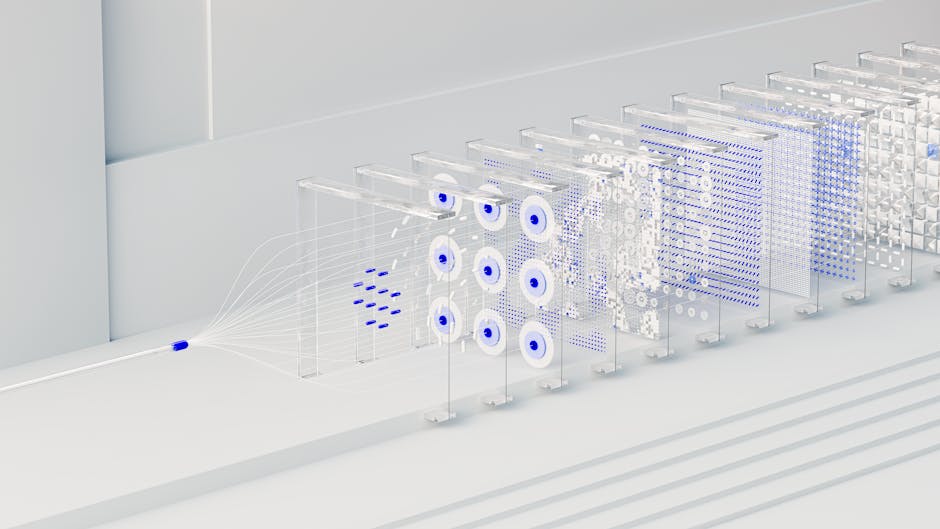
Challenges and Community Perspectives
Despite the promising features of Aurora, some experts express skepticism regarding its long-term efficacy. There is an ongoing debate about the balance between optimizer complexity and performance gains. While Aurora offers significant improvements, critics argue that the added complexity may not always justify the benefits, especially for smaller models or less demanding applications.
As machine learning continues to penetrate various industries, the efficiency of neural networks will become increasingly critical.
Additionally, the machine learning community is divided on the necessity of addressing neuron death as a standalone issue. Some researchers believe that enhancing overall model architecture and training techniques may yield better results than optimizing existing frameworks. This contradiction underscores the need for further research and discussion within the community to establish best practices in optimizer development.

Future Directions in Neural Network Optimization
The future of neural network optimization is set for transformation as innovations like Aurora pave the way. The focus on maintaining neuron activity and improving training efficiency will likely inspire a new wave of research aimed at refining optimizer design. As machine learning models become more complex, the demand for effective optimizers will only grow.
The success of Aurora could encourage other research teams to explore similar approaches, leading to a broader range of solutions for common challenges in machine learning. This collaborative spirit may foster an environment where knowledge sharing and innovation thrive, ultimately benefiting the entire field.
You may also like
 Entrepreneurship & Business
Earnings Must Validate AI Investments
Tiffany McGhee emphasizes the need for companies to demonstrate the effectiveness of their AI investments in earnings reports, as global AI spending is projected to…
Read More →As industries increasingly rely on machine learning, the demand for efficient and effective models will drive further advancements in optimization techniques. Aurora represents a significant step in this direction, and its influence may extend well beyond its initial implementation.