No products in the cart.

Autonomous Offices Redefine the Workplace Landscape

The rise of purpose-driven, digitally enabled workspaces is forcing landlords, CEOs, and Gen Z talent to renegotiate what "office" means. The Shift Away from…

The rise of purpose-driven, digitally enabled workspaces is forcing landlords, CEOs, and Gen Z talent to renegotiate what “office” means.
The Shift Away from Traditional Office Spaces
A March 2026 survey by Mint found that 42% of employees now split their week between a corporate hub, a co-working pod, and a home desk, a pattern the firm calls “microshifting.” This shift is driven by Generation Z, who value purposeful, digital, and flexible environments above prestige-driven towers. As a result, traditional office towers in Manhattan and London are seeing vacancy rates climb to 18% and 22%, respectively.
Landlords are scrambling to adapt. Some, like WeWork, have repurposed vacant floors into “autonomous offices” – self-contained pods with AI-controlled lighting, sound masking, and booking apps. Others, such as CBRE, warn that without rapid adaptation, their revenue could fall 15% year-on-year.
The Rise of Autonomous Offices and Remote Work

The pandemic forced a massive experiment in remote work. Gallup’s post-pandemic analysis reports that 31% of workers now prefer a hybrid split, while 19% have gone fully remote. Companies like Microsoft and Salesforce responded by rolling out “hub-and-spoke” models: a central office for collaboration, surrounded by satellite autonomous pods.
Some, like WeWork, have repurposed vacant floors into “autonomous offices” – self-contained pods with AI-controlled lighting, sound masking, and booking apps.
Autonomous offices differ from classic co-working spaces. They are equipped with sensors that adjust temperature, desk height, and noise-cancellation levels based on individual preferences. Critics argue that the tech-heavy model may erode work-life boundaries and raise equity concerns for employees in regions without robust broadband.
The Impact on Employees, Employers, and the Economy
For employees, flexibility translates into measurable gains. Mint’s survey shows microshifters report a 12% increase in self-rated productivity and a 9% boost in job satisfaction. Employers face a cultural overhaul, with firms that invested early in digital collaboration tools seeing a 15% reduction in meeting-time waste.
Economically, the shift could reshape urban tax bases. A Bloomberg analysis estimates that U.S. cities could lose up to $30 billion in annual property tax revenue if autonomous-office adoption cuts traditional office space by one-third.
Companies Adapt to the New Reality
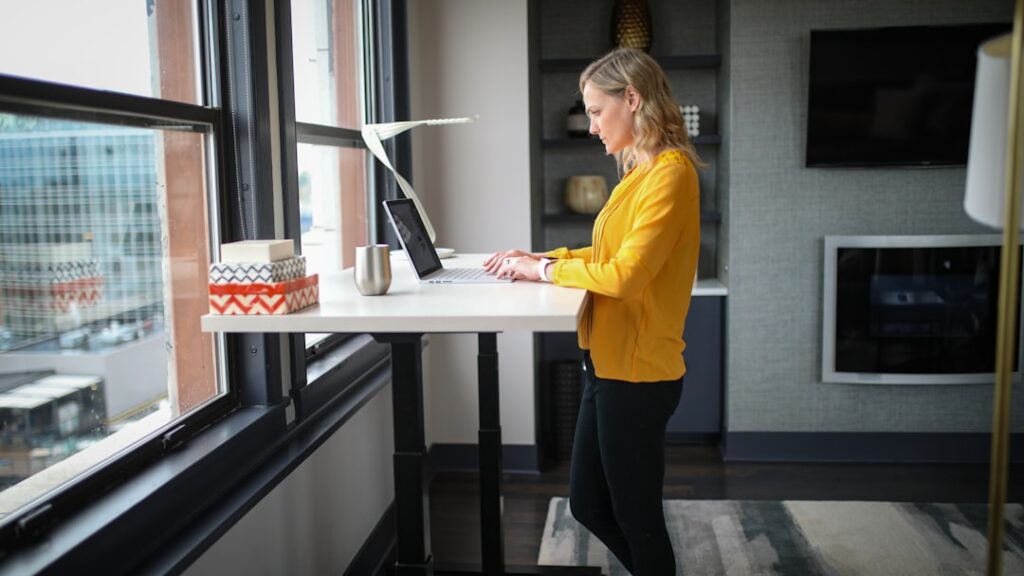
Tech giants are leading the charge. Google’s “Workspace 2.0” pilot in Austin uses AI to allocate desks in real time, cutting unused space by 27% in six months. Mid-size firms are more cautious, with 38% lacking the budget to retrofit existing premises with autonomous-office tech. Landlords are diversifying revenue streams, with CBRE launching a “flex-as-a-service” platform that bundles high-speed internet, ergonomic furniture, and on-site wellness pods.
However, not every experiment succeeds. A 2025 case study of a Berlin fintech’s autonomous-office rollout revealed a 15% drop in employee-reported focus after three months, traced to frequent “pod-hopping” and fragmented communication.
The Future of Work and the Autonomous Office
You may also like
 Future Skills & Work
Adani, Kachchh University Launch Centre for Green Jobs
Adani Skills & Education and Kachchh University have launched a Centre of Excellence for Green Energy in Kutch, India, aimed at training over 10,000 students…
Read More →Industry forecasts converge on a blended future. By 2028, JLL predicts that 78% of large enterprises will operate a hybrid model that includes at least one autonomous-office node. Regulators are watching, with New York’s Office Space Act slated for 2027 requiring landlords to disclose the percentage of autonomous-office space in any lease agreement.
Companies Adapt to the New Reality Autonomous Offices Redefine the Workplace Landscape Tech giants are leading the charge.
For workers, the skill set that will matter most is digital fluency. Mastery of booking platforms, data-privacy protocols, and virtual-collaboration etiquette will differentiate high-performers from those who struggle in a pod-centric world.
“`json
{
“excerpt”: “Microshifting and autonomous offices are reshaping work, forcing landlords, CEOs, and Gen Z talent to redefine the office. Flexibility drives productivity, but the transition raises equity, burnout, and fiscal challenges.”,
“image_keywords”: [“autonomous office pod”, “remote work”, “flexible workplace”]
}